


Divide Old Clumps
Every 3–5 years, lift and divide crowded clumps in late winter or early spring, replanting vigorous fans with healthy roots to maintain flowering performance and prevent the center from dying out.


Yellow fortnight lily (Dietes bicolor) is a clump-forming, evergreen perennial often used in borders, mass plantings, and low-maintenance landscapes. It belongs to the iris family and produces upright, sword-like leaves with pale yellow flowers marked with dark spots. Each bloom lasts a short time, but the plant flowers repeatedly in warm seasons, giving intermittent color. Dietes bicolor is native to southern Africa, where it grows in grasslands and along stream edges. It is generally easy to grow, adapting well to a range of garden soils if drainage is good. To care for Yellow fortnight lily, provide full sun to light shade and moderate, consistent moisture.

Care Difficulty
Easy Care

Light Preference
Full Sun

Water Requirements
Moderate Water

Temperature Preference
Warm Climate

Hardiness Zone
8–11

Soil Texture
Sandy, Loamy, Clay

Soil pH
Slightly acidic (6.5–7.0), Neutral (7.0)

Soil Drainage
Moist but well-drained

Fertilization
Minimal (feed rarely)
Scan your plant to receive care tips personalized for your specific plant
Available on iOS and Android
This rhizomatous perennial prefers bright outdoor light to flower well.
This plant prefers moderately moist but free-draining soil and dislikes standing water.
This species grows best in mild, frost-free climates with moderate seasonal shifts.
This species is tolerant of a wide humidity range and usually does not need special moisture control indoors or outdoors.
This plant prefers moderately fertile, free-draining soil that never stays waterlogged.
This species adapts well to container growing when given enough root depth and drainage.
Dietes bicolor benefits from light, balanced feeding during its active growing season.
Pruning Dietes bicolor is mainly about tidiness and maintaining strong flowering.
Dietes bicolor is more often transplanted in the ground than repotted, as it forms long-lived clumps.
Dietes bicolor is most commonly propagated by division, with seed used where slower establishment is acceptable.
Dietes bicolor has moderate cold tolerance but benefits from basic winter preparation in cooler regions.

Plant Health Check
Not sure what's wrong with your plant? Check your plant's health inside the app.
This species often flowers in multiple flushes through warm seasons, with each individual bloom lasting only about a day but new buds opening in succession from the same fan of leaves.
Plants spread slowly by short rhizomes, forming dense, long-lived clumps that can persist for many years and stabilize soil on banks and slopes.
In its native range in South Africa, this species naturally occurs along moist grasslands and stream margins, where it tolerates periodic drying between rainfall events.

Despite its delicate, iris-like flowers, this species is notably tolerant of urban conditions and is widely planted along roadsides and in traffic islands in warm regions because it endures reflected heat, irregular watering, and compacted soils better than many ornamental perennials.
This species forms dense clumps and slowly spreads by rhizomes and self‑seeding. In mild climates it can become overabundant if not managed. Remove spent seed pods and divide clumps every few years to control spread.
Keep your plants happy and healthy with plant identification, disease detection, and easy care guidance.

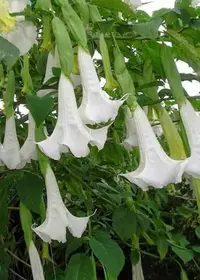
angel's-tears
Brugmansia suaveolens
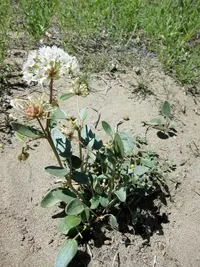
fragrant white sand verbena
Abronia elliptica

Plymouth rose gentian
Sabatia kennedyana
Joseph's coat plant
Alternanthera ficoidea
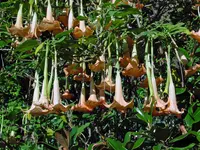
arborescent angel's-tears
Brugmansia versicolor
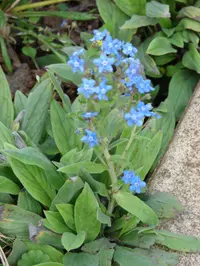
Chinese hound's tongue
Cynoglossum amabile
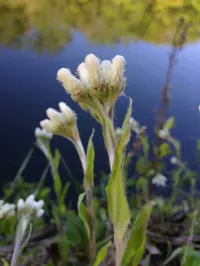
woman's tobacco
Antennaria plantaginifolia
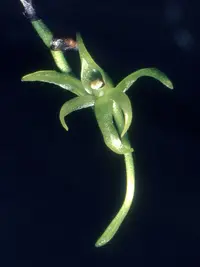
Angraecum calceolus
Angraecum calceolus