Pink trumpet tree Care (Handroanthus heptaphyllus)

Also known as: Pink tab
Pink trumpet tree

About Pink trumpet tree

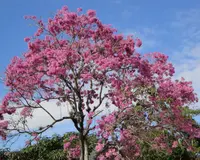
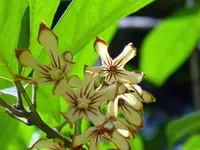
The pink trumpet tree, Handroanthus heptaphyllus, is a deciduous flowering tree valued for its striking pink, trumpet-shaped blooms. It forms a rounded crown and can become a medium to large landscape tree in warm climates.

This species is native to South America, especially Brazil, Paraguay, and neighboring regions, where it grows in tropical and subtropical forests. It is often slow to moderate in growth and needs warmth, sun, and space, so it is not ideal for very small gardens or cold regions.

Gardeners who care for Pink trumpet tree should know it prefers full sun, well-drained soil, and moderate moisture. Once established, it is relatively resilient but still benefits from protection from hard frost and strong, drying winds.

Main Plant Requirements

Care Difficulty

Moderate Care

Light Preference

Full Sun

Water Requirements

Moderate Water

Temperature Preference

Tropical / Frost Sensitive

Hardiness Zone

10–11

Soil Texture

Sandy, Loamy, Organic-rich

Soil pH

Acidic (5.5–6.5), Slightly acidic (6.5–7.0)

Soil Drainage

Well-drained

Fertilization

Minimal (feed rarely)

Get Personalized Care Plan

Scan your plant to receive care tips personalized for your specific plant

Available on iOS and Android

How to Care for the Pink trumpet tree

This fast-growing tree needs abundant sun to flower and build a strong canopy.

  • Provide 6–8 hours of direct sun daily; full sun is best, though Pink trumpet tree accepts light partial shade in very hot climates.
  • Favor exposure with strong morning sun and lighter afternoon sun, especially during its first 2–3 years to reduce leaf scorch risk.
  • In cooler seasons, ensure it is not shaded by buildings or larger trees, or flowering will decline and the crown will thin.

This species prefers deep, infrequent watering that allows the soil to dry slightly between soakings.

  • Water when the top 5–8 cm of soil are dry, applying a slow, deep soak so moisture reaches the main root zone rather than just the surface.
  • Use well-drained soil or a slope to prevent standing water; persistent wetness leads to root rot and yellowing, dropping leaves.
  • In hot, dry summers, expect more frequent watering, while in cool seasons reduce volume; limp, curling leaves suggest drought stress, while soft, blackened roots indicate overwatering.

This subtropical tree thrives in warm conditions and is sensitive to frost, especially when young.

  • Aim for active growth temperatures around 70–90°F (21–32°C); it tolerates short hot spells up to about 100°F (38°C) if soil moisture is adequate.
  • Protect young trees from temperatures below 30°F (-1°C); brief light frost may burn leaves and twigs, while harder freezes can kill small specimens.
  • In marginal climates, plant in a warm microclimate such as a south-facing, sheltered spot so winter lows stay a few degrees higher than the general area.

This species handles a wide humidity range but grows best with moderately moist air.

  • Aim for 40–60% humidity; it tolerates brief drops lower but prolonged very dry air can slow growth.
  • Crisping leaf edges, leaf drop, or buds failing to open signal humidity stress, especially in heated or air-conditioned spaces.
  • Increase humidity with grouped plants, a wide pebble tray under the container, or a nearby humidifier rather than misting the Pink trumpet tree foliage.

Handroanthus heptaphyllus prefers deep, well-drained, moderately fertile soil.

  • Use a loamy mix with clear structure, combining roughly 40% garden loam, 30% coarse sand, and 30% composted organic matter.
  • Ensure fast drainage; water should infiltrate quickly and not pool on the surface for more than a few minutes.
  • Target a slightly acidic to neutral pH around 6.0–7.0, avoiding strongly alkaline sites that can limit nutrient uptake.
  • Improve aeration and drainage in heavy or compacted soil by incorporating coarse sand, fine gravel, or pine bark fines, and avoid low-lying, waterlogged spots.

This tree can be grown in containers for its juvenile stages or in small spaces, with careful attention to stability and root room.

  • Choose a wide, heavy container that resists tipping, as the crown becomes top-heavy long before the trunk thickens fully.
  • Select a pot at least 45–60 cm deep so the strong taproot and structural roots can develop without circling tightly.
  • Elevate the container slightly on feet or bricks so drainage holes stay clear and runoff leaves quickly after irrigation.

Handroanthus heptaphyllus responds well to moderate feeding in fertile, well-drained soil during its active growing season.

  • Use a balanced slow-release fertilizer (e.g., 10-10-10) or well-rotted compost mixed into the root zone in spring.
  • Apply granular fertilizer once in spring and, in poorer soils, once more in midsummer for young Pink trumpet tree specimens.
  • Reduce or stop feeding in fall and winter when growth slows or trees are deciduous.
  • Avoid strong doses; use about half the label rate for young or container-grown plants to limit salt stress and root burn.

Handroanthus heptaphyllus benefits from light, structured pruning to maintain a strong framework and reliable flowering.

  • Carry out main pruning in late winter or very early spring before new growth begins.
  • Remove dead, diseased, or storm-damaged branches first, then thin crossing or crowded shoots to open the canopy.
  • Shorten or remove weak, poorly placed stems to encourage a balanced shape and strong scaffold limbs.
  • Use clean, sharp bypass pruners or a pruning saw, making smooth cuts just outside the branch collar to support proper healing.

This tree is usually grown in the ground, so transplanting young Handroanthus heptaphyllus correctly is more important than frequent repotting.

  • Transplant in late winter or early spring while the tree is dormant and soil is workable.
  • Look for roots circling the container, poor drainage, or slow growth as signs a nursery plant needs a larger space.
  • Move up only 1–2 pot sizes or into a prepared planting hole with well-drained soil at the same depth as in the container.
  • Water deeply after planting, mulch 5–8 cm away from the trunk, and keep soil evenly moist for the first season to limit transplant shock.

Handroanthus heptaphyllus is most often propagated from seed, with cuttings used less frequently in home settings.

  • Collect ripe seed pods in late summer to early fall and extract seeds once fully dry.
  • Sow fresh seeds in a free-draining, sterile mix, just covered, kept at 70–80°F with bright, indirect light.
  • Maintain light, even moisture but avoid waterlogging, which reduces germination and encourages damping-off disease.
  • Semi-hardwood cuttings taken in late spring to summer can root under high humidity with a rooting hormone and bottom heat.

In subtropical and mild warm-temperate regions, Handroanthus heptaphyllus needs some winter consideration, especially when young or container-grown.

  • The tree is frost sensitive; young plants can be damaged by temperatures near or below freezing.
  • Apply a 5–8 cm layer of organic mulch over the root zone in late fall, keeping it slightly away from the trunk.
  • Wrap small trunks with breathable frost cloth during cold snaps, especially in exposed sites.
  • Move container-grown trees into a bright, cool, frost-free space and reduce watering while growth is slow.

Care Tips

Wind-firm training

Stake young trees for the first 2–3 years in windy sites, then gradually loosen and remove ties so the trunk flexes and strengthens without rubbing damage.

Root flare protection

When planting or mulching, keep the trunk base and root flare exposed and mulch pulled back 5–8 cm to reduce risk of trunk rot and girdling roots.

Low-branch management

Allow some lower temporary branches to remain on young trees to thicken the trunk, then remove them in stages over several years to establish a clear, stable canopy.

Controlled structural pruning

In late winter, selectively thin crowded interior branches while they are still small (under 2 cm diameter) to create a balanced framework that can support future heavy flowering.

Frost-event preparation

In marginal climates, water deeply the day before a forecast frost and wrap the trunk of young trees with breathable tree wrap to reduce cold injury when growing Pink trumpet tree.

Common Pests and Diseases

Leaf‑cutting ants

This pest removes circular or irregular pieces from young leaves and carries them away to nests, which can completely defoliate young trees. Symptoms include rapid thinning of the canopy and fresh bite marks on leaf edges.

Solution

Locate active nests around the tree and use ant baits labeled for leaf‑cutting ants, placing them along foraging trails in dry weather. Protect young trunks with sticky barriers or tree bands, and keep turf and weeds trimmed to reduce ant pathways while monitoring new flushes of growth closely when growing Pink trumpet tree in warm regions.

Caterpillars

These insects chew holes in foliage and can skeletonize leaves during outbreaks, especially on young or recently flushed shoots. Symptoms include ragged leaf margins, green droppings on lower leaves, and visible larvae on branches or undersides of leaves.

Solution

Hand-pick larger caterpillars where practical and prune heavily infested twigs on small trees. For repeated damage, apply a biological product containing Bacillus thuringiensis (Bt) to the foliage in the evening, ensuring thorough coverage of young leaves while avoiding treatments during peak bee activity.

Powdery mildew

This disease produces white to gray powdery patches on leaves, buds, and young shoots, often in warm, dry conditions with poor air movement. Symptoms include distorted new growth and premature leaf drop when infections are heavy.

Solution

Prune to open the canopy and improve air circulation, and avoid overhead watering late in the day so foliage dries quickly. Remove and discard affected leaves from the ground, and if the problem recurs, use a labeled fungicidal spray such as horticultural oil or sulfur applied according to directions at the first sign of new spots.

Leaf spot

This disease causes small brown, purple, or black spots on leaves that may merge into larger dead areas, leading to partial defoliation in humid climates. Symptoms include spotting that starts on older leaves and may be more severe in shaded, dense canopies.

Solution

Rake and dispose of fallen leaves to reduce fungal spores, and thin nearby vegetation to improve light and airflow around the tree. If defoliation repeats each year, protect new foliage at the start of the rainy season with a labeled copper or other foliar fungicide, applied evenly to both upper and lower leaf surfaces.

Scale insects

These insects attach to twigs and leaves as small bumps and feed on sap, sometimes causing yellowing leaves, sticky honeydew, and sooty mold on the bark. Symptoms include weakened growth and decline in heavily infested young trees.

Solution

Prune and discard branches with heavy scale clusters and wash reachable parts of the canopy with a strong but controlled stream of water to dislodge some insects. For remaining colonies, apply horticultural oil during mild weather, coating branches and leaf undersides thoroughly to suffocate the scales and repeating as needed according to label directions.

Interesting Facts

Seasonally leafless crowns

This species is typically deciduous and often drops most of its leaves just before flowering, creating a brief period where nearly bare branches are covered in pink blooms. This leaf-shedding strategy helps direct resources to flower production and improves floral visibility to pollinators.

Specialist bee pollinators

The tubular, trumpet-shaped flowers are primarily pollinated by medium to large bees that can navigate the deep corolla to reach nectar. Flower shape, color, and timing are adapted to these bee visitors rather than to birds or bats in much of its native range.

Hard, dense timber

The wood is notably heavy, hard, and durable, with high resistance to decay and insect attack compared with many tropical hardwoods. In parts of South America, it has been used for structural applications such as outdoor construction and heavy carpentry where long service life is needed.

Botan icon

Did you know?

In several Brazilian cities, this species has been designated as a symbolic or ornamental tree for public avenues, and coordinated planting has created highly visible pink-flowering corridors that act as seasonal urban landmarks.

FAQs about Pink trumpet tree

Lack of flowers usually comes from insufficient maturity, too much shade, or previous hard pruning removing flowering wood. Late frosts, drought stress, or heavy nitrogen fertilization also reduce bud formation. Stable warmth and moderate feeding encourage bloom.

Grow Healthy Plants with Botan Care

Keep your plants happy and healthy with plant identification, disease detection, and easy care guidance.

Botan plant care app — identify plants on mobile

Explore More Plants