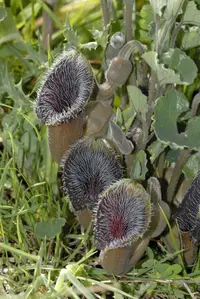
Dioscorea antaly Care

About Dioscorea antaly

Dioscorea antaly is a caudiciform yam, grown mainly as an ornamental for its unusual swollen base, or caudex, rather than for edible use. The plant produces twining vines from this woody structure, often with small, simple leaves.

It is believed to originate from specialized habitats with distinct dry and wet periods, which shapes how to care for Dioscorea antaly in cultivation. Growth is typically seasonal, with an active vining phase followed by dormancy when the top growth may die back.

This species is generally suited to patient growers who can manage its dormancy cycle and avoid overwatering. It usually prefers bright light, a very well-drained mineral-rich mix, and careful watering that keeps the caudex dryish, especially when not in active growth.

Main Plant Requirements

Care Difficulty

Moderate Care

Light Preference

Partial Shade

Water Requirements

Moderate Water

Temperature Preference

Warm Climate

Hardiness Zone

Unknown

Soil Texture

Loamy, Sandy, Organic-rich

Soil pH

Acidic (5.5–6.5), Slightly acidic (6.5–7.0)

Soil Drainage

Well-drained

Fertilization

Minimal (feed rarely)

Get Personalized Care Plan

Scan your plant to receive care tips personalized for your specific plant

Available on iOS and Android

How to Care for the Dioscorea antaly

This caudiciform climber prefers bright, gentle sun that mimics light woodland edges.

  • Provide 3–5 hours of soft morning sun with bright, filtered light for the rest of the day; avoid harsh, exposed afternoon sun in hot climates.
  • Plant where it gets dappled or partial shade at midday; leaves may yellow, crisp, or show pale patches if Dioscorea antaly receives intense direct sun for many hours.
  • If stems stretch or leaves space out, the site is too dim; in winter, shift slightly closer to light or remove shading to compensate for shorter days.

Watering should protect the caudex from rot while supporting leafy vine growth in the active season.

  • During active growth, water when the top 3–5 cm of soil are dry, soaking thoroughly and letting excess drain; the caudex should never sit in standing water.
  • Use a sharply draining, gritty mix so water passes through quickly; soft, wrinkling caudex and limp vines signal underwatering, while yellowing leaves and a mushy caudex indicate overwatering.
  • Reduce watering sharply in dormancy when vines yellow and die back; give only light sips every few weeks to prevent complete desiccation of the caudex.

This species performs best in warm, frost-free conditions with a marked dry rest period.

  • Aim for 70–85°F (21–29°C) during active growth, as sustained warmth supports steady vine and leaf development.
  • Protect the caudex from temperatures below 50°F (10°C); frost easily damages tissue, and prolonged cold, damp soil greatly increases rot risk.
  • The plant tolerates brief heat up to about 95°F (35°C) if shaded from intense sun and kept in a well-ventilated position with slightly more frequent, but still well-drained, watering.

This species handles typical indoor humidity but grows best with moderately stable moisture levels in the air.

  • Aim for 40–60% humidity; it tolerates drier air but avoid very drafty, heated spots that drop below 30%.
  • Crisping leaf tips, slowed vine growth, and buds that fail to open indicate humidity stress in Dioscorea antaly.
  • Increase humidity locally with a nearby pebble tray or grouped plants, rather than misting directly onto foliage for long periods.

This species prefers an airy, fast-draining, slightly gritty mix that lets the caudex and roots dry quickly between waterings.

  • Use a mix of roughly 40% cactus potting mix, 30% pumice or perlite, and 30% coarse bark or gritty sand to keep texture loose.
  • Ensure water runs through in seconds, not minutes; stagnant, heavy media easily cause rot around the caudex of Dioscorea antaly.
  • Keep pH slightly acidic to neutral (6.0–7.0), avoiding strongly alkaline additives like large amounts of lime or wood ash.
  • Avoid dense peat-only mixes, compacted garden soil, or containers without a drainage layer, all of which reduce aeration around the roots.

This species is well suited to container growing when the pot supports both drainage and the weight of the caudex.

  • Choose a wide, shallow pot so the caudex sits slightly above the rim, preventing water from pooling around the top surface.
  • Use unglazed terracotta if you tend to water heavily, as it allows faster moisture loss and reduces prolonged soggy conditions.
  • Place the container in a stable, low-traffic spot or use a heavy saucer to prevent tipping as the vine and support structure gain height.

This caudiciform vine benefits from light, targeted feeding during active growth but is sensitive to overfertilization.

  • Use a balanced liquid fertilizer (such as 10-10-10) at 1/4–1/2 strength every 4–6 weeks during the warm growing season.
  • Alternatively, apply a small amount of slow-release fertilizer at the start of spring, kept away from the caudex surface.
  • Skip or greatly reduce feeding when foliage yellows and Dioscorea antaly enters dormancy, resuming only when new growth appears.
  • Avoid manure-heavy composts or strong feeds that can burn roots; always water before and after applying fertilizer.

This species needs only minimal pruning to keep the vining growth manageable and healthy.

  • Best timing is late winter or very early spring, just before new growth starts.
  • Use clean, sharp scissors or pruners to remove dead, damaged, or tangled stems.
  • Shortening overly long vines helps control size and encourages denser side shoots.
  • Avoid cutting into the caudex; focus pruning on the soft green growth only.

This caudex-forming plant prefers to stay slightly root-bound and dislikes frequent disturbance.

  • Repot only every 3–4 years or when roots circle the pot base or emerge from drainage holes, or growth slows noticeably.
  • Choose late winter to early spring, before vigorous vining begins, as the least stressful time for repotting.
  • Select a pot just 2–3 cm wider with very free-draining mix, keeping the caudex partly exposed above the soil line.
  • Handle roots gently, avoid breaking the caudex, water lightly after repotting, and provide bright, indirect light while it recovers.

Propagation of this species is typically done from seed and is slow, so it is not a fast way to increase plants.

  • Sow fresh seeds in late winter to spring in a very well-drained, gritty mix kept at 70–80°F.
  • Press seeds lightly into the surface and keep the medium just barely moist, never waterlogged.
  • Provide bright, indirect light and good air movement to limit damping-off, a fungal seedling disease.
  • Germination can be erratic and slow; avoid disturbing seedlings until the young caudex is clearly formed.

This plant is not frost hardy and needs specific winter management, especially in cool climates.

  • Move container plants indoors before temperatures drop below 50°F, providing bright, indirect light.
  • Allow the vine to die back naturally in winter dormancy, then keep the caudex cool and almost dry.
  • Maintain soil just barely dry to prevent rot, watering lightly only if the caudex begins to wrinkle.
  • In mild climates, grow Dioscorea antaly in pots so temperature and moisture can be controlled over winter.

Care Tips

Seasonal vine control

Allow the vine to climb a slim stake or small trellis during active growth, then cut it back cleanly at the start of dormancy to prevent a tangled mass that hides the caudex and makes inspection for pests difficult.


Mark the caudex top

At repotting time, mark the natural soil line on the caudex with a discreet nursery marker or photo reference so you can keep it at the same depth and avoid burying the tissue, which greatly reduces rot risk.

Compact pot strategy

Use a relatively tight, shallow pot with a heavy base so the caudex stays stable and does not rock or tip when the long vine develops, which also reduces root disturbance over time.

Controlled dormancy rest

When leaves yellow and drop, move the plant to a dry, airy spot and keep the potting mix almost dry instead of fully unpotting the caudex, which protects fine roots and supports predictable dormancy while caring for Dioscorea antaly.

Targeted pest scouting

Inspect the undersides of fresh vine growth and the crevices of the caudex every 2–3 weeks with a hand lens so scale insects or spider mites are caught early, and spot-treat with cotton swabs dipped in alcohol before infestations build.

Common Pests and Diseases

Scale insects

This pest attaches to the caudex and stems, sucking sap and causing yellowing, thin growth, and sticky honeydew on nearby surfaces.

Solution

Isolate the plant, then gently scrub the caudex and stems with a cotton pad dipped in 70% isopropyl alcohol or a mild insecticidal soap solution, repeating weekly until no new scale appears; improve light and avoid overfertilizing, as soft, lush growth is more vulnerable.

Mealybugs

These insects often hide in vine nodes, leaf bases, and crevices of the caudex, leaving white cottony clusters and causing stunted, distorted foliage.

Solution

Physically remove visible mealybugs with cotton swabs dipped in alcohol, then treat the entire plant (including caudex crevices) with insecticidal soap or a neem oil spray every 7–10 days for several cycles, keeping the plant in good light and avoiding excessive nitrogen fertilizer.

Spider mites

This pest favors Dioscorea foliage in warm, dry indoor air, leading to pale, speckled leaves and fine webbing on undersides and between nodes.

Solution

Rinse vines thoroughly under a gentle stream of lukewarm water, then apply an insecticidal soap or horticultural oil to both sides of all leaves every 5–7 days for several treatments, while increasing ambient humidity slightly and avoiding very dry, dusty conditions for stable Dioscorea antaly indoor care.

Fungal leaf spots

This disease appears as small brown, tan, or dark spots on the leaves, sometimes with a yellow halo, often following prolonged surface moisture and poor air circulation.

Solution

Remove and discard affected leaves, avoid wetting the foliage during watering, and provide stronger airflow and brighter light; if new spots continue to appear, apply a labeled copper or chlorothalonil-based fungicide according to directions and space the plant away from crowded foliage.

Tuber soft rot

This disease causes parts of the caudex to become soft, sunken, and discolored, often accompanied by a foul smell after chronic overwatering or poorly drained media.

Solution

Unpot the plant and cut away all soft, discolored tissue with a sterile knife, dust the healthy cut surfaces with sulfur or a fungicidal powder, then replant in a dry, sharply draining mix and water sparingly until new healthy growth confirms recovery.

Interesting Facts

Caudex surface pattern

Mature plants develop a prominently fissured caudex surface, forming irregular polygonal plates that resemble dried, cracked earth, a diagnostic feature used by taxonomists to separate it from other Dioscorea species with smoother tubers.

Seasonally deciduous vines

The twining stems and leaves are seasonally deciduous, appearing and dying back in response to the native climate’s wet and dry cycles, while the caudex remains dormant and stores reserves below or at the soil surface.

Sexes on separate plants

Like many species in the genus, it is dioecious, meaning individual plants bear either male or female flowers, so seed production in cultivation requires both sexes to be grown in proximity.

FAQs about Dioscorea antaly

Growth is usually slow to moderate. New vine and leaf growth appears mainly during the active season, then pauses in dormancy. Expect gradual increase in caudex size over years rather than dramatic yearly changes when caring for Dioscorea antaly.

Grow Healthy Plants with Botan Care

Keep your plants happy and healthy with plant identification, disease detection, and easy care guidance.


Botan plant care app — identify plants on mobile

Explore More Plants