

Cool root microclimate
Mulch the root zone with a 2–3 cm layer of fine bark or leaf mold to keep the crown cool and evenly moist, but keep the mulch a few cm away from the rhizome to prevent rot.

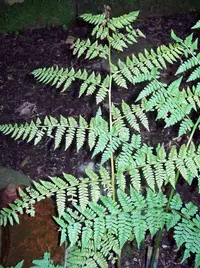
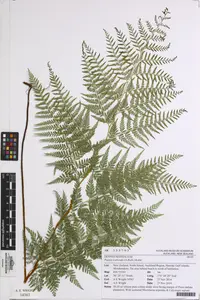
The Austral lady-fern, Diplazium australe, is a clumping, evergreen fern with graceful, arching fronds and a soft, layered texture. It forms dense tufts that give a lush, woodland look.
This species is native to moist forests and shaded gullies in Australia and nearby regions, often growing along streams and in sheltered ravines. Its preference for consistent moisture and protection from direct sun influences how easy it is to keep healthy.
Gardeners who care for Austral Lady-Fern usually find it manageable if humidity and soil moisture stay fairly even. It prefers dappled light, organically rich soil, and good drainage to avoid waterlogging.

Care Difficulty
Moderate Care

Light Preference
Partial Shade

Water Requirements
Keep Soil Moist

Temperature Preference
Warm Climate

Hardiness Zone
9–11

Soil Texture
Loamy, Peaty, Organic-rich

Soil pH
Acidic (5.5–6.5)

Soil Drainage
Moist but well-drained

Fertilization
Light (every 4–6 weeks)
Scan your plant to receive care tips personalized for your specific plant
Available on iOS and Android
This fern prefers low to moderate light that mimics a shaded forest floor.
This species needs consistently moist but not waterlogged soil to stay healthy.
This fern prefers cool to mild temperatures similar to a sheltered woodland.
This fern needs consistently moist air and reacts quickly to dry indoor conditions.
Diplazium australe prefers a loose, moisture-retentive but airy mix that mimics forest floor conditions.
This fern grows well in containers when the pot supports its spreading root system and moisture needs.
Diplazium australe benefits from light, consistent nutrition during active growth but reacts poorly to heavy feeding.
Diplazium australe requires only light, hygienic pruning to keep fronds healthy and tidy.
This fern prefers stable, moist conditions, so repotting or transplanting Diplazium australe should be infrequent and gentle.
Diplazium australe is most practically propagated by division of established clumps rather than by spores for home growers.
In mild climates this fern is fairly cold tolerant but benefits from simple winter care, especially in containers.

Plant Health Check
Not sure what's wrong with your plant? Check your plant's health inside the app.
This fern naturally grows on moist, shaded forest floors and stream banks in eastern Australia and New Zealand, and its broad, arching fronds are adapted to capture low, filtered light under dense tree canopies.
Its fronds show a clear contrast between the glossy, darker green upper surface and a paler underside with prominent veins and sori, which helps with efficient light use and spore development in dim habitats.
In the wild it often indicates cool, humid microclimates, thriving in sheltered gullies, ravines, and near waterfalls where air movement is gentle and the soil stays consistently damp but not waterlogged.

This species is one of the few native ferns that can sometimes colonize disturbed, shaded urban sites such as old garden walls or damp shaded corners, using wind-dispersed spores to reappear far from established forest populations.
This species is a true fern and does not produce flowers or blooms. Instead, it reproduces using spores, which form in small clusters (sori) on the undersides of mature fronds when conditions are suitable.
Keep your plants happy and healthy with plant identification, disease detection, and easy care guidance.

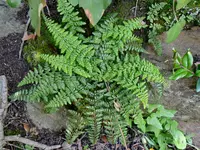
Asplenium foreziense
Asplenium foreziense
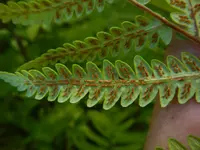
Virginia chainfern
Woodwardia virginica
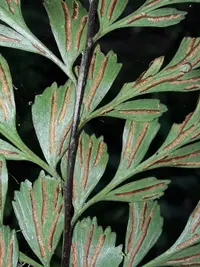
wedgeleaf spleenwort
Asplenium cuneatum
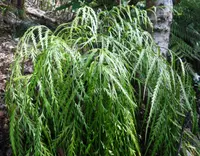
drooping spleenwort
Asplenium flaccidum
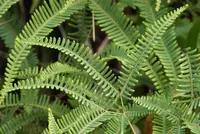
drooping forkedfern
Dicranopteris flexuosa
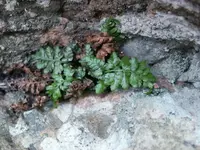
Asplenium balearicum
Asplenium balearicum
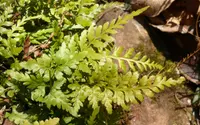
black spleenwort
Asplenium adiantum-nigrum
Hard fern
Paesia scaberula