

Frond spacing management
Rotate the pot by 90° every 1–2 weeks so new fronds develop evenly around the crown, reducing crowding and helping inner fronds receive better air circulation.


Diplazium dilatatum, commonly called the widened twin-sorus fern, is a terrestrial fern valued for its graceful, arching fronds and layered clumping habit. It forms lush, medium-sized rosettes that give a soft, woodland look.
This species occurs naturally in humid, shaded forests in parts of Asia, often along stream banks and on moist slopes. It prefers consistently damp, humus-rich soil and protection from strong sun, which reflects its forest-floor origins.
With stable moisture, moderate shade, and good drainage, it is moderately easy to grow for those who learn how to care for Widened Twin-sorus Fern. It suits shaded gardens, fern collections, and sheltered containers in mild climates.

Care Difficulty
Moderate Care

Light Preference
Partial Shade

Water Requirements
Keep Soil Moist

Temperature Preference
Warm Climate

Hardiness Zone
Unknown

Soil Texture
Loamy, Peaty, Organic-rich

Soil pH
Acidic (5.5–6.5), Slightly acidic (6.5–7.0)

Soil Drainage
Moist but well-drained

Fertilization
Light (every 4–6 weeks)
Scan your plant to receive care tips personalized for your specific plant
Available on iOS and Android
This fern prefers soft, woodland-style light rather than strong direct sun.
This species favors consistently moist but not waterlogged soil.
This fern thrives in mild, stable temperatures typical of sheltered woodland conditions.
This fern needs consistently moist air to maintain healthy fronds.
This species prefers moist, airy, organic-rich soil that mimics a forest floor.
This fern adapts well to container growing when moisture and root space are carefully managed.
Diplazium dilatatum benefits from light, consistent feeding rather than heavy doses of fertilizer.
Pruning Diplazium dilatatum focuses on hygiene and maintaining an open, healthy clump.
This fern prefers stable conditions and only needs repotting or transplanting when clearly root-bound or overcrowded.
Diplazium dilatatum is most practically propagated by division, with spore raising reserved for experienced growers.
This fern is moderately cold tolerant but benefits from basic winter protection in colder regions.

Plant Health Check
Not sure what's wrong with your plant? Check your plant's health inside the app.
This species has its spore clusters (sori) arranged in distinctive paired rows on either side of the leaf vein, which gives rise to the name widened twin-sorus fern and helps distinguish it from related Diplazium species.
It typically grows on shaded, humid forest floors and stream banks, often in deep leaf litter, indicating high value as an indicator of stable, undisturbed woodland microclimates.
The fertile fronds that bear spores are often narrower and more elongated than the sterile fronds, a dimorphic pattern that aids efficient spore dispersal while maintaining a broad photosynthetic surface.
This species is generally evergreen in mild, frost-free climates, keeping green fronds year-round. In cooler areas, fronds may partially die back in winter, then resprout from the crown when temperatures and moisture improve.
Keep your plants happy and healthy with plant identification, disease detection, and easy care guidance.


golden leatherfern
Acrostichum aureum

Ground Spleenwort
Asplenium appendiculatum
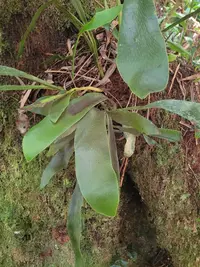
Antrophyum boryanum
Antrophyum boryanum
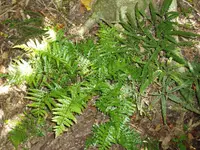
Asplenium lamprophyllum
Asplenium lamprophyllum
 POPULAR
Tasmanian tree fern
Dicksonia antarctica

rooting chainfern
Woodwardia radicans
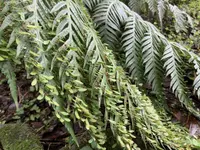
Woodwardia prolifera
Woodwardia prolifera
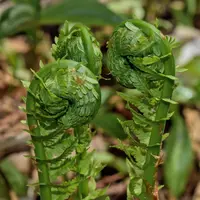
Matteuccia
Onoclea struthiopteris