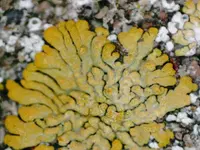
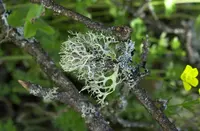
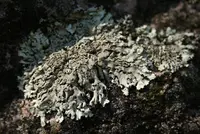
Cow pie lichen Care (Diploschistes muscorum)

Also known as: crater lichen
Cow pie lichen

About Cow pie lichen

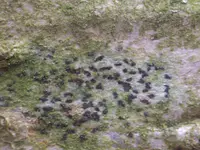
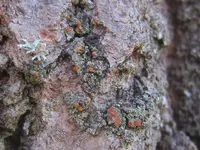
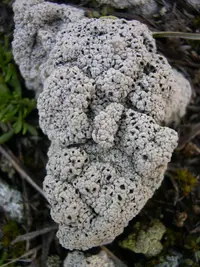
Cow pie lichen, Diploschistes muscorum, is a crustose lichen, not a true plant. It forms flat, crusty patches that often grow over moss cushions or soil. The surface is usually pale gray to whitish, with small cracked sections and scattered, shallow fruiting cups.

This species is common in temperate regions, especially in open, dry, nutrient-poor sites such as heaths, dunes, and disturbed ground. It is slow-growing and sensitive to air pollution, which makes it challenging to care for Cow pie lichen in typical home environments. It prefers bright light, stable, cool to mild conditions, and a dry, well-aerated substrate with minimal disturbance.

Main Plant Requirements

Care Difficulty

Hard Care

Light Preference

Full Sun

Water Requirements

Low Water

Temperature Preference

Cold Hardy

Hardiness Zone

3–8

Soil Texture

Sandy, Rocky

Soil pH

Acidic (5.5–6.5), Slightly acidic (6.5–7.0)

Soil Drainage

Well-drained

Fertilization

Minimal (feed rarely)

Get Personalized Care Plan

Scan your plant to receive care tips personalized for your specific plant

Available on iOS and Android

How to Care for the Cow pie lichen

This ground-dwelling lichen prefers stable, open light conditions rather than deep shade or constant harsh sun.

  • Provide 4–6 hours of direct morning sun or light, open exposure; avoid intense, reflected afternoon sun in hot, dry sites to reduce desiccation stress.
  • Tolerates bright partial shade, especially under sparse shrubs or grasses, but dense shade slows growth and can cause thinning or patchy thalli.
  • In summer, protect Cow pie lichen from prolonged, high-angle sun in exposed sites, while in winter it benefits from full sun when air is cool and moist.

This crustose lichen is highly drought-tolerant and depends more on humidity and brief wetting than on deep, frequent watering.

  • On soil or mossy substrates, allow the surface to dry fully and remain dry for several days before any intentional wetting, imitating natural rainfall patterns.
  • Use very well-drained, sandy or gritty mineral soil so water runs through quickly; persistent surface dampness encourages algae, moss overgrowth, and decay of Diploschistes muscorum.
  • Signs of excess moisture include soft, discolored, or greenish patches, while long, uninterrupted dryness with brittle, easily crumbling lobes indicates the need for occasional light misting or rainfall.

This lichen is adapted to wide outdoor temperature swings but grows best in cool to moderately warm conditions.

  • Optimal active growth generally occurs around 50–70°F (10–21°C), especially when air is moist and light is bright but not scorching.
  • Mature colonies can tolerate winter lows near 10–15°F (-12 to -9°C) on natural sites, but repeated freeze–thaw on saturated substrates can damage the crust.
  • In hot weather above 85–90°F (29–32°C), growth slows; exposure is tolerated if the substrate dries between rains, though some afternoon shade reduces thermal stress.

This crustose lichen is adapted to open, dry habitats and does not require controlled humidity.

  • Thrives in low to moderate ambient humidity around 30–60% without special adjustment.
  • Tolerates dry air well; brief humidity spikes from rain or mist are natural and harmless.
  • Humidity stress appears mainly as prolonged softening or algal overgrowth rather than crisp, firm thalli typical of Cow pie lichen.

Diploschistes muscorum grows on very lean, mineral substrates rather than conventional potting soil.

  • Use a gritty, sandy mix with 60–80% mineral material such as sharp sand, fine grit, or decomposed granite.
  • Ensure extremely fast drainage; water must run through immediately and the surface should dry quickly between wettings.
  • Aim for neutral to slightly alkaline conditions, for example by mixing in a small amount of crushed limestone or marble chips.
  • Avoid peat-heavy, organic-rich, or compacted substrates, which stay wet, reduce aeration, and promote competing mosses or algae.

This species can be kept in shallow containers mainly as a display of attached substrate rather than as a rooted plant.

  • Select a broad, shallow tray or dish that allows the lichen-bearing stones or soil crusts to sit firmly without rocking.
  • Choose unglazed clay or similarly porous materials so brief wetting dries quickly and does not keep the substrate saturated.
  • Raise the container on spacers or feet outdoors so rain and irrigation can drain away freely and surfaces do not stay waterlogged.

Diploschistes muscorum, commonly called Cow pie lichen, does not need fertilizing in typical garden or natural settings.

Diploschistes muscorum requires no true pruning, only minimal hygiene care when necessary.

Transplanting Diploschistes muscorum is rarely needed and often unsuccessful, as this lichen anchors tightly to its substrate.

  • Only consider transplanting when the original substrate is breaking down, contaminated, or must be removed.
  • Attempt moves in cool, moist weather to reduce desiccation stress and avoid hot, windy periods.
  • Gently lift the supporting soil or moss mat beneath the lichen instead of peeling the thallus itself.
  • Reinstall the substrate onto a similar, well-drained site and maintain stable moisture without waterlogging.

Propagation of Diploschistes muscorum is specialized and usually left to natural spread rather than active home techniques.

Diploschistes muscorum is cold hardy and generally needs no special winter care in outdoor conditions.

Care Tips

Stable substrate choice

Attach the lichen to stable, long‑lasting mineral surfaces such as unglazed rock, brick, or old concrete instead of organic mulch so the crust can slowly fuse to the substrate without being disturbed or decomposed.

Minimal handling

Place the lichen where it will not be brushed, stepped on, or frequently moved, since even light abrasion can break the crustose thallus and slow recovery for many months.

Controlled colonization

To extend a patch, gently press a few small broken fragments onto nearby similar rock or compacted mineral soil and leave them undisturbed, allowing natural spores and fragments to slowly colonize over several seasons.

Careful companion selection

Avoid planting fast‑spreading mosses or dense groundcovers directly adjacent to colonies, since these can overgrow and shade the lichen; choose sparse, slow, or tufted neighbors instead.

Pollution and spray avoidance

Site colonies away from vehicle exhaust, fire pits, and routine pesticide or fertilizer spray drift, since lichens are highly sensitive to airborne pollutants and nutrient enrichment when growing Cow pie lichen in designed landscapes.

Common Pests and Diseases

Air pollution damage

Symptoms include discoloration, bleaching, or local dieback of the lichen thallus on surfaces exposed to traffic or industrial fumes. This issue is linked to sensitivity to sulfur dioxide, nitrogen oxides, and other airborne pollutants.

Solution

Reduce exposure by placing collected material in well-ventilated, low-traffic outdoor areas with clean air, away from exhaust vents, busy roads, and smoke sources. Avoid using chemical sprays, solvents, or strong cleaners nearby, and if possible relocate any cultivation setup to a site with better air quality to support gradual recovery during Diploschistes muscorum care.

Substrate instability

This problem appears when the moss or soil substrate the lichen grows on becomes compacted, shifts, erodes, or dries and re-wets too aggressively, causing cracking or detachment of the thallus. Symptoms include loose flakes, broken margins, and patches lifting away from the substrate.

Solution

Stabilize the substrate by using a firm but not compacted moss or stone base and keeping containers in a position where they are not frequently disturbed. Water gently so the surface does not erode, avoid heavy handling or brushing of the lichen, and minimize strong mechanical shocks such as heavy rainfall impact in shallow trays.

Overgrowth by mosses

This issue occurs when fast-growing moss species overtop and shade the lichen, leading to thinning, loss of color, and eventual disappearance of the lichen patches. Symptoms include dense green moss cushions engulfing the pale lichen rosettes.

Solution

Carefully thin or peel back competing moss around the lichen, keeping a narrow open margin so light reaches the lichen surface. Maintain moderate, not constantly wet, moisture levels and provide open, bright conditions, which favor crustose lichens over taller, shade-forming mosses.

Algal overgrowth

This condition shows as a slimy or intensely green surface film that can cover the lichen in persistently wet, low-light conditions. Symptoms include loss of the typical gray-white color and a slick or patchy green coating.

Solution

Improve air circulation and increase light levels without adding strong heat, and allow the surface to dry slightly between waterings so it is damp rather than constantly wet. If possible, gently flush with clean, low-mineral water at a shallow angle to remove loose algal film, avoiding direct strong jets that could damage the lichen thallus.

Slug and snail grazing

These animals may feed on moist lichen surfaces, leaving irregular scraped areas, missing margins, or torn patches. Damage tends to occur during cool, damp periods or in shaded outdoor setups and trays.

Solution

Limit access by using physical barriers such as copper tape around containers or raising trays off the ground, and hand-remove slugs or snails during evening checks. Reduce nearby hiding places such as dense debris and keep the area slightly drier at the surface so it is less attractive, while still maintaining the moderate humidity needed to grow Diploschistes muscorum.

Interesting Facts

Obligate moss parasite

This crustose lichen almost always grows directly on living moss cushions, especially in dry, open habitats, and gradually overgrows and kills the moss tissues beneath it.

Cracked crater surface

Its thallus forms a pale, cracked crust with tiny crater-like depressions that hold the reproductive structures, giving mature colonies a distinctive pockmarked appearance visible even without a hand lens.

Nitrogen-limited strategist

Although it contains photosynthetic algal partners, this species typically lacks nitrogen-fixing cyanobacteria, so it is specialized for nutrient-poor, nitrogen-limited soils where competition from faster-growing plants and lichens is reduced.

Botan icon

Did you know?

This lichen is often one of the first epigeic species to colonize disturbed sandy or gravelly soils in heathlands and boreal regions, helping stabilize the surface and subtly shaping early-stage succession before more competitive vegetation arrives.

FAQs about Cow pie lichen

Growth is very slow. Thalli often expand only 1–3 mm per year under natural conditions. In cultivation on suitable rock or soil crust, expect visible expansion over several years rather than months when trying to grow Diploschistes muscorum.

Grow Healthy Plants with Botan Care

Keep your plants happy and healthy with plant identification, disease detection, and easy care guidance.

Botan plant care app — identify plants on mobile

Explore More Plants