Dipteris conjugata Care

Dipteris conjugata

About Dipteris conjugata

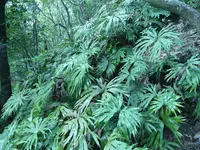
Dipteris conjugata is a primitive fern with a distinctive, fan-shaped frond that often divides into two broad wings. It forms low clumps and creates a striking, almost architectural look.

This species is native to humid, tropical forests in parts of Southeast Asia and the Pacific, where it grows on sheltered slopes and rocky outcrops. It prefers consistently moist, well-drained substrates and protection from strong sun and wind.

Because it relies on high humidity, stable warmth, and good air movement, it can be challenging outside specialized collections. Anyone who wants to learn how to care for Dipteris conjugata should be prepared to recreate a humid, shaded forest environment as closely as possible.

Main Plant Requirements

Care Difficulty

Hard Care

Light Preference

Partial Shade

Water Requirements

Keep Soil Moist

Temperature Preference

Tropical / Frost Sensitive

Hardiness Zone

Unknown

Soil Texture

Loamy, Peaty, Organic-rich

Soil pH

Acidic (5.5–6.5), Slightly acidic (6.5–7.0)

Soil Drainage

Moist but well-drained

Fertilization

Minimal (feed rarely)

Get Personalized Care Plan

Scan your plant to receive care tips personalized for your specific plant

Available on iOS and Android

How to Care for the Dipteris conjugata

This fern thrives in bright, filtered light that mimics a humid forest understory.

  • Provide 3–5 hours of soft morning sun with dappled or filtered light for the rest of the day; avoid direct midday or harsh afternoon sun on fronds.
  • Grow Dipteris conjugata in partial shade under taller plants or shade cloth giving 40–70% shade to prevent leaf scorch and crisping edges.
  • In summer, increase shade or move to brighter indirect light; in winter, allow more open exposure so fronds still receive 4–6 hours of bright, indirect light.

This species prefers consistently moist, fast-draining soil without cycles of full drying or waterlogging.

  • Aim for soil that feels evenly damp; in the growing season rewater when the top 1–2 cm feels just losing surface sheen but is still slightly cool to the touch.
  • Use loose, organic-rich soil with good drainage so excess water runs out quickly, reducing risk of root rot, blackened rhizomes, and yellowing fronds from overwatering.
  • In cooler months let the top 2–3 cm dry slightly deeper before watering, watching for faintly drooping or curling frond tips as an early underwatering sign for Dipteris conjugata.

This fern favors warm, frost-free conditions with only narrow temperature swings.

  • Provide an ideal range of 65–80°F (18–27°C) during active growth; stable temperatures support steady frond expansion and reduce stress spotting.
  • Avoid temperatures below 50°F (10°C); brief dips to 45°F (7°C) may be survived but can damage tender fronds and slow root activity.
  • Protect from hot, dry conditions above 90°F (32°C) by increasing shade and humidity, and avoid cold drafts or frost, which can kill exposed foliage even if rhizomes survive.

This fern needs constantly moist air to maintain healthy fronds.

  • Aim for 70–90% humidity; growth stalls and fronds brown at typical indoor 30–40%.
  • In dry air, leaflet edges crisp, new fronds deform, and sori may fail to develop evenly.
  • Increase humidity with daily fine misting, pebble trays under pots, and placement in a shaded, humid greenhouse or shadehouse.

This species prefers a loose, organic, moisture-retentive yet free-draining substrate.

  • Use a mix of 40% fine bark, 30% peat or coco coir, 20% compost, and 10% perlite for structure and drainage.
  • Soil should feel springy and airy; avoid heavy clay and compacted garden soil that stay waterlogged.
  • Target slightly acidic conditions around pH 5.5–6.5 to support nutrient uptake and root health.
  • Add extra bark chips or coarse perlite if the mix stays wet for more than 2–3 days after thorough watering.

This species can be grown in containers if moisture and stability are well managed.

  • Choose a wide, relatively shallow pot to accommodate its spreading rhizomes and prevent the plant from becoming unstable in wind.
  • Select a heavier material such as ceramic or clay so the container does not tip as the arching fronds expand.
  • Ensure drainage holes run clear and raise the pot slightly on feet or bricks so excess water leaves the container quickly after rain or watering.

This fern is adapted to low-nutrient forest habitats, so use fertilizer sparingly for Dipteris conjugata.

  • Apply a balanced, dilute liquid fertilizer (around 10-10-10 at 1/4 strength) every 4–6 weeks during the warm growing season only.
  • Alternatively, use a light top-dressing of fine compost, keeping it away from direct contact with the rhizomes.
  • Avoid slow-release pellets that may accumulate salts in shallow containers or tight root zones.
  • Stop feeding in autumn and winter, when growth slows, to prevent weak, lush tissue and root stress.

Pruning needs are minimal and focus on hygiene and maintaining a clean outline for Dipteris conjugata.

  • Best time to prune is late winter to early spring, just before new fronds unfurl.
  • Use sharp, clean scissors or pruners to remove dead, yellowing, or diseased fronds at the base.
  • Thin out badly crowded or crossing fronds to improve air flow and reduce fungal problems.
  • Light grooming maintains a balanced, open shape without cutting into healthy rhizomes.

This species dislikes disturbance, so transplant or repot Dipteris conjugata only when clearly necessary.

  • Look for roots circling the pot, growing from drainage holes, or noticeably slowed new frond production as signs to move it.
  • Plan repotting or transplanting for spring, every 2–3 years at most, when active root growth resumes.
  • Shift into a slightly larger, shallow container or gently relocate the clump into similar, consistently moist, well-drained soil.
  • Handle rhizomes carefully, keep the original soil around roots, water thoroughly, and shade the plant for 1–2 weeks to reduce stress.

Propagation of Dipteris conjugata is specialist work and not commonly done in home settings, so routine home propagation is not recommended.

This tropical fern lacks frost tolerance and needs thoughtful winter care in cooler climates.

  • Maintain temperatures above 55–60°F; move container plants indoors or into a heated greenhouse before the first frost.
  • Provide bright, indirect light indoors and keep humidity moderate to high to limit frond desiccation.
  • Keep the root zone evenly moist but slightly reduce watering as growth slows, avoiding both soggy soil and complete dryness.
  • Outdoors in mild frost-free regions, a light mulch around the root zone stabilizes moisture and temperature.

Care Tips

Shaded hardening

Before moving a nursery plant outdoors or into brighter shade, acclimate it over 10–14 days by gradually increasing light and airflow to prevent frond scorch and desiccation.

Moisture-retentive mulching

Apply a 3–5 cm layer of fine bark or leaf mold around, but not touching, the rhizome to stabilize surface moisture, cool the root zone, and reduce watering frequency.

Rhizome positioning

Set the creeping rhizome just below the substrate surface and keep new growth points free of compacted mix so emerging fronds are not mechanically restricted or damaged.

Targeted pest inspection

Check the undersides of mature fronds and along the rhizome for scale insects, mealybugs, or mites every 2–3 weeks, and remove early infestations with a cotton swab dipped in alcohol before considering broader treatments.

Container stability

In pots, use a wide, heavy container or add a top layer of gravel so the tall, spreading fronds do not topple the plant when wet or exposed to airflow, which is especially helpful when growing Dipteris conjugata in sheltered outdoor spaces.

Common Pests and Diseases

Fern aphids

This pest feeds on the undersides of fronds and young rachises, causing pale speckling, curling, and weak new growth. Honeydew may appear on fronds, sometimes leading to sooty mold on the glossy Dipteris tissue.

Solution

Rinse fronds thoroughly with a strong but controlled stream of water, focusing on the undersides, and repeat weekly until populations drop. For heavier infestations, spot-treat clusters with insecticidal soap or a light horticultural oil, applied in the early morning in shaded conditions to avoid phytotoxicity, and improve air movement so new growth hardens quickly.

Fern scale

These insects attach along midribs and stipes as small, fixed bumps, slowly sapping sap and causing dull, yellowed, or patchy fronds. Symptoms include poor vigor and premature browning of older pinnae in cultivated clumps.

Solution

Scrape off individual scales gently with a cotton swab or soft brush dipped in alcohol, then wash fronds with water to remove residues. For larger colonies, apply a light horticultural oil to fully coat the scale bodies while keeping the plant shaded and well hydrated, and prune out heavily infested older fronds to reduce pressure on new growth.

Rhizoctonia leaf blight

This disease causes irregular tan to dark brown lesions starting at frond bases or along crowded sections, often in overly damp, poorly ventilated plantings. Symptoms include water-soaked patches that coalesce, causing whole pinnae or frond sections to collapse in humid, warm conditions.

Solution

Remove and discard affected frond sections promptly, then thin or divide clumps to increase airflow around the arching fronds. Allow the surface of the substrate to dry slightly between waterings, avoid overhead watering late in the day, and if spread continues, use a labeled fungicide for foliar blights according to Dipteris conjugata care instructions and local regulations.

Bacterial frond spot

This disease produces small, water-soaked translucent spots on fronds that turn dark and may have a yellowish halo, especially after warm, wet periods. Spots can merge, giving fronds a scorched, patchy appearance, particularly on tender, newly expanded blades.

Solution

Remove and discard spotted fronds to reduce bacterial load and avoid misting directly onto foliage, especially in enclosed shadehouses. Improve spacing and airflow, water at the soil level in the morning, and disinfect cutting tools between plants; in collections with recurrent issues, isolate affected plants and monitor new fronds closely while adjusting humidity and irrigation patterns.

Snails and slugs

These pests feed at night on the broad, leathery blades, leaving irregular holes and shredded edges, especially on younger fronds. Silvery slime trails may appear on the soil surface and lower frond bases around the plant.

Solution

Hand-pick snails and slugs in the evening or early morning and use physical barriers such as copper tape or rough mineral mulches around the planting zone. Reduce damp debris where they hide, and if needed, apply iron phosphate-based pellets around but not touching the crown, following label directions to protect non-target wildlife while you grow Dipteris conjugata in moist, shaded beds or containers.

Interesting Facts

Ancient fern lineage

This species belongs to one of the most evolutionarily distinct fern families, Dipteridaceae, which has a rich fossil record dating back to the Mesozoic era, making it a living representative of an old fern lineage that was once more diverse and widespread.

Butterfly-shaped fronds

Its fronds are fan-like and often divided into two broad wings with deep sinuses and radiating veins, giving a butterfly or bat-wing appearance that is very different from the feather-like fronds of most common ferns.

Specialized rocky habitat

In the wild it typically grows on exposed, humid rock faces and steep slopes in lowland to montane tropical forests, often in areas with frequent mist and good air movement rather than in deep, shaded forest understory.

Botan icon

Did you know?

This species has experienced significant regional decline and local extinctions in parts of its native range in Southeast Asia and the Pacific islands, and in some areas it is now considered rare or threatened due to habitat loss and disturbance of its specialized rocky forest habitats.

FAQs about Dipteris conjugata

Growth is relatively slow. New fronds appear seasonally, and clumps may take several years to form a noticeable specimen. In suitable humid, warm conditions, it gradually expands rather than showing rapid height or spread increases each year.

Grow Healthy Plants with Botan Care

Keep your plants happy and healthy with plant identification, disease detection, and easy care guidance.

Botan plant care app — identify plants on mobile

Explore More Plants