Rock-ginger Fern Care (Drynaria coronans)

Rock-ginger Fern

About Rock-ginger Fern

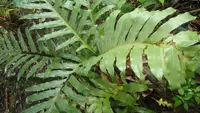
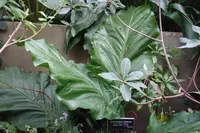
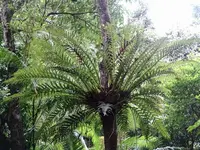
Rock-ginger fern (Drynaria coronans) is an epiphytic fern that often grows on tree trunks or rocks, forming dramatic clumps of fronds. It develops two frond types: upright, leafy fronds for photosynthesis and shorter, nest-like sterile fronds that help trap organic debris. In the wild it is found in tropical and subtropical forests of Southeast Asia, where humidity is high and air movement is good. The plant is moderately challenging for beginners because it dislikes prolonged dryness and waterlogging. Those who want to care for Rock-ginger Fern should provide bright, filtered light, regular moisture, and a loose, airy growing medium that mimics its natural habitat.

Main Plant Requirements

Care Difficulty

Moderate Care

Light Preference

Partial Shade

Water Requirements

Moderate Water

Temperature Preference

Tropical / Frost Sensitive

Hardiness Zone

11–12

Soil Texture

Loamy, Peaty, Organic-rich

Soil pH

Acidic (5.5–6.5), Slightly acidic (6.5–7.0)

Soil Drainage

Moist but well-drained

Fertilization

Light (every 4–6 weeks)

Get Personalized Care Plan

Scan your plant to receive care tips personalized for your specific plant

Available on iOS and Android

How to Care for the Rock-ginger Fern

This epiphytic fern prefers bright, filtered light that mimics dappled forest shade.

  • Provide 4–6 hours of bright, indirect light daily, such as under shade cloth or beneath taller plants, avoiding direct midday sun that can scorch fronds.
  • Morning sun with light shade from late morning to afternoon is suitable; strong west-facing sun should be filtered through sheer fabric or a shaded greenhouse roof.
  • In winter, when light is weaker, allow slightly brighter exposure, but in summer increase shade to prevent leaf yellowing or crisp brown patches from excess radiation.

Watering should keep the root zone evenly moist but never waterlogged.

  • Allow the top 2–3 cm of the mounting medium or soil to dry slightly before watering again, then soak thoroughly so excess drains away.
  • In warm growing seasons, water more often as fronds feel thinner or slightly limp; in cooler months reduce frequency while preventing the rhizome from drying out completely.
  • Watch for yellowing, soft fronds and a sour smell as signs of overwatering, and for curling, brittle fronds as an indication that Drynaria coronans is too dry.

This species thrives in warm, frost-free conditions similar to a tropical understory.

  • Maintain an active growth range of 65–80°F (18–27°C), which supports steady frond development and healthy rhizomes.
  • Avoid temperatures below 50°F (10°C); brief dips to 45°F (7°C) may be survived but can slow growth and damage tender new fronds.
  • The plant tolerates short periods up to 90–95°F (32–35°C) if humidity and shade are high, but it should be protected from frost and cold drafts year-round.

This epiphytic fern requires elevated humidity to maintain healthy fronds and shield fronds.

  • Aim for 60–80% humidity; growth slows and fronds brown at much lower levels.
  • Tolerates short dry-air spells, but crispy tips and dull, curling fronds indicate humidity stress.
  • Use a room humidifier, pebble tray near the plant, or group Rock-ginger Fern with other plants to raise local humidity.

This species prefers a loose, airy, organic-based medium that mimics leaf litter on tree trunks or rocks.

  • Use a mix like 40% fine orchid bark, 30% composted pine or leaf mold, 20% coco coir or peat, and 10% perlite for drainage.
  • Structure should be chunky and springy, allowing water to drain quickly while holding light, even moisture around the rhizomes.
  • Keep pH slightly acidic to neutral (pH 5.5–7.0), avoiding strongly alkaline substrates that can limit nutrient uptake.
  • Avoid dense garden soil or mixes heavy in fine peat alone, which can compact, reduce aeration, and keep rhizomes too wet.

This fern adapts well to container culture when mounted-style or shallow, wide pots are used.

  • Choose a low, broad container to spread the rhizome horizontally, preventing crowding and promoting shield frond formation.
  • Select a breathable pot material such as unglazed clay to reduce water retention in the coarse, organic mix.
  • Secure the plant firmly with ties or mesh when first potted to stabilize the creeping rhizome and prevent wobbling as fronds elongate.

Drynaria coronans benefits from modest, consistent feeding during active growth in warm months.

  • Use a balanced liquid fertilizer (around 10-10-10) at 1/4–1/2 strength every 4–6 weeks in spring and summer.
  • Alternatively, apply a light top-dressing of fine compost or a dilute organic fertilizer suitable for epiphytic ferns.
  • Avoid feeding in late fall and winter when growth slows and fronds may rest.
  • Flush the pot or mount occasionally with plain water to prevent salt buildup on sensitive roots of Rock-ginger Fern.

Pruning Drynaria coronans focuses on hygiene and shaping rather than heavy cutting.

  • Best time for pruning is late winter to early spring, just before new fronds emerge strongly.
  • Remove dead, dried, or diseased fronds at the base with clean, sharp scissors or pruners.
  • Thin overcrowded fertile fronds selectively to improve air movement and light penetration around the rhizome.
  • Avoid cutting healthy nest fronds that shield the rhizome, as these help regulate moisture and support new growth.

This fern is usually mounted or grown in shallow containers and only needs infrequent repotting or remounting.

  • Plan to repot or remount every 3–4 years, or when roots circle tightly, growth slows, or the plant lifts off its mount.
  • Best timing is in spring, as new fronds start, so Drynaria coronans can recover quickly and root into fresh material.
  • Use a very loose, airy mix such as orchid bark with sphagnum, and secure the rhizome firmly but without burying it deeply.
  • Reduce root stress by soaking the root ball before work, trimming only damaged roots, and keeping humidity high for 1–2 weeks afterward.

Propagation of this fern is usually done by rhizome division rather than by spores in home settings.

  • Divide rhizomes in late spring to early summer, when active growth supports rapid recovery.
  • Choose a healthy clump with several fronds and cut the rhizome into sections, each with at least 2–3 viable buds.
  • Press divisions onto a moist, airy substrate such as sphagnum over bark, keeping rhizomes slightly exposed.
  • Maintain high humidity, gentle airflow, and warm temperatures around 70–80°F until new fronds and roots establish.

Drynaria coronans is frost-sensitive and needs protection in climates with cool or freezing winters.

  • Keep temperatures above 55°F; avoid any exposure to frost or freezing wind.
  • Move container or mounted plants indoors to a bright, sheltered spot before night lows drop below 60°F.
  • Maintain slightly drier substrate in winter while preventing complete drying, as cool, soggy conditions increase rot risk.
  • In very dry indoor air, raise humidity with pebble trays or room humidifiers rather than heavy winter watering.

Care Tips

Secure mounting base

Attach the rhizome to a long-lasting, rot-resistant mount such as hardwood slab or cork bark using soft ties or plastic mesh, leaving the growing tips uncovered so new fronds can easily expand over the surface.

Encourage nest fronds

Periodically tuck clean, dry leaf litter or fine orchid bark behind the shield-like sterile fronds so they can trap and decompose this material, gradually creating a natural humus layer that buffers moisture and nutrients around the rhizome.

Optimize air movement

Position the plant where there is gentle, continuous air circulation from a fan or vent to keep the fronds dry between misting sessions and reduce risk of fungal spotting on the foliage.

Controlled division timing

If division is needed, only cut the rhizome in late spring to early summer when new growth is active, and plant each section firmly on its new mount so the underside has good contact and does not wobble as roots re-establish.

Monitor mount weight

If the mounted fern is hung, periodically check and upgrade hooks, wires, or chains as the plant and its humus layer gain weight over time, which is a key safety step when caring for Rock-ginger Fern indoors.

Common Pests and Diseases

Scale insects

This pest attaches to fronds and nest leaves, sucking sap and causing yellowing, stunting, and sticky honeydew that can lead to sooty mold.

Solution

Isolate the plant, then gently scrub affected areas with a cotton pad dipped in diluted alcohol or insecticidal soap, repeating weekly until no new insects appear; increase airflow around the fronds and avoid overfertilizing, which encourages scale populations when caring for Rock-ginger Fern.

Mealybugs

These insects hide in the crevices of nest fronds and rhizomes, producing white cottony clusters and weakening the plant over time.

Solution

Remove visible clusters with a cotton swab dipped in alcohol, then wash fronds with lukewarm water and a mild insecticidal soap; inspect regularly and treat early, especially in warm, still indoor air where populations build quickly.

Rhizome rot (fungal)

This disease affects the creeping rhizomes, which become soft, dark, and foul-smelling, often following prolonged moisture against the mounting surface or potting mix.

Solution

Cut away all mushy, discolored rhizome sections with a sterile knife, dust cuts with a fungicidal powder, and remount or repot on a fast-draining, airy medium; reduce watering frequency, let the mounting material dry slightly between waterings, and increase ventilation to prevent recurrence.

Leaf spot

This disease causes scattered brown to black spots on fertile fronds, sometimes with yellow halos, and can spread in humid, poorly ventilated conditions.

Solution

Remove and discard heavily spotted fronds, avoid wetting fronds when watering, and improve air circulation; if new spots keep appearing, use a fern-safe fungicide according to label directions and space plants to reduce constant surface moisture.

Interesting Facts

Elaborate nest leaves

This species produces large, brown, sterile fronds that overlap and form a basket-like structure, trapping leaf litter and dust that slowly decompose into extra nutrients for the plant.

Epiphyte of warm forests

Drynaria coronans most often grows as an epiphyte on tree trunks and large branches in humid, lowland to montane forests of South and Southeast Asia, anchoring by its rhizomes rather than taking nutrients from the host tree.

Distinctively sculpted fronds

Its fertile fronds are long, narrow, and strongly lobed with a slightly leathery texture, and their undersides carry rows of round sori, which are the spore-producing structures used for reproduction.

Botan icon

Did you know?

In parts of its native range, particularly in Thailand, large clumps of Drynaria coronans are sometimes left undisturbed on old trees near homes and temples, where they are valued as long-lived, sculptural ornamentals that signal a mature, stable landscape.

FAQs about Rock-ginger Fern

Growth is moderate. In suitable warmth and humidity, rhizomes slowly thicken and fronds extend over several seasons, often taking 3–5 years to develop a mature, dramatic clump when mounted or grown in a roomy container.

Grow Healthy Plants with Botan Care

Keep your plants happy and healthy with plant identification, disease detection, and easy care guidance.

Botan plant care app — identify plants on mobile

Explore More Plants