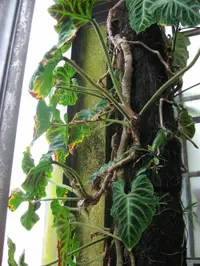
Catclaw vine Care (Dolichandra unguis-cati)

Also known as: Cat's claw creeper
Catclaw vine

About Catclaw vine

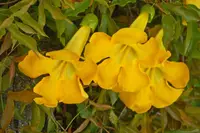
Catclaw vine (Dolichandra unguis-cati) is a fast-growing, woody climber known for its small claw-like tendrils that hook firmly onto walls, fences, and trees. It forms dense, evergreen foliage with bright yellow, trumpet-shaped flowers. Native to tropical and subtropical areas of Central and South America, it often behaves aggressively in warm climates and can become invasive outdoors. The plant tolerates poor soils and short dry spells once established, which makes it robust but sometimes difficult to control. Understanding how to care for Catclaw vine involves providing strong support, enough sun, and soil that drains well while managing its vigorous spread.

Main Plant Requirements

Care Difficulty

Easy Care

Light Preference

Full Sun

Water Requirements

Moderate Water

Temperature Preference

Warm Climate

Hardiness Zone

9–11

Soil Texture

Sandy, Loamy, Organic-rich

Soil pH

Acidic (5.5–6.5), Slightly acidic (6.5–7.0)

Soil Drainage

Well-drained

Fertilization

Minimal (feed rarely)

Get Personalized Care Plan

Scan your plant to receive care tips personalized for your specific plant

Available on iOS and Android

How to Care for the Catclaw vine

This vigorous climber prefers bright, direct sun in most warm climates.

  • Provide 6–8 hours of full sun daily for strongest flowering; morning and midday sun are ideal, with light afternoon shade in very hot regions.
  • It tolerates light or dappled shade for part of the day, but Catclaw vine may produce fewer blooms and stretch toward brighter areas.
  • Watch foliage for stress: pale, sparse leaves and long internodes indicate too little light, while scorched, crispy leaf edges suggest harsh, all-day afternoon sun.

This woody vine prefers deep, infrequent watering once established.

  • In the ground, water when the top 5–7 cm of soil feel dry, soaking the root zone thoroughly, then allow the soil to dry again before the next watering.
  • Reduce irrigation in cool seasons when growth slows, increasing frequency only during hot, dry spells; Dolichandra unguis-cati becomes more drought tolerant with age.
  • Ensure sharply draining soil; signs of overwatering include yellowing, soft leaves and root rot smell, while severe wilting and brittle stems indicate prolonged dryness.

This subtropical climber grows best in warm, frost-free conditions.

  • Aim for an active growth range of 65–85°F (18–29°C), where stems and foliage develop quickly and flowering is most reliable.
  • The vine tolerates short drops to about 30°F (−1°C), but foliage may be damaged; repeated or hard frosts below 28°F (−2°C) can kill top growth.
  • In hot climates with summer peaks above 95°F (35°C), provide soil mulch and light afternoon shade to reduce heat stress and protect roots.

This vigorous vine is adaptable and humidity is rarely a limiting factor in typical home or outdoor conditions.

This species prefers free-draining, moderately fertile soil that does not stay waterlogged.

  • Use a loamy or sandy soil structure enriched with modest organic matter for both aeration and nutrient supply.
  • Ensure rapid drainage by incorporating mineral components such as coarse sand or fine gravel, especially in heavy or compacted ground.
  • Aim for slightly acidic to neutral pH (6.0–7.5), avoiding strongly alkaline sites where nutrient uptake becomes less efficient.
  • Avoid dense clay, standing water, or continuously saturated beds, as Dolichandra unguis-cati is prone to root stress in poorly aerated substrates.

This vine can be grown successfully in containers if the pot is sized and weighted to manage its vigorous climbing habit.

  • Choose a wide, heavy container to counterbalance the top-heavy growth once the vine climbs a trellis or support.
  • Use a deep pot that allows a strong root system to anchor the plant and reduces the risk of the container tipping in wind.
  • Select a thicker-walled or non-porous pot material if rapid moisture loss in hot, exposed locations is a recurring issue.

Dolichandra unguis-cati responds well to modest feeding in active growth but usually needs no heavy fertilization.

  • Apply a balanced slow-release fertilizer (for example 10-10-10) in early spring at label rates to support new growth.
  • Supplement poor soils with a thin layer of compost around the root zone once a year, keeping it off stems.
  • If using liquid feed, dilute to 1/2 strength and apply every 4–6 weeks during the growing season only.
  • Stop feeding in late summer to early fall so growth can harden before winter, avoiding soft, frost-prone shoots.

Pruning helps manage Dolichandra unguis-cati’s vigorous growth and supports flowering and structure.

  • Carry out main pruning in late winter to early spring, before strong new growth begins.
  • Remove dead, damaged, or crossing stems first, then thin overly crowded shoots to open the canopy.
  • Shorten excessively long vines to control spread and maintain the desired framework or support coverage.
  • Use clean, sharp bypass pruners and make angled cuts just above a healthy bud or side branch.

This species is most often planted in the ground, so focus on careful transplanting rather than frequent repotting.

  • Transplant in spring when soil is warming and the plant resumes growth, which reduces stress and improves establishment.
  • Look for roots circling the pot, water running straight through, or slowed growth as signs a container plant needs more space.
  • Shift into a container or planting hole 1–2 sizes larger, using well-drained soil and gently loosening congested roots.
  • Water thoroughly after planting, provide shade or wind protection for 1–2 weeks, and keep soil evenly moist until new growth appears.

Dolichandra unguis-cati is commonly propagated from cuttings and also by seeds or natural layering.

  • Take semi-ripe stem cuttings in late spring to summer, 10–15 cm long, with 2–3 nodes each.
  • Remove lower leaves, dip the cut end in rooting hormone, and place in a moist, free-draining mix under bright, indirect light.
  • Maintain high humidity (for example with a clear cover) and warm temperatures around 70–75°F to encourage rooting.
  • Sow fresh seeds in spring in a light seed mix, barely covered, and keep evenly moist until germination.

In mild climates this vine needs limited winter care, but colder regions require some protection.

  • Mature plants tolerate light frosts, but prolonged freezes below about 25°F can damage stems and young growth.
  • Apply a 5–8 cm layer of organic mulch over the root zone in late fall, keeping it slightly away from the main stem.
  • In colder areas, grow Dolichandra unguis-cati in containers and move plants indoors to a bright, cool, frost-free space.

Care Tips

Root zone control

Install a deep root barrier or plant in a large, heavy container to limit underground spread and make future removal or relocation more manageable when growing Catclaw vine.

Early tendril training

As new shoots appear in spring, loosely tie them to wires or a sturdy trellis before the clawed tendrils harden, so the vine climbs in the desired direction and does not damage gutters or rooflines.

Wall and fence protection

Use tensioned wires, mesh, or a dedicated support frame set a few centimeters off walls or fences to keep the tendrils from adhering directly to masonry, paint, or timber surfaces.

Aggressive sucker removal

Check surrounding soil and nearby beds a few times per season and promptly dig out any satellite shoots with a trowel, removing as much of the connecting root as possible to prevent unwanted colonization.

Post-bloom cleanup

After the main flowering flush, remove developing seed pods and spent clusters to reduce self-seeding, conserve plant energy, and keep the vine from spreading into adjacent areas.

Common Pests and Diseases

Caterpillars

This pest feeds on young leaves and soft shoots, often leaving irregular holes and chewed edges along Catclaw vine runners.

Solution

Hand-pick caterpillars in the early morning or evening, then prune and dispose of heavily damaged shoots. Encourage or introduce natural predators such as birds, and if damage is persistent, use a targeted biological product containing Bacillus thuringiensis (Bt) following label directions on outdoor vines only.

Leaf spot

This disease causes small brown to dark lesions on leaves that may merge into larger patches, especially in warm, humid weather or on dense, unpruned vines.

Solution

Remove and discard affected leaves, then thin and prune the vine to improve air movement and light penetration. Avoid overhead watering, and if spotting continues in wet conditions, apply a copper-based fungicide to the foliage according to label instructions.

Powdery mildew

This disease shows as white, powdery patches on upper leaf surfaces and young shoots, which can lead to yellowing and premature leaf drop under dry-warm conditions with poor air circulation.

Solution

Increase spacing and prune congested stems to improve airflow, and water at the base instead of wetting foliage. At early signs, treat with a labeled sulfur or potassium bicarbonate product and repeat as needed, following instructions to prevent leaf burn.

Scale insects

These insects appear as small, dome-shaped or oval bumps on stems and leaf midribs, sucking sap and causing yellowing, reduced vigor, and sticky honeydew on established vines.

Solution

Wipe stems with a cloth or cotton swab dipped in diluted alcohol to remove small colonies, then prune out heavily infested sections. For outdoor plantings with persistent scale, use horticultural oil sprays during mild weather, thoroughly coating stems and the undersides of leaves.

Nematode damage

This pest complex involves microscopic soil worms that attack roots, leading to poor growth, sparse foliage, and reduced flowering, especially in sandy or previously infested soils where the vine is long-lived and spreading.

Solution

Remove and discard severely affected plants and avoid replanting Catclaw vine in the same spot, then improve soil with organic matter and use resistant or non-host species in problem areas. In existing plantings, maintain even moisture, mulch around the base, and avoid root disturbance to help the vine tolerate some nematode pressure.

Interesting Facts

Hooked climbing claws

This vine climbs by producing small, three-pronged, claw-like tendrils that hook into bark, cracks, and rough surfaces, allowing it to anchor very firmly to trees, rocks, and masonry.

Aggressive root tubers

It forms extensive underground tubers that store water and carbohydrates, which makes the plant very drought-tolerant but also difficult to remove once established.

Seed pods and winged seeds

After flowering, it produces long, flattened seed pods containing many papery, winged seeds that are easily dispersed by wind and help the plant spread rapidly in suitable climates.

Botan icon

Did you know?

In several warm regions outside its native range in tropical America, including parts of Australia and South Africa, this species is listed as a serious environmental weed because it can blanket and smother native vegetation, forming dense curtains over tree canopies.

FAQs about Catclaw vine

This species spreads very aggressively via long stems and underground tubers. In mild climates it can overwhelm fences, trees, and nearby plantings. Regular pruning, root barrier edging, and prompt removal of unwanted shoots help limit spread when growing Dolichandra unguis-cati.

Grow Healthy Plants with Botan Care

Keep your plants happy and healthy with plant identification, disease detection, and easy care guidance.

Botan plant care app — identify plants on mobile

Explore More Plants