Pinkball Care (Dombeya wallichii)

Also known as: Scarlet Dombeya
Pinkball

About Pinkball

Pinkball, Dombeya wallichii, is a fast-growing evergreen shrub or small tree from Madagascar and nearby islands. It is valued for its large, rounded clusters of soft pink flowers. The plant typically forms a dense canopy of broad, heart-shaped leaves, creating a lush, tropical look in gardens or large containers. It is often grown in mild climates outdoors, or under protection in cooler regions. Dombeya wallichii prefers bright light, moderate moisture, and well-drained soil. With suitable space and regular pruning, it is relatively straightforward to care for Pinkball.

Main Plant Requirements

Care Difficulty

Moderate Care

Light Preference

Full Sun

Water Requirements

Regular Water

Temperature Preference

Tropical / Frost Sensitive

Hardiness Zone

10–11

Soil Texture

Loamy, Sandy, Organic-rich

Soil pH

Acidic (5.5–6.5), Slightly acidic (6.5–7.0)

Soil Drainage

Moist but well-drained

Fertilization

Light (every 4–6 weeks)

Get Personalized Care Plan

Scan your plant to receive care tips personalized for your specific plant

Available on iOS and Android

How to Care for the Pinkball

This shrub thrives in bright outdoor light with some protection from harsh extremes.

  • Provide 4–6 hours of direct morning sun with light afternoon shade; Pinkball handles full sun in mild coastal climates but benefits from filtered light inland.
  • In hotter regions, protect from intense sun from 11 a.m.–4 p.m. to reduce leaf scorch and flower fade.
  • In partial shade (2–4 hours sun), flowering decreases; prune surrounding plants or reposition young plants to increase light before flowering season.

This plant prefers consistently moist but not saturated soil, especially during active growth.

  • In the ground, water when the top 3–5 cm of soil feels dry; in hot weather this may mean deep watering 1–2 times per week, less often in cool seasons.
  • Use well-drained soil; puddling for longer than 30 minutes after watering suggests poor drainage and raises root-rot risk.
  • Underwatering shows as limp, curling leaves and premature flower drop; overwatering shows as yellowing lower leaves and soft stems, so adjust frequency rather than volume.

This warm-climate shrub grows best in stable, mild to warm conditions without frost exposure.

  • Optimal growth occurs around 65–85°F (18–29°C), with strongest flowering where nights stay above 55°F (13°C).
  • Mature plants can survive brief drops to about 30–32°F (-1–0°C), but flowers and young growth are often damaged; repeated frosts can kill branches.
  • Tolerates heat up to about 95°F (35°C) if soil moisture is steady and roots are mulched; in heatwaves, reduce stress with extra shade and avoid pruning or transplanting.

This species benefits from moderately high humidity, especially in warm indoor or conservatory settings.

  • Aim for 50–70% humidity; it tolerates brief dips lower but sustained very dry air slows growth and leaf quality.
  • Crisp leaf edges, curling, and stalled buds indicate humidity stress in Pinkball, especially during heated indoor winters.
  • Increase humidity with grouped plants, a nearby humidifier, or a pebble tray under (not touching) the pot, rather than misting leaves.

This shrub prefers deep, moisture-retentive yet draining soil that supports fast growth and heavy flowering.

  • Use a loamy mix with high organic matter, such as 2 parts composted bark or garden loam, 1 part compost, and 1 part coarse sand or perlite.
  • Ensure rapid drainage; water should infiltrate quickly and not pool on the surface or in the saucer after watering.
  • Keep pH slightly acidic to neutral (6.0–7.0) to support nutrient uptake and prevent micronutrient lockout in Dombeya wallichii.
  • Avoid compacted clay, poorly aerated sites, or heavy peat-only mixes; incorporate coarse material and organic matter to improve structure and root oxygen.

This species can be grown in containers if the pot is large, stable, and allows rapid excess water escape.

  • Select a wide, heavy container that resists tipping as the shrub becomes tall and top-heavy in wind or on balconies.
  • Choose a potting mix that drains in seconds yet holds moisture, such as shrub mix amended with extra coarse bark or perlite for air space.
  • Elevate the pot on feet or bricks so drainage holes stay clear and water runs off freely instead of backing up into the root zone.

Dombeya wallichii responds well to moderate feeding during active growth for best flowering and foliage density.

  • Use a balanced, slow-release granular fertilizer (for example 10-10-10) in spring, worked lightly into the topsoil around the drip line.
  • Supplement with a thin layer of compost once a year to improve soil structure and microbial activity when caring for Pinkball.
  • Feed every 6–8 weeks in the growing season, using 1/2-strength rates if using liquid fertilizer to reduce salt stress.
  • Stop feeding in late summer or early fall so new growth can harden before winter, and avoid fertilizing in winter dormancy.

Thoughtful pruning keeps Dombeya wallichii compact, safe, and flowering well.

  • Carry out main pruning just after flowering, removing spent flower clusters and lightly shortening overly long shoots.
  • Cut out dead, diseased, crossing, or inward-growing branches to improve air flow and reduce pest and disease pressure.
  • Use clean, sharp bypass pruners or loppers, making cuts just above outward-facing buds or side branches.
  • Shape the canopy gradually over several seasons rather than making heavy cuts in one year to avoid stress and poor regrowth.

This species is usually grown in the ground, so focus on careful transplanting or upsizing large containers.

  • Plan major transplanting for late winter to early spring, before vigorous new growth, to reduce shock.
  • Look for signs such as roots circling the pot, pushing through drainage holes, or noticeably slowed growth as cues to move or up-pot every 2–3 years.
  • Dig a wide planting hole, keep the root ball intact, and set the plant at the same soil level to limit root disturbance.
  • Water thoroughly after transplanting, then maintain even moisture and temporary shade for 1–2 weeks while the root system re-establishes.

This ornamental shrub is most often propagated from semi-ripe cuttings under warm, humid conditions.

  • Take 8–12 cm semi-ripe stem cuttings in late spring to midsummer, choosing non-flowering shoots with healthy leaves.
  • Remove lower leaves, dip the cut end in rooting hormone, then insert into a free-draining mix such as 50% perlite and 50% peat or coco coir.
  • Maintain bottom warmth around 70–75°F, high humidity, and bright, indirect light to support root formation over several weeks.
  • Seeds may be sown in warm conditions, but germination is slower and less reliable than vegetative cuttings.

This tropical shrub is frost-sensitive and needs protection in regions with cold winters.

  • In USDA zones below about 9, grow in large containers so plants can be moved indoors or into a heated greenhouse before nights drop near 32°F.
  • For in-ground plants in mild climates, apply a 5–8 cm mulch layer over the root zone, keeping it slightly away from the trunk.
  • Cover young or marginally hardy plants with breathable frost cloth during short cold snaps to reduce leaf and stem damage.

Care Tips

Early framework training

In the first 2–3 years, select 3–5 strong main stems and remove competing shoots to build a stable framework that will support the heavy flower clusters later on.

Support heavy trusses

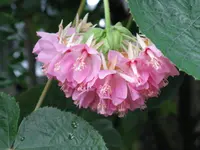
Before flowering, install discreet stakes or soft ties to help carry the weight of large hanging flower clusters and reduce the risk of branches snapping in wind or rain.

Post-bloom clean‑up

After the main flowering flush, remove spent flower heads and any weak, twiggy interior growth to reduce disease pressure and encourage stronger new shoots for next season.

Wind shelter planning

Position the plant where buildings, fences, or taller shrubs break prevailing winds, or create a simple windbreak with lattice or shade cloth to protect the brittle branches and large leaves.

Container root management

For long‑term container culture, root prune and repot every 2–3 years, trimming back circling roots and refreshing the outer third of the root ball to keep growing Pinkball vigorous and compact.

Common Pests and Diseases

Spider mites

This pest often appears on Dombeya foliage during hot, dry periods, causing fine stippling and a dull, dusty look on leaves. Symptoms include fine webbing on the undersides of leaves and gradual yellowing or bronzing.

Solution

Rinse foliage thoroughly with a strong but controlled stream of water, especially the undersides of leaves, then repeat every few days until populations drop. In persistent cases, use insecticidal soap or a horticultural oil labeled for spider mites, applied in the early morning or evening and repeated as directed, while increasing ambient humidity and reducing plant stress to support recovery.

Mealybugs

These insects feed on tender shoots and leaf nodes, leaving white cottony clusters and sticky honeydew on leaves and stems. Symptoms include distorted new growth and sooty mold development on the sugary residue.

Solution

Isolate the plant if possible, then dab visible clusters with cotton swabs dipped in 70% isopropyl alcohol and prune heavily infested twigs. Follow with regular applications of insecticidal soap or a light horticultural oil, making sure to coat leaf axils and undersides, and monitor new growth closely as part of long-term Dombeya wallichii care.

Scale insects

This pest appears as small, dome-shaped or flattened bumps attached firmly to stems and sometimes leaves, often accompanied by honeydew and sooty mold. Symptoms include yellowing leaves, reduced vigor, and dieback of affected twigs if populations are heavy.

Solution

Gently scrape or rub off accessible scales with a soft brush or cloth and prune out severely infested branches. Apply horticultural oil during mild weather to smother remaining scale, repeating according to label directions, and improve light and air circulation around the shrub to help new, healthy growth replace damaged tissue.

Sooty mold

This disease is a superficial black fungal growth that develops on leaves and stems where honeydew from sap-feeding insects has accumulated. Symptoms include black, velvety coatings that block light from leaves and reduce photosynthesis, though underlying tissues are not directly invaded.

Solution

Control the source insects such as aphids, scale, or mealybugs first, then gently wash affected foliage with lukewarm water and a small amount of mild liquid soap, rinsing thoroughly. Improve airflow and light penetration by thinning dense growth, which helps leaves dry quickly and reduces the chances of mold reappearing.

Leaf spot

This disease causes small brown, tan, or purplish spots on leaves, sometimes with yellow halos and premature leaf drop in humid, crowded conditions. Symptoms include patchy thinning of the canopy and a generally stressed appearance when infections are repeated over several seasons.

Solution

Remove and discard affected leaves from the plant and ground to reduce inoculum, and water at the base rather than overhead to keep foliage dry. Improve spacing and pruning for better airflow, and in severe, recurring cases use a copper-based or other labeled ornamental fungicide during warm, wet periods, following all label instructions carefully.

Interesting Facts

Winter-blooming shrub

This species typically flowers in the cooler months, often from late fall through winter in mild climates, producing large, pendulous clusters of pink, bell-shaped blossoms when many other ornamentals are not in bloom.

Fragrant, nectar-rich clusters

The rounded flower clusters can reach the size of a small grapefruit and produce a noticeable sweet fragrance, attracting bees and other pollinators that remain active in warm-winter regions.

Malvaceae family relative

This species belongs to the mallow family, Malvaceae, making it a relative of hibiscus, cotton, and cacao, which explains its palmate leaves and characteristic radial, five-petaled flowers.

Botan icon

Did you know?

In suitable subtropical and tropical climates, this species can grow into a small tree around 4–6 m tall with a broad, spreading canopy, which makes its dense, spherical flower clusters particularly striking when seen from below.

FAQs about Pinkball

Lack of flowers often comes from insufficient light, heavy or incorrect pruning, or low nutrients. Mature wood usually blooms best. Overfertilizing with nitrogen can push leafy growth instead of buds, reducing the winter flower display.

Grow Healthy Plants with Botan Care

Keep your plants happy and healthy with plant identification, disease detection, and easy care guidance.

Botan plant care app — identify plants on mobile

Explore More Plants