Rotate For Symmetry
Turn the pot 90° every 2–3 weeks so the rosette receives light from all sides, which keeps the stem straight and prevents leaning or lopsided growth when growing Dracaena canaliculata.

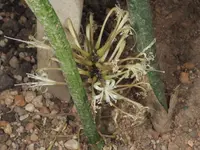
Dracaena canaliculata is a woody, shrubby dracaena with narrow, channeled leaves that often form rosettes on cane-like stems. It tends to grow upright and compact, making it suitable for containers and indoor displays.
This species is native to parts of Madagascar and nearby regions, where it grows in warm, relatively dry habitats. Its slow to moderate growth and tolerance for occasional neglect make it reasonably manageable for home growers.
It prefers bright, filtered light, modest watering, and well-drained soil. Understanding how to care for Dracaena canaliculata starts with avoiding constant wet roots and very low light conditions.

Care Difficulty
Moderate Care

Light Preference
Bright Indirect Light

Water Requirements
Moderate Water

Temperature Preference
Tropical / Frost Sensitive

Hardiness Zone
11–12

Soil Texture
Sandy, Loamy, Organic-rich

Soil pH
Acidic (5.5–6.5), Slightly acidic (6.5–7.0)

Soil Drainage
Well-drained

Fertilization
Light (every 4–6 weeks)
Scan your plant to receive care tips personalized for your specific plant
Available on iOS and Android
This species prefers bright, filtered light and is sensitive to harsh, direct sun at midday.
Watering should keep the root zone lightly moist but never saturated to prevent rot in this species.
Stable, warm conditions support steady growth and reduce stress for Dracaena canaliculata.
This species prefers moderate indoor humidity and tolerates typical dry-room conditions.
This plant prefers a loose, fast-draining, slightly acidic to neutral mix.
This species is well suited to container growing.
This species grows slowly and needs only light, periodic feeding in containers.
This plant benefits from light structural pruning to maintain a clean form and encourage branching.
Container-grown plants respond well to careful repotting, while established landscape specimens dislike frequent disturbance.
New plants are most often produced from stem cuttings taken from healthy, actively growing shoots.
This species is frost sensitive and needs protection in regions with cool or freezing winters.

Plant Health Check
Not sure what's wrong with your plant? Check your plant's health inside the app.
The species name canaliculata refers to the finely grooved or channeled texture on its stems and sometimes leaf bases, a feature that helps distinguish it from many other dracaenas with smoother canes.
This species is native to dry forests and thickets of Madagascar, where it grows in seasonally arid conditions with strong light and well-drained, often rocky substrates.
It forms a woody, upright trunk with relatively slow vertical growth, producing leaves in tufts or clusters near the stem tips rather than evenly spaced along the stem.
Growth is generally slow to moderate. Indoors, expect around 5–15 cm of new stem per year, sometimes less in low light. Limited root space, cool temperatures, and low nutrients further reduce growth compared with outdoor tropical conditions.
Keep your plants happy and healthy with plant identification, disease detection, and easy care guidance.