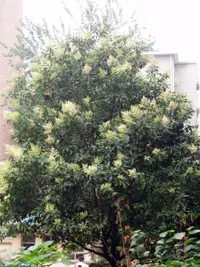
Deep container choice
Use a tall, heavy container with excellent drainage so the long taproot can develop straight down and the tree is less likely to topple as the crown becomes broader and heavier.

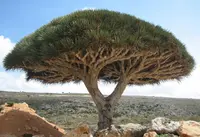
The dragon's blood tree, Dracaena cinnabari, is a slow-growing succulent tree known for its dense, umbrella-shaped crown and distinctive red resin. It forms a single trunk that branches repeatedly, creating a sculptural outline that looks almost architectural.
This species is native to the dry, rocky plateaus of Socotra, an island in the Arabian Sea, where it adapts to strong sun and limited water. Its tough leaves, drought tolerance, and slow growth make it relatively demanding indoors, as it dislikes overwatering and poor light.
Those wanting to learn how to care for Dragon's Blood Tree should know it prefers bright, indirect to mildly direct light, well-drained gritty soil, and careful, infrequent watering.

Care Difficulty
Hard Care

Light Preference
Full Sun

Water Requirements
Low Water

Temperature Preference
Tropical / Frost Sensitive

Hardiness Zone
12–13

Soil Texture
Sandy, Rocky, Loamy

Soil pH
Slightly acidic (6.5–7.0), Neutral (7.0)

Soil Drainage
Well-drained

Fertilization
Minimal (feed rarely)
Scan your plant to receive care tips personalized for your specific plant
Available on iOS and Android
This arid-climate tree prefers strong light but suffers in extreme, reflected midday sun.
This drought-adapted species prefers thorough but infrequent watering in sharply draining soil.
This desert tree thrives in warm, dry conditions and is sensitive to frost.
This species tolerates relatively dry air but grows best with moderate, stable humidity.
This drought-adapted tree requires very fast-draining, mineral-rich soil to prevent root rot.
This species is suitable for long-term container growing when planted in a stable, heavy pot with sharp drainage.
This species grows slowly on poor soils, so fertilizing Dragon's Blood Tree should stay light and infrequent.
Pruning Dracaena cinnabari is minimal and mainly for safety, health, and structure.
Dracaena cinnabari grows slowly and dislikes disturbance, so transplant only when clearly necessary.
Reproducing Dracaena cinnabari is usually done from seed and requires patience and warm, dry-adapted conditions.
This dryland tree is not frost-hardy and needs careful winter management in most temperate climates.

Plant Health Check
Not sure what's wrong with your plant? Check your plant's health inside the app.
This dragon tree is endemic to the island of Socotra in the Arabian Sea and forms distinctive umbrella-shaped woodlands on the island’s high limestone plateaus and granite mountains.
Its famous red resin, called dragon’s blood, contains complex phenolic compounds such as flavonoids and resin acids, which give the sap its deep color and help seal wounds on the tree.
The densely packed, upward-pointing leaves and umbrella crown help intercept fog and light rain, directing water toward the trunk base and root zone in its extremely arid habitat.

Fossil and historical evidence suggest this species once had a much wider range around the Arabian Peninsula, but it is now restricted mainly to Socotra and is classified as Vulnerable by the IUCN due to habitat loss and poor regeneration.
Brown leaf tips usually come from low humidity, underwatering, or salt buildup from fertilizer. Entire brown leaves often indicate root stress or past drought. Trim damaged leaves, flush the soil, and stabilize watering and humidity.
Keep your plants happy and healthy with plant identification, disease detection, and easy care guidance.