Dracaena concinna Care

Dracaena concinna

About Dracaena concinna

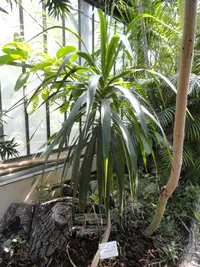
Dracaena concinna is an evergreen tropical shrub grown mainly as a foliage houseplant. It forms upright canes topped with narrow, arching leaves that create a clean, architectural look indoors. In nature, this species occurs in warm, humid regions, where it grows in filtered light under taller vegetation. Its slow to moderate growth and relatively compact habit make it suitable for smaller spaces and container culture. This plant is considered moderately easy, as it tolerates some neglect, uneven watering, and indoor humidity, but it resents waterlogged soil and very low light. Understanding how to care for Dracaena concinna focuses on providing bright, indirect light, lightly moist but well-drained soil, and stable indoor temperatures.

Main Plant Requirements

Care Difficulty

Easy Care

Light Preference

Bright Indirect Light

Water Requirements

Moderate Water

Temperature Preference

Tropical / Frost Sensitive

Hardiness Zone

10–11

Soil Texture

Loamy, Sandy, Organic-rich

Soil pH

Acidic (5.5–6.5), Slightly acidic (6.5–7.0)

Soil Drainage

Well-drained

Fertilization

Light (every 4–6 weeks)

Get Personalized Care Plan

Scan your plant to receive care tips personalized for your specific plant

Available on iOS and Android

How to Care for the Dracaena concinna

This species prefers bright, filtered light that mimics light under a tree canopy.

  • Provide 6–8 hours of bright, indirect light daily; morning sun from an east window or lightly shaded outdoor spot suits Dracaena concinna well.
  • Allow partial shade, but avoid deep shade where new growth becomes thin, leaves lose color, and stems stretch toward the light source.
  • Protect from harsh midday or afternoon sun, which causes leaf scorch and crispy edges; in winter, move slightly closer to the light to compensate for shorter days.

This plant prefers evenly moist but not saturated soil and reacts quickly to excess water.

  • Water when the top 2–4 cm of soil feels dry, using enough water so some drains away, then discard any standing water to protect roots from rot.
  • In spring and summer, soil may dry faster and need more frequent checks; in fall and winter, extend the interval as growth slows and evaporation drops.
  • Watch for yellowing, soft lower leaves and a sour soil smell as signs of overwatering, and dull, curling, or browning leaf tips as signs it is staying too dry.

This species grows best in stable, warm conditions without sudden drafts.

  • Aim for 65–80°F (18–27°C) for steady growth; short exposure up to about 85°F (29°C) is usually tolerated if humidity and watering are adequate.
  • Avoid temperatures below 55°F (13°C); prolonged exposure near this level can slow growth, and near-freezing conditions can damage leaves and roots.
  • Protect from frost and cold drafts near doors or leaky windows, and from hot, dry air from heaters or vents that can cause browning leaf tips and stress.

This species manages well in typical indoor humidity if extremes are avoided.

  • Aim for 40–60% humidity to support steady growth without encouraging fungal issues.
  • Leaves curling inward or developing crispy brown tips indicate air that is too dry or inconsistent.
  • Increase humidity with a nearby open water tray or grouped plants, rather than misting directly onto foliage.

Use a loose, well-aerated mix that drains quickly but still holds moderate moisture for Dracaena concinna.

  • Choose a peat- or coco-based mix with added perlite and fine bark to create a slightly chunky, loamy structure.
  • Ensure rapid drainage; water should exit the pot within seconds, not pool on the surface.
  • Keep pH slightly acidic to neutral, around 6.0–7.0, to support nutrient uptake and avoid leaf chlorosis.
  • Avoid dense garden soil, heavy compost loads, or unamended clay that compresses and suffocates roots.

This species is well suited to container growing in homes and offices.

  • Select a pot only 2–4 in wider than the root ball to limit excess wet substrate and reduce rot risk.
  • Use a stable, heavier container if the plant grows tall, so the narrow stem does not tip the pot over.
  • Prefer thick-walled ceramic or terracotta pots when extra moisture loss is needed in low-light rooms.

Light, consistent feeding supports steady growth without stressing Dracaena concinna.

  • Use a balanced liquid fertilizer (around 10-10-10 or 20-20-20) diluted to 1/4–1/2 strength for container plants.
  • Apply every 4–6 weeks during spring and summer when growth is active.
  • Avoid fertilizing in late fall and winter, when growth slows and roots uptake less nutrients.
  • Flush the pot with plain water a few times per year to reduce salt buildup from fertilizers.

Pruning helps maintain a neat shape and encourages branching on Dracaena concinna.

  • Carry out light pruning in spring or early summer when the plant is actively growing.
  • Remove dead, yellowing, or damaged leaves at the base with clean, sharp scissors or pruners.
  • Shorten overly tall or leggy stems just above a node to encourage new side shoots.
  • Disinfect tools before and after use to limit disease spread between cuts or plants.

Repotting keeps root health and moisture balance stable for Dracaena concinna in containers.

  • Check for roots circling the pot, growing from drainage holes, or noticeably slowed growth as signs to repot.
  • Plan to move the plant to a container 2–5 cm wider every 2–3 years in spring.
  • Use a fresh, free-draining mix and gently loosen circling roots to encourage new growth outward.
  • Water thoroughly after repotting, then keep in bright, indirect light and avoid heavy feeding for 3–4 weeks to limit stress.

Propagation of Dracaena concinna is commonly done from stem cuttings under warm, stable conditions.

  • Take 8–15 cm stem cuttings in late spring or summer from healthy, non-flowering shoots.
  • Remove lower leaves, then place the cut end in water or a sterile, moist, well-drained rooting mix.
  • Maintain 70–80°F, high humidity, and bright, indirect light to support rooting.
  • After roots reach 3–5 cm, pot cuttings individually and keep slightly moist until established.

Winter care focuses on temperature stability and moderate moisture for this frost-sensitive plant.

  • Keep Dracaena concinna indoors or in a heated space where temperatures stay above 55°F.
  • Position away from cold drafts, exterior doors, and uninsulated windows to prevent leaf damage.
  • Water less often in winter, allowing the top 3–5 cm of soil to dry before watering again.
  • Avoid cold, wet soil by using a free-draining mix and emptying saucers after watering.

Care Tips

Rotate For Symmetry

Turn the pot 90° every 2–3 weeks so new leaves distribute evenly and the cane does not lean strongly toward the light source.

Support Tall Canes

Once stems exceed 60–80 cm, insert a slim stake near the cane and secure it loosely with soft ties to prevent bending or cracking at the base.

Clean Leaf Blades

Wipe leaves every 4–6 weeks with a barely damp, soft cloth to remove dust, which improves light capture and makes early pest spotting easier when caring for Dracaena concinna.

Refresh Potting Zone

Every 1–2 years, gently scrape away the top 2–3 cm of old mix and replace it with fresh, well-draining potting medium to reduce salt buildup without disturbing roots heavily.

Inspect Cane Tissue

Check the canes a few times per year for soft or shriveled sections and trim back to firm, healthy tissue with sterilized pruners to stop hidden rot from progressing.

Common Pests and Diseases

Fluoride leaf tip burn

Symptoms include brown, dried leaf tips and margins, often on older leaves, while the rest of the leaf remains mostly green. This disorder is linked to sensitivity to fluoride and sometimes high soluble salts in tap water or low-quality potting mixes.

Solution

Use low-fluoride water such as filtered, distilled, or rainwater, and flush the pot thoroughly every 1–2 months to leach built-up salts. Repot in a fresh, peat-free, well-draining mix labeled as low in added fluoride, trim damaged tips if desired, and avoid superphosphate fertilizers that can add extra fluoride as part of standard Dracaena concinna care instructions.

Soft scale

This pest forms dome-shaped, tan to brown bumps along stems and leaf midribs and produces sticky honeydew that can lead to sooty mold. Infestations often cause yellowing leaves, stunted growth, and a generally sticky plant surface.

Solution

Physically remove scales by gently scraping or wiping with a cotton pad dipped in 70% isopropyl alcohol, then wash foliage with lukewarm soapy water and rinse. For persistent cases, repeat cleaning weekly and apply a horticultural oil spray, ensuring thorough coverage of stems and leaf undersides while improving light and airflow around the plant.

Spider mites

These insects are tiny sap-feeding arachnids that thrive in warm, dry indoor air and cause fine stippling, dull foliage, and delicate webbing between leaves. This pest can cause leaf drop and overall decline if not controlled early.

Solution

Shower the plant with a strong, lukewarm water spray to dislodge mites, then wipe leaves carefully, including undersides. Increase humidity around the plant, isolate it from others, and repeat washing or use a labeled insecticidal soap or horticultural oil every 5–7 days until no new webbing or stippling appears.

Mealybugs

This pest appears as white, cottony clusters in leaf axils, along stems, and on roots, feeding on sap and weakening the plant. Honeydew and sooty mold may follow, and heavily infested leaves may yellow and drop.

Solution

Isolate the plant, then dab visible mealybugs with cotton swabs dipped in 70% isopropyl alcohol and rinse the foliage with lukewarm soapy water. Inspect weekly, repeat spot treatments, and consider a systemic insecticide labeled for indoor ornamentals if infestations persist, taking care to follow all safety directions.

Fusarium leaf spot

This disease produces small, water-soaked spots that turn tan to reddish-brown with possible yellow halos, often expanding along leaf margins. Severe infections can cause premature leaf yellowing and drop, especially in plants kept too wet or crowded with poor air circulation.

Solution

Remove and discard affected leaves, keep foliage dry during watering, and improve air circulation around the plant by spacing it from neighboring pots. Allow the top 3–5 cm of soil to dry between waterings, avoid overhead misting on foliage, and if the problem continues, apply a fungicide labeled for Fusarium leaf spots on indoor ornamentals according to package directions.

Interesting Facts

Naturally compact habit

Compared with many other Dracaena species, this plant tends to stay relatively short and densely leafed, forming a compact rosette that makes it suitable for small indoor spaces without extensive pruning.

Narrow arching foliage

Its leaves are characteristically narrow, linear, and gracefully arching, creating a fine-textured, fountain-like silhouette rather than the broader, strap-like look of related species.

Taxonomic uncertainty

The name Dracaena concinna has been applied inconsistently in horticulture, and some botanists consider it a variant or misapplied name within a complex group of similar Dracaena species, so plants sold under this label may not all be genetically identical.

FAQs about Dracaena concinna

Brown tips usually result from low humidity, excess fertilizer salts, or fluoride/chlorine in tap water. Use filtered or dechlorinated water, leach the pot occasionally, avoid overfertilizing, and keep the plant away from hot or cold drafts.

Grow Healthy Plants with Botan Care

Keep your plants happy and healthy with plant identification, disease detection, and easy care guidance.

Botan plant care app — identify plants on mobile

Explore More Plants