Striped Dracaena Care (Dracaena fragrans 'Warneckii')

Also known as: Corn Plant
Striped Dracaena

About Striped Dracaena

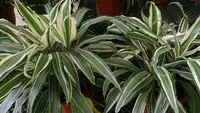
Striped dracaena, Dracaena fragrans 'Warneckii', is a tropical foliage plant valued for its upright, cane-like stems and dense rosettes of narrow, arching leaves. The leaves are gray-green with bold cream to white stripes, giving the plant a clean, architectural look that suits modern interiors.

This cultivar originates from tropical Africa, where the species grows as an understory shrub in warm, shaded forests. It adapts well to indoor conditions, grows slowly to moderately, and generally tolerates occasional care mistakes, which makes it approachable to care for Striped Dracaena.

It prefers bright, indirect light, evenly moist but not waterlogged soil, and stable indoor temperatures without cold drafts.

Main Plant Requirements

Care Difficulty

Easy Care

Light Preference

Bright Indirect Light

Water Requirements

Moderate Water

Temperature Preference

Tropical / Frost Sensitive

Hardiness Zone

10–12

Soil Texture

Loamy, Sandy, Organic-rich

Soil pH

Acidic (5.5–6.5), Slightly acidic (6.5–7.0)

Soil Drainage

Moist but well-drained

Fertilization

Light (every 4–6 weeks)

Get Personalized Care Plan

Scan your plant to receive care tips personalized for your specific plant

Available on iOS and Android

How to Care for the Striped Dracaena

This plant prefers bright, indirect light to keep its striped leaves healthy and well defined.

  • Provide 6–8 hours of bright, filtered light each day, such as near an east- or north-facing window with sheer curtains.
  • Tolerates partial shade, but Striped Dracaena may develop slower growth and duller variegation if kept in low light for many months.
  • Avoid strong midday or afternoon sun, especially outdoors in summer, as it can cause leaf scorch; give more filtered light in bright seasons.

Watering should keep the root zone lightly moist but never saturated.

  • Allow the top 3–5 cm of soil to dry before watering, checking with a finger rather than following a fixed schedule.
  • In spring and summer, expect more frequent watering as growth and evaporation increase; reduce frequency in fall and winter.
  • Dracaena fragrans 'Warneckii' dislikes soggy conditions, so use free-draining soil and watch for yellowing, soft leaves as a sign of overwatering.

Stable, moderate temperatures support steady growth and limit stress for this foliage plant.

  • Aim for 65–80°F (18–27°C) for best growth, with minimal daily temperature swings where possible.
  • Protect from cold; growth slows below 60°F (16°C) and tissue damage can occur near 40°F (4°C), especially with any frost.
  • In hotter periods above 85°F (29°C), increase air movement and shade from harsh sun to reduce heat stress and leaf tip burn.

This species handles typical indoor humidity but benefits from slightly moist air.

  • Aim for 40–60% humidity to reduce leaf tip browning and keep growth steady.
  • It tolerates drier air, but prolonged levels under 30% often cause crispy brown margins and slow growth.
  • Increase humidity with a nearby humidifier, grouping plants, or a wide pebble tray, and avoid misting into leaf whorls to prevent rot.

This plant prefers a loose, slightly acidic to neutral, well-drained potting medium.

  • Use a peat- or coco-based mix with added perlite or pumice for a light, airy structure that drains freely.
  • Aim for pH 6.0–7.0, which supports nutrient uptake without risking micronutrient lockout or toxicity.
  • Blend 60–70% all-purpose potting mix with 20–30% perlite and 10–20% fine bark to improve aeration.
  • Avoid compacted, clay-heavy, or constantly wet substrates, which lead to root suffocation and rot in Dracaena fragrans 'Warneckii'.

This species is well suited to container growing and adapts to a range of indoor and sheltered outdoor sites.

  • Choose a tall, heavy-bottomed pot to counterbalance the upright, cane-like stems and prevent tipping as it gains height.
  • Select containers made from slightly porous materials such as unglazed clay if the environment is humid, to help moisture evaporate between waterings.
  • Use a pot only 2–5 cm wider than the root ball so the soil mass dries evenly and does not stay wet around the roots.

This plant benefits from moderate feeding during active growth to support healthy striped foliage in Striped Dracaena.

  • Use a balanced liquid fertilizer (such as 10-10-10 or 20-20-20) diluted to 1/4–1/2 strength for indoor plants.
  • Feed every 4–6 weeks in spring and summer when growth is active.
  • Skip or reduce feeding to 1 light application for the whole period in fall and winter, when growth slows.
  • Avoid organic compost-heavy mixes in pots; instead use a synthetic or well-filtered liquid fertilizer to limit salt buildup.

Pruning Dracaena fragrans 'Warneckii' helps maintain a compact, tidy indoor form and encourages fresh foliage.

  • Best time is late winter to early spring before strong new growth begins.
  • Remove dead, yellowing, or damaged leaves by cutting close to the cane with clean, sharp scissors or pruners.
  • Shorten tall, bare canes by cutting above a node; this encourages branching and a fuller shape.
  • Disinfect blades with alcohol before and after use to reduce disease spread.

This dracaena prefers slightly snug pots and only needs repotting when clearly rootbound.

  • Check for crowded roots circling the pot, roots emerging from drainage holes, or slowed growth as repotting signals.
  • Plan to repot every 2–3 years in spring, shifting to a container 2–5 cm wider with drainage holes.
  • Gently loosen the root ball, trim rotten or dead roots with sterile scissors, and set the plant in fresh, free-draining mix.
  • Water thoroughly after repotting, then keep in bright, indirect light and slightly drier soil for 1–2 weeks to limit root stress.

Dracaena fragrans 'Warneckii' is commonly propagated from stem cuttings taken during active growth.

  • Take 8–15 cm tip cuttings or section the cane into similar lengths in late spring or summer.
  • Remove lower leaves, then place cuttings in water or a sterile, slightly moist mix such as perlite and peat or coco coir.
  • Maintain bright, indirect light, high humidity, and temperatures around 70–80°F for reliable rooting.
  • After roots reach 2–5 cm, pot each cutting individually in a well-drained houseplant mix and resume normal care.

This tender tropical houseplant needs warm, frost-free conditions through winter.

  • Move any outdoor containers indoors before temperatures drop below 55°F; the plant is not frost tolerant.
  • Maintain indoor temperatures around 65–75°F and avoid cold drafts or direct blasts from heating vents.
  • Reduce watering in winter, letting the top 2–3 cm of soil dry before watering again to prevent root rot.
  • Provide bright, indirect light and, if air is very dry, use a humidity tray or room humidifier to limit leaf tip browning.

Care Tips

Rotate For Symmetry

Turn the pot 90° every 2–3 weeks so the canes receive light from all sides, which keeps the striped foliage evenly distributed and reduces leaning toward a window.

Support Tall Canes

Once stems exceed 60–80 cm, insert a discreet stake and tie the cane with soft plant ties in a loose figure‑8 to prevent top‑heavy bending or snapping when the soil is moist and less anchoring.

Staggered Cane Heights

When repotting, plant canes at slightly different depths or add an extra cane cutting, creating a tiered effect that produces a fuller, multi‑level canopy rather than one flat top line.

Clean Leaves Strategically

Wipe leaves with a barely damp, soft cloth every 3–4 weeks, supporting each leaf from below, to remove dust that blocks light and to spot early signs of scale or spider mites while caring for Striped Dracaena.

Use Weighted Pots

For tall specimens, choose a wider, heavier container or add a layer of clean gravel at the bottom (below drainage holes) to lower the center of gravity and reduce the risk of the plant tipping over.

Common Pests and Diseases

Fluoride toxicity

Symptoms include brown leaf tips and margins that progress along the leaf edges, often while the rest of the plant looks relatively healthy. This disorder is strongly associated with sensitivity of Dracaena species to fluoride in tap water and some fertilizers.

Solution

Use low-fluoride or filtered water, such as rainwater, distilled, or reverse-osmosis water, and flush the potting mix thoroughly every 1–2 months to leach built-up salts. Avoid superphosphate fertilizers and high-fluoride water sources, trim damaged tips for appearance, and repot if damage is severe or the soil is heavily mineralized.

Spider mites

These insects create fine webbing on foliage and cause stippled, dull, or bronzed leaves, especially in warm, dry indoor air. This pest is common on Dracaena grown in low-humidity homes and can spread quickly along the long, narrow leaves.

Solution

Rinse leaves thoroughly with lukewarm water, including the undersides, and repeat every few days to disrupt the life cycle. Increase humidity, isolate the plant, and apply insecticidal soap or a horticultural oil labeled for indoor use, ensuring full leaf coverage and repeating as directed.

Soft scale

This pest appears as small, dome-shaped or oval bumps on stems and leaf midribs and excretes sticky honeydew that can lead to sooty mold. Infestations reduce vigor and cause yellowing leaves and poor new growth.

Solution

Physically remove visible scale with a cotton swab dipped in isopropyl alcohol and prune heavily infested stems if possible. Follow with repeated applications of insecticidal soap or horticultural oil, making sure to coat stems and leaf midribs, and wipe off honeydew to reduce secondary mold growth.

Fusarium leaf spot

This disease causes small, water-soaked spots that enlarge into tan to reddish-brown lesions with darker margins along leaves, sometimes aligned with the leaf veins. In humid, warm conditions the spots can merge, leading to large dead patches and premature leaf drop.

Solution

Remove and discard affected leaves, avoid wetting the foliage, and improve spacing and airflow around the plant. Allow the top of the soil to dry slightly between waterings, disinfect cutting tools, and if the disease progresses, use a fungicide labeled for Fusarium leaf spot on ornamentals according to label directions.

Bacterial leaf spot

Symptoms include irregular, water-soaked lesions that may appear translucent at first, then turn dark brown with yellow halos on the leaves. Spots often start where water sits on the foliage and can spread under warm, wet conditions.

Solution

Quickly remove and discard infected leaves, avoid overhead watering, and water at the soil level only. Improve air circulation, keep leaves dry, and if infection is caught early, apply a copper-based bactericide labeled for indoor ornamentals, following directions carefully and testing on a small area first to check for sensitivity.

Interesting Facts

Naturally variegated leaves

This cultivar shows stable white to pale green striping along the leaves, caused by genetically reduced chlorophyll in specific tissue bands rather than random virus or damage. The variegation pattern tends to stay consistent as the plant matures, which makes it a reliable striped form compared to many other dracaena types.

Narrow, arching foliage

It develops relatively narrow, sword-like leaves that arch outward from a central stem, creating a more upright and fountain-like habit than the broader-leaved corn plant forms. This growth pattern allows dense planting in narrow indoor spaces such as office corners and hallways.

Old foliage self-shedding

Over time, older lower leaves yellow and naturally drop, gradually exposing a bare cane-like stem topped with a tuft of striped foliage. This slow self-pruning process gives mature plants a tree-like appearance that is characteristic of Dracaena fragrans 'Warneckii' compared with many other common houseplants.

FAQs about Striped Dracaena

Brown tips usually come from low humidity, fluoride or salts in tap water, or past underwatering. Use filtered or rainwater, avoid letting soil fully dry, and trim damaged tips without cutting into healthy tissue.

Grow Healthy Plants with Botan Care

Keep your plants happy and healthy with plant identification, disease detection, and easy care guidance.

Botan plant care app — identify plants on mobile

Explore More Plants