

Mounting substrate choice
Use cork bark, tree fern fiber, or a hardwood slab rather than soft, rotting wood so the rhizomes can anchor securely without the mount collapsing within a few years.

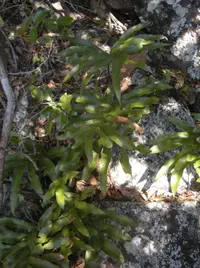
Drynaria sparsisora is an epiphytic fern, often found growing on tree trunks or rocks rather than in regular soil. It forms a nest-like base of brown, papery fronds that collect debris, with longer green fronds rising above.
This species is native to parts of tropical Asia, where it grows in warm, humid forests with filtered light. It can be moderately challenging, as it dislikes drying out completely and needs good air circulation.
Once its moisture and shade needs are understood, it becomes easier to care for Drynaria sparsisora in sheltered outdoor spots or specialized indoor displays.

Care Difficulty
Moderate Care

Light Preference
Partial Shade

Water Requirements
Keep Soil Moist

Temperature Preference
Tropical / Frost Sensitive

Hardiness Zone
11–12

Soil Texture
Peaty, Organic-rich, Loamy

Soil pH
Acidic (5.5–6.5)

Soil Drainage
Moist but well-drained

Fertilization
Light (every 4–6 weeks)
Scan your plant to receive care tips personalized for your specific plant
Available on iOS and Android
This fern prefers soft, filtered light similar to bright forest shade.
This epiphytic fern needs frequent light moisture but dislikes waterlogged conditions.
This species prefers warm, frost-free conditions with only modest temperature swings.
This fern prefers consistently moist air to mimic its native forest habitat.
Prepare a loose, airy, organic mix that drains quickly but holds some consistent moisture.
This species adapts well to container growing when its epiphytic tendencies are considered.
This epiphytic fern grows slowly and needs only light feeding in active growth.
This fern needs minimal pruning, mainly to keep fronds tidy and healthy.
This species is usually grown mounted or in a shallow basket rather than in deep pots.
Propagation of this fern is possible but more advanced than for many common houseplants.
This fern is not frost hardy and needs protection in regions with cold winters.

Plant Health Check
Not sure what's wrong with your plant? Check your plant's health inside the app.
This species develops a distinctive basal nest of sterile fronds that dry, layer, and trap falling leaf litter, bark fragments, and dust, creating a natural compost pocket that feeds the plant’s rhizomes.
In the wild it typically grows as a lithophyte on rocks or as an epiphyte on tree trunks in humid forests, anchoring with creeping rhizomes rather than relying on soil like most terrestrial ferns.
Fertile fronds are long, arching, and deeply lobed with spore-bearing sori on the underside, while the shorter nest fronds are sterile and primarily serve to collect moisture and nutrients.

In some subtropical Asian forests, dense colonies of this species can significantly enrich the organic matter on otherwise bare rock surfaces, helping create the first thin soil layer that later supports other plants.
Growth is moderate rather than fast. New fronds usually appear in flushes during warm months, with noticeable size increase over 1–2 seasons. Growth slows in cool or very dry conditions and may pause completely in winter.
Keep your plants happy and healthy with plant identification, disease detection, and easy care guidance.

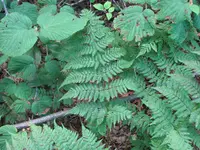
mountain woodfern
Dryopteris campyloptera
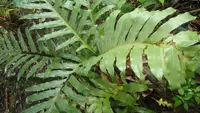
Oakleaf fern
Drynaria quercifolia
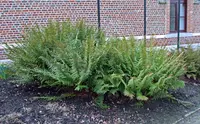
Dryopteris pseudomas
Dryopteris pseudomas
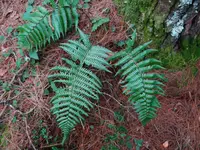
Sunset Fern
Dryopteris lepidopoda
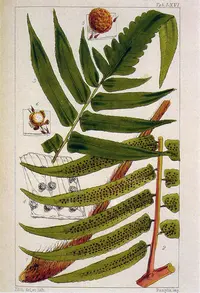
Gymnosphaera podophylla
Gymnosphaera podophylla
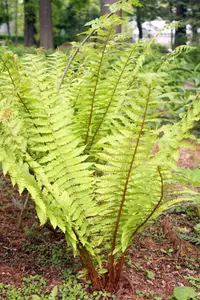
Thick-stemmed woodfern
Dryopteris crassirhizoma
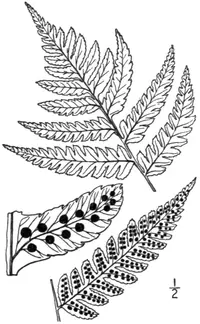
Clinton's woodfern
Dryopteris clintoniana
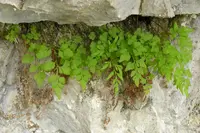
Steller's rockbrake
Cryptogramma stelleri