

Cool root zone
Use a light mulch layer of fine bark or leaf mold around the crown to keep the root zone cool and evenly moist while avoiding direct contact with the rhizome to prevent rot.

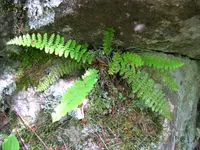
Fragrant woodfern, Dryopteris fragrans, is a compact, evergreen fern known for its aromatic fronds, which release a pleasant resin-like scent when touched or crushed. It forms low clumps with arching, finely divided fronds that stay attractive for much of the year.
This species naturally occurs on rocky cliffs and cool, shaded slopes in northern regions, often growing in crevices with sharp drainage. Its slow growth, preference for cool conditions, and dislike of disturbance make it more challenging than common garden ferns, so learning how to care for fragrant woodfern is important. It generally prefers dappled light, consistent but not heavy moisture, and gritty, humus-rich soil.

Care Difficulty
Moderate Care

Light Preference
Partial Shade

Water Requirements
Keep Soil Moist

Temperature Preference
Cold Hardy

Hardiness Zone
3–7

Soil Texture
Loamy, Rocky, Organic-rich

Soil pH
Acidic (5.5–6.5), Slightly acidic (6.5–7.0)

Soil Drainage
Moist but well-drained

Fertilization
Minimal (feed rarely)
Scan your plant to receive care tips personalized for your specific plant
Available on iOS and Android
This hardy fern prefers bright, filtered conditions that mimic light on a cool rocky slope.
This fern prefers consistently moist but not saturated soil around its fibrous roots.
This species is notably cold tolerant but grows best in cool to moderately warm conditions.
This fern prefers cool, moderately humid air but copes with typical indoor levels if not kept too warm.
Soil for Dryopteris fragrans should mimic a cool, humus-rich forest floor.
This species adapts well to container growing when moisture and root space are carefully managed.
This fern has modest nutrient needs, so light feeding is enough for healthy growth.
Dryopteris fragrans needs only light pruning to stay tidy and healthy.
This fern grows slowly and dislikes frequent disturbance, so repot or transplant only when clearly needed.
Dryopteris fragrans is usually propagated by careful division rather than by spores for home growers.
This species is notably cold hardy and usually needs only minimal winter care in the ground.

Plant Health Check
Not sure what's wrong with your plant? Check your plant's health inside the app.
This species naturally grows on cool, rocky cliffs and ledges in boreal and subarctic regions, often rooting in crevices with very thin, well-drained soil.
When dried or crushed, its evergreen fronds release a noticeable sweet, resin-like scent, which is unusually strong for a fern and is the origin of its common name fragrant woodfern.
Unlike many temperate ferns that die back each winter, this species often keeps its leathery fronds green under snow cover in its native cold habitats.

In parts of its northern range, especially in areas with exposed bedrock near the Arctic tree line, this fern can form long-lived, compact clumps that occupy the same rock crevice for many decades, demonstrating strong adaptation to extreme freeze–thaw cycles and nutrient-poor substrates.
This species is semi-evergreen to evergreen in many cool climates. Fronds often persist through winter, especially with snow cover or shelter, though older fronds may brown and can be trimmed away in early spring.
Keep your plants happy and healthy with plant identification, disease detection, and easy care guidance.

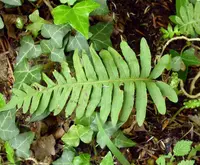
Intermediate Polypody
Polypodium interjectum
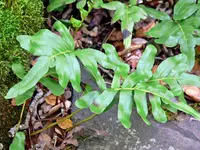
leathery polypody
Polypodium scouleri
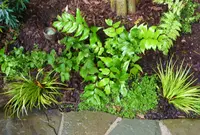
Japanese Holly Fern
Cyrtomium falcatum 'Rochfordianum'
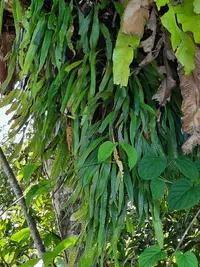
Microgramma percussa
Microgramma percussa
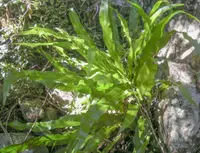
Elkhorn fern
Microsorum punctatum
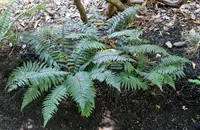
Korean rock fern
Polystichum luctuosum
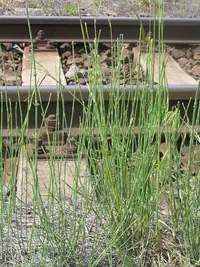
branched scouringrush
Equisetum ramosissimum
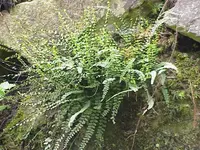
maidenhair spleenwort
Asplenium trichomanes