Intermediate Polypody Care (Polypodium interjectum)

Intermediate Polypody

About Intermediate Polypody

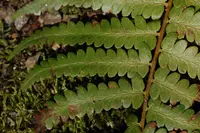
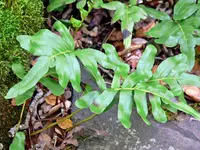
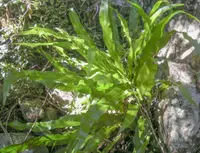
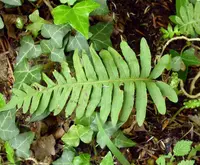
Intermediate polypody (Polypodium interjectum) is a hardy evergreen fern, typically found growing on rocks, walls, and tree trunks in its native western European range. It forms loose clumps of arching, divided fronds that stay green through mild winters and give a soft, natural look.

In gardens, it is often used for shaded rockeries, woodland edges, and mossy logs, where it slowly spreads by creeping rhizomes. Once established, it tolerates some dryness and neglect, which makes it relatively easy to care for Intermediate Polypody in suitable shade. This fern prefers cool, humid conditions and thrives in free-draining, humus-rich substrates such as leaf litter or gritty, organic soil.

Main Plant Requirements

Care Difficulty

Moderate Care

Light Preference

Partial Shade

Water Requirements

Moderate Water

Temperature Preference

Cool Climate

Hardiness Zone

6–8

Soil Texture

Loamy, Rocky, Organic-rich

Soil pH

Acidic (5.5–6.5), Slightly acidic (6.5–7.0)

Soil Drainage

Moist but well-drained

Fertilization

Minimal (feed rarely)

Get Personalized Care Plan

Scan your plant to receive care tips personalized for your specific plant

Available on iOS and Android

How to Care for the Intermediate Polypody

This fern prefers gentle, filtered light that mimics bright woodland shade.

  • Provide dappled or bright indirect light with 2–4 hours of soft morning sun, avoiding harsh midday exposure.
  • Intermediate Polypody tolerates partial to full shade, but growth becomes looser and fronds lengthen if light stays very low.
  • In summer, shield from direct sun after 11 a.m. to prevent leaf scorch; in winter, allow brighter exposure to compensate for weaker light.

This species prefers consistently moist but not saturated soil around its rhizomes.

  • Water when the top 1–2 cm of soil or substrate feels just starting to dry, then moisten thoroughly so excess drains away.
  • In spring and summer, expect to water more often, while in cooler months allow the surface to dry slightly more between waterings.
  • Signs of overwatering include black, mushy rhizomes and sour odor; crisp, browning frond tips and curling indicate underwatering and low moisture around Polypodium interjectum.

This fern thrives in mild, frost-free conditions with cool to moderate temperatures.

  • Aim for 50–70°F (10–21°C) for steady growth, with best vigor around 55–65°F (13–18°C).
  • The plant tolerates short drops to about 23–25°F (-5 to -4°C) if well established, but repeated hard frosts can damage fronds.
  • In hot spells above 80°F (27°C), increase shade and humidity and avoid drying winds, as sustained heat stress can cause frond scorch and early dieback.

This fern prefers moist air and reacts quickly to very dry conditions.

  • Aim for 50–70% humidity to keep fronds lush and reduce browning tips.
  • Intermediate Polypody tolerates brief dips to 40%, but prolonged dry air causes crisping edges and slow growth.
  • Increase humidity with a nearby humidifier, grouped plants, or a pebble tray, rather than misting that only raises humidity for a few minutes.

This species needs loose, humus-rich, sharply drained soil that stays lightly moist but never stagnant.

  • Use a mix of 40% peat-free compost, 30% fine bark, 20% perlite, and 10% coarse sand to mimic woodland, epiphytic-style conditions.
  • Ensure very free drainage so water runs through within seconds, leaving the mix damp but not waterlogged.
  • Keep pH slightly acidic to neutral (pH 5.5–7.0); avoid strongly alkaline, chalky substrates that can restrict nutrient uptake.
  • Improve aeration by increasing bark and perlite if the mix compacts or stays wet on the surface for more than 2–3 days.

This fern grows well in containers when the pot supports its shallow, spreading rhizomes.

  • Choose a wide, relatively shallow pot so rhizomes can spread horizontally rather than sit deep and saturated.
  • Select a rigid pot material, such as terracotta or thick plastic, to keep the lightweight, fibrous root mass stable in wind.
  • Use a pot with multiple drainage holes and stand it slightly raised so excess water exits quickly instead of pooling under the base.

This fern needs only light feeding, as Polypodium interjectum is adapted to relatively low-nutrient conditions.

  • Use a balanced liquid fertilizer at 1/4–1/2 strength or a very thin layer of fine compost on the soil surface.
  • Feed every 4–6 weeks during the active growing season, typically spring to early autumn.
  • Do not apply fertilizer to completely dry soil; water lightly first to reduce root burn risk.
  • Stop or halve feeding in late autumn and winter when growth slows or fronds are semi-dormant.

Pruning needs for Polypodium interjectum are minimal and focus on hygiene rather than shaping.

  • In late winter or early spring, remove dead, yellowed, or diseased fronds at the base with clean, sharp scissors.
  • Cut back damaged or tatty fronds through the growing season to maintain a tidy clump and encourage fresh growth.
  • Thin out any congested fronds to improve air movement around the rhizomes and reduce fungal problems.
  • Disinfect tools before and after use, especially when cutting unhealthy tissue, to limit disease spread.

This fern resents disturbance, so transplant Polypodium interjectum only when clear signs appear.

  • Look for rhizomes pressing against the pot edge, roots circling the base, or slow, weak new fronds as cues to move it.
  • Plan repotting or transplanting in early spring, just as new growth starts, to support quick recovery.
  • Repot every 3–4 years into a shallow, wide container with loose, well-drained, organic-rich mix.
  • Handle rhizomes gently, keep the root ball mostly intact, water thoroughly, then keep shaded and evenly moist for 1–2 weeks.

Division is the most practical way to increase Polypodium interjectum for home growers.

  • Divide mature clumps in early spring when new frond nubs are visible but not fully expanded.
  • Lift the plant carefully and cut the rhizome into sections, each with several healthy frond buds and roots.
  • Plant divisions shallowly in a loose, moisture-retentive mix and firm gently around the rhizomes.
  • Maintain high humidity, bright shade, and consistently moist (not waterlogged) substrate until new fronds expand.

This fern is moderately cold hardy in many temperate climates and usually needs only light winter care outdoors.

  • In the ground, apply a 3–5 cm layer of leaf mulch around the rhizomes in late autumn to buffer freeze–thaw cycles.
  • Container plants are more vulnerable; move pots to a sheltered, frost-free but cool spot with bright shade.
  • Keep soil just slightly moist in winter, avoiding both waterlogging and complete drying, to prevent rhizome damage.

Care Tips

Rhizome positioning

Set the creeping rhizomes right at the soil surface or slightly exposed rather than buried deep, which reduces rot risk and encourages new fronds to emerge evenly along the rhizome line.

Rock and crevice mounting

For a more natural habit, tuck the rhizomes into crevices of a stone wall, rock pile, or coarse bark slab filled with gritty organic mix, which mimics its wild epiphytic and lithophytic growth and improves drainage.

Seasonal frond renewal

In late winter, remove old, tired, or wind-tattered fronds at the base to allow stronger new croziers (unfurling fronds) to develop with better airflow and reduced fungal spotting.

Mulch with leaf litter

Use a thin layer of shredded leaves or fine bark around but not over the rhizomes to buffer moisture and temperature while still allowing good air movement at the crown.

Dividing for vigor

Every 3–5 years, lift and divide overcrowded clumps into sections with at least 3–4 healthy fronds each, then replant shallowly to maintain vigor when caring for Intermediate Polypody in long-term plantings.

Common Pests and Diseases

Scale insects

This pest feeds on frond undersides and rachises, appearing as small brown or tan bumps that cause yellowing and weakened fronds over time.

Solution

Wipe fronds and stems with a soft cloth or cotton pad dipped in dilute alcohol (1:3 alcohol:water), then rinse with lukewarm water; for outdoor clumps, a strong water spray and targeted application of horticultural soap to the undersides of fronds helps break the life cycle. Improve airflow and avoid overfertilizing, as soft, lush growth is more attractive to scale.

Fern aphids

These insects cluster on young fronds and sori, sucking sap and causing distortion, sticky honeydew, and sometimes sooty mold on intermediate polypody growing in damp, sheltered sites.

Solution

Dislodge colonies with a firm water spray, then treat remaining aphids with insecticidal soap, ensuring thorough coverage of both sides of the fronds. Reduce nearby lush weed growth and avoid excess nitrogen fertilizer to make the plant less attractive to heavy infestations while still supporting healthy Polypodium interjectum plant care.

Rhizoctonia crown rot

This disease affects the rhizomes and lower frond bases, leading to soft, brown, collapsing crowns, especially in overly wet or compacted planting pockets on walls or rocks.

Solution

Remove and discard all affected rhizome sections and any rotting fronds, then improve drainage by thinning overcrowded growth and reducing irrigation or splash from adjacent plantings. When replanting divisions, use clean tools, place rhizomes on a free-draining, gritty substrate, and avoid burying them too deeply.

Botrytis leaf spot

This disease produces scattered brown lesions on fronds that can merge into larger dead areas, often with a grey, fuzzy mold in cool, still, humid conditions.

Solution

Cut off and dispose of affected fronds promptly to remove inoculum, and increase air movement around the plant by thinning surrounding vegetation or spacing pots further apart. Water at the base rather than over the fronds and, in very damp sites, temporarily reduce watering until new, clean growth appears.

Slugs and snails

This pest group grazes on tender emerging fronds and young rhizome tips, leaving irregular holes, shredded edges, and slime trails, particularly in shaded, moist habitats preferred by this species.

Solution

Hand-pick slugs and snails during damp evenings and remove nearby hiding places such as dense debris and stacked pots. Use iron phosphate slug baits placed away from the rhizomes, and if needed create barriers such as copper tape around containers or key planting pockets to protect new frond flushes.

Interesting Facts

Hybrid origin history

This species is now widely accepted as a stabilized hybrid between Polypodium vulgare and Polypodium australe, showing intermediate traits in frond shape, sori arrangement, and spore characteristics.

Preference for mild climates

It has a distinctly Atlantic–Mediterranean distribution in Europe, favoring humid but relatively mild, frost-free or low-frost areas such as western Britain, Ireland, and coastal regions, unlike some relatives that tolerate more continental climates.

Rock and wall specialist

In much of its range it grows most often as a lithophyte, anchoring into crevices of acidic rocks, old stone walls, and tree bases, taking advantage of moss and accumulated humus instead of deep soil.

Botan icon

Did you know?

Its spores are often shed and dispersed during mild winter periods in western Europe, so fertile fronds can frequently be seen in the colder months, a phenology that helps it exploit moist, low-competition conditions on rocks and walls.

FAQs about Intermediate Polypody

This fern spreads slowly to moderately via creeping rhizomes. It usually forms small to medium clumps rather than taking over beds. In suitable, consistently moist, shaded spots it can naturalize, but regular division keeps it in bounds.

Grow Healthy Plants with Botan Care

Keep your plants happy and healthy with plant identification, disease detection, and easy care guidance.


Botan plant care app — identify plants on mobile

Explore More Plants