Dryopteris uniformis Care

Dryopteris uniformis

About Dryopteris uniformis

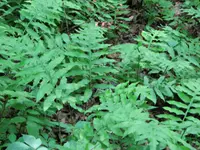
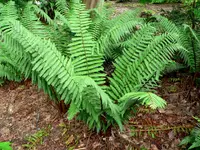
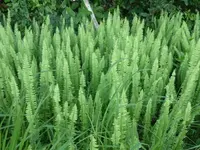
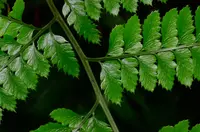
Dryopteris uniformis is a hardy, clump-forming fern known for its finely divided, uniform fronds that create a soft, arching mound of foliage. It is a terrestrial fern, growing from a short rhizome close to the soil surface.

This species is typically found in shaded woodlands and moist forest edges, often in cool, temperate regions with consistent humidity. Its preference for stable moisture and shade makes it suitable for sheltered garden beds and naturalistic plantings.

Gardeners who learn how to care for Dryopteris uniformis usually find it moderate in difficulty, mainly because it dislikes drought and harsh sun. It performs best in humus-rich, well-drained soil that stays evenly moist and protected from strong wind.

Main Plant Requirements

Care Difficulty

Moderate Care

Light Preference

Partial Shade

Water Requirements

Keep Soil Moist

Temperature Preference

Cool Climate

Hardiness Zone

Unknown

Soil Texture

Loamy, Peaty, Organic-rich

Soil pH

Acidic (5.5–6.5)

Soil Drainage

Moist but well-drained

Fertilization

Minimal (feed rarely)

Get Personalized Care Plan

Scan your plant to receive care tips personalized for your specific plant

Available on iOS and Android

How to Care for the Dryopteris uniformis

This woodland fern prefers soft, filtered light that mimics a shaded forest floor.

  • Provide bright shade or dappled light under trees, with no more than 1–2 hours of gentle morning sun and no direct afternoon sun.
  • Tolerates deep shade but fronds become thinner and more open if light drops below roughly 2–3 hours of indirect light daily.
  • In hot summers, use taller plants or shade cloth to protect Dryopteris uniformis from leaf scorch and crisped edges caused by intense sun.

This fern prefers consistently moist, cool soil without becoming waterlogged.

  • Water when the top 2–3 cm of soil feels barely dry, aiming to keep the root zone evenly moist during the main growing season.
  • Reduce watering slightly in late fall and winter, allowing the surface to dry a bit more while avoiding bone-dry soil that causes frond browning.
  • Use humus-rich, well-drained soil; symptoms of overwatering include blackened, mushy crowns, while dry, curling fronds signal underwatering.

This hardy fern is adapted to cool, temperate climates with moderate seasonal shifts.

  • Optimal growth occurs around 55–75°F (13–24°C), with steady moisture helping the plant tolerate short warm spells.
  • Most established plants handle down to about 10–15°F (-12–-9°C) outdoors, though fronds may die back and re-sprout from the crown in spring.
  • In heat above 85°F (29°C), provide extra shade and moisture, and shield from drying winds to reduce stress on new fronds.

This fern prefers consistently moist air and reacts quickly to dry indoor conditions.

  • Target 50–70% humidity; use a hygrometer to check levels in heated or air-conditioned rooms.
  • Tolerates brief dips to 40%, but fronds may brown at tips and edges if air stays drier.
  • Increase humidity with a pebble tray under the pot or a nearby humidifier rather than misting, which evaporates too fast.

Provide loose, humus-rich soil that stays evenly moist yet drains freely for Dryopteris uniformis.

  • Use a mix of roughly 50% peat or coir, 30–40% leaf mold or compost, and 10–20% perlite or fine bark for structure and aeration.
  • Aim for slightly acidic to neutral pH, around 6.0–7.0, which supports efficient nutrient uptake for fern roots.
  • Ensure drainage is fast enough that water does not sit in the pot or planting hole longer than 15–20 minutes after watering or rain.
  • Avoid heavy clay, compacted ground, or pure sand; blend in organic matter and perlite or bark to prevent waterlogging and root suffocation.

This species adapts well to container growing when the pot is chosen to support its shallow, spreading root system.

  • Choose a wide, moderately deep pot rather than a tall narrow one to support the fern’s spreading crown and prevent tipping in wind.
  • Select heavier materials like ceramic or clay outdoors to stabilize the plant and reduce sudden moisture swings in hot weather.
  • Elevate the container slightly on pot feet or bricks so drainage holes stay clear and excess water exits quickly after rain or irrigation.

This fern grows best in humus-rich soil and only needs modest feeding to maintain healthy fronds.

  • Use a balanced liquid fertilizer (around 10-10-10) diluted to 25–50% strength for caring for Dryopteris uniformis in containers.
  • Feed every 4–6 weeks during spring and summer when growth is active.
  • Avoid synthetic fertilizer on plants in the ground; instead, top-dress with compost or leaf mold in spring.
  • Stop feeding in fall and winter to prevent soft, weak growth.

Pruning focuses on hygiene and tidiness rather than reshaping this naturally graceful fern.

  • Best time for pruning Dryopteris uniformis is late winter to early spring before new fronds unfurl.
  • Remove dead, yellowing, or damaged fronds at the base with clean, sharp scissors or hand pruners.
  • Thin out congested old fronds to improve air flow and reduce fungal problems in humid sites.
  • Avoid cutting healthy new fronds, as this reduces vigor and weakens the plant’s form.

This fern is usually grown in the ground, but container plants and crowded clumps benefit from occasional transplanting.

  • Look for roots circling the pot, water running straight through, or slowed growth as signs Dryopteris uniformis needs more space.
  • Plan repotting or division in early spring or early fall, when temperatures are mild and soil is moist.
  • For containers, move into a pot 2–5 cm wider, using a moisture-retentive, humus-rich mix and keeping the crown at the same depth.
  • Reduce root stress by watering well before and after moving, shading the plant for 1–2 weeks, and avoiding heavy fertilization immediately.

Propagation is usually done by division, which maintains the characteristics of the parent fern.

  • Divide established clumps of Dryopteris uniformis in early spring or early fall when weather is cool and soil is moist.
  • Lift the clump carefully, then separate sections with several healthy crowns and a good root mass using a clean knife.
  • Replant divisions at the same depth into humus-rich, consistently moist soil with partial to full shade.
  • Keep newly planted divisions evenly moist and sheltered from strong sun and wind until new fronds firm up.

This fern is generally cold hardy in temperate climates and needs only light winter attention in the ground.

  • Tolerates typical garden frosts; fronds may die back, but underground crowns usually survive.
  • In colder areas, apply a 5–8 cm layer of leaf mold or compost around the root zone, keeping mulch off the crown.
  • Container-grown Dryopteris uniformis benefits from being moved to a sheltered, unheated porch or cold frame to limit root freezing.

Care Tips

Frond cleanup

Remove spent or damaged fronds at the base in late winter or very early spring to reduce disease carryover and make space for healthy new growth.

Mulch ring management

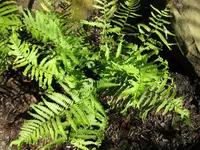
Maintain a 3–5 cm ring of fine bark or leaf mold around the crown, keeping mulch slightly back from the growth point to protect roots from temperature swings while avoiding crown rot.

Dividing mature clumps

Divide older, congested plants every 4–6 years in early spring, cutting the root mass into several firm sections and replanting immediately to refresh vigor and create uniform new plantings.

Moisture monitoring strip

In outdoor beds, insert a narrow plastic or metal strip 10–15 cm from the crown to check soil moisture at root depth before irrigating, which helps prevent both drought stress and chronic waterlogging when growing Dryopteris uniformis.

Slug and snail barriers

In damp, shaded sites, place low copper tape or coarse grit around the planting zone and remove nearby debris where slugs and snails shelter to limit chewing damage to young unfurling fronds.

Common Pests and Diseases

Scale insects

These insects attach to fronds and rachis, sucking sap and causing yellowing, speckling, and a general decline in vigor. Symptoms include sticky honeydew on fronds and nearby surfaces, sometimes followed by sooty mold growth.

Solution

Prune and discard heavily infested fronds, then wipe remaining fronds and stipes with a soft cloth dipped in a dilute insecticidal soap or horticultural oil solution, taking care to reach the undersides. Improve air movement around the clump and repeat treatments every 7–10 days until new growth appears clean, which is a key step in effective Dryopteris uniformis care instructions.

Fern aphids

These insects cluster on the undersides of young fronds and on new croziers, causing curling, distortion, and pale growth. This pest often leaves a shiny honeydew residue that can attract ants or support sooty mold.

Solution

Rinse colonies off with a firm stream of water, focusing on the undersides of fronds and emerging fiddleheads. If populations persist, apply insecticidal soap to all green tissue in the early morning, and repeat weekly until no new aphids appear, while monitoring nearby ferns for reinfestation.

Rhizoctonia crown rot

This disease causes browning and collapse of the central crown, with fronds yellowing and dying back from the base despite adequate moisture. Symptoms include a firm but discolored crown tissue that may show reddish-brown lesions.

Solution

Remove and destroy affected fronds and dig out severely rotted crowns to prevent spread through the planting bed. Replant only into well-drained but evenly moist soil, avoid burying the crown too deeply, and keep mulch pulled back 3–5 cm from the base to reduce persistent surface moisture around the crown.

Leaf spot complex

This disease group produces small tan, brown, or purplish spots on pinnae that may merge into irregular patches, giving fronds a scorched or tattered look. Symptoms include more severe spotting in humid, shaded locations with poor air movement.

Solution

Cut off and discard heavily spotted fronds to remove most of the fungal inoculum, and avoid overhead watering that keeps fronds wet for long periods. Space plants to improve airflow, water at soil level in the morning, and in severe, recurrent cases use a labeled fungicide on newly emerging fronds in spring according to product directions.

Slug and snail damage

These pests chew irregular holes in young fronds and croziers, often leaving only midribs and ragged edges, especially in damp, shaded beds. Symptoms include slime trails on soil, rocks, or damaged fronds around the fern clump.

Solution

Hand-pick slugs and snails at dusk or after rain, and use barriers such as copper tape or rough mineral mulch around the planting area. Deploy iron phosphate slug baits around, not on, the crown according to label directions, and reduce dense groundcovers or debris where these pests hide during the day.

Interesting Facts

East Asian woodland native

This fern is naturally distributed in parts of East Asia, where it grows in cool, shaded forest habitats and on moist slopes, often under mixed deciduous and coniferous canopies.

Distinctive frond structure

The fronds are typically 1-pinnate (once-divided) with a relatively uniform pinna shape along the rachis, a feature that helps distinguish it from many other Dryopteris species with more complex or unevenly divided fronds.

Spore-based reproduction

Like other true ferns, it reproduces via spores rather than seeds; the spores develop in clusters called sori on the undersides of fertile fronds, which release into the air to colonize suitable moist substrates.

FAQs about Dryopteris uniformis

This fern is typically evergreen in mild climates, holding fronds through winter. In colder regions, fronds may burn or die back, then be replaced by fresh growth from the crown in spring.

Grow Healthy Plants with Botan Care

Keep your plants happy and healthy with plant identification, disease detection, and easy care guidance.

Botan plant care app — identify plants on mobile

Explore More Plants