

Mulch For Cool Roots
Apply a 3–5 cm layer of leaf mold or fine bark mulch around, but not touching, the crown to keep roots cool, conserve moisture, and mimic the natural woodland litter this fern prefers.

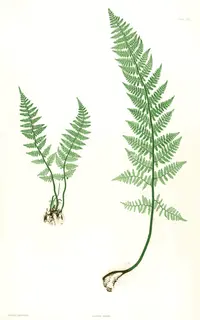
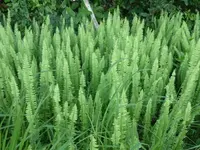
Rigid buckler fern (Dryopteris villarii) is a hardy, clumping fern found on rocky, often limestone slopes in European mountain regions. It forms dense rosettes of finely divided, evergreen to semi-evergreen fronds. The fronds are stiff, upright, and neatly arranged, giving the plant a compact, architectural look that suits shaded rock gardens and naturalistic plantings. Growth is generally slow to moderate, but it is long-lived once established. This species prefers cool, moist, well-drained, slightly alkaline substrates and tolerates shade and temperature fluctuations reasonably well. These traits make it relatively straightforward for gardeners who want to learn how to care for rigid buckler fern without constant attention.

Care Difficulty
Moderate Care

Light Preference
Partial Shade

Water Requirements
Keep Soil Moist

Temperature Preference
Cool Climate

Hardiness Zone
5–8

Soil Texture
Loamy, Peaty, Organic-rich

Soil pH
Acidic (5.5–6.5), Slightly acidic (6.5–7.0)

Soil Drainage
Moist but well-drained

Fertilization
Minimal (feed rarely)
Scan your plant to receive care tips personalized for your specific plant
Available on iOS and Android
This fern prefers cool, shaded conditions that mimic moist, rocky woodland or cliff habitats.
This species prefers consistently moist but not saturated soil around its shallow root system.
This hardy fern tolerates cool conditions but grows best within a moderate temperature range.
This fern prefers consistent, moderately high humidity for best frond health.
This species does best in moist, airy, humus-rich soil that never stays waterlogged.
This fern is suitable for container growing outdoors in shaded, cool positions.
Dryopteris villarii is adapted to lean, rocky soils and needs only light, targeted feeding in cultivation.
Pruning Dryopteris villarii focuses on hygiene and maintaining a tidy clump rather than reshaping the plant.
This fern is more often grown in the ground, so focus on careful transplanting or occasional container upgrades.
Propagation of Dryopteris villarii is usually done by division rather than by spores for dependable results at home.
Dryopteris villarii is generally cold hardy in temperate climates and needs only modest winter care outdoors.

Plant Health Check
Not sure what's wrong with your plant? Check your plant's health inside the app.
This fern is naturally restricted to calcareous mountain habitats, typically rooting in crevices of limestone or dolomite cliffs in European ranges such as the Alps and Carpathians.
Compared with many related Dryopteris species, it has noticeably rigid, narrowly lance-shaped fronds with firm texture, an adaptation that helps it withstand wind exposure on rocky slopes.
Botanical research indicates that this taxon belongs to a complex of closely related Dryopteris species and hybrids, and its taxonomic limits have been revised several times as its evolutionary relationships became better understood.
This species is a true fern and does not bloom. It reproduces by spores produced on the undersides of the fronds rather than by flowers, so a lack of blooms is completely normal and expected.
Keep your plants happy and healthy with plant identification, disease detection, and easy care guidance.

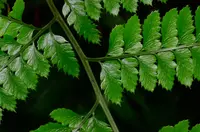
Arachniodes rhomboidea
Arachniodes rhomboidea
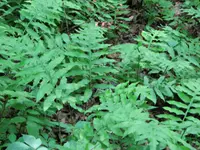
netted chainfern
Woodwardia areolata
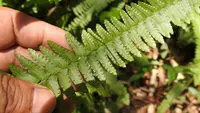
streamside swordfern
Nephrolepis rivularis
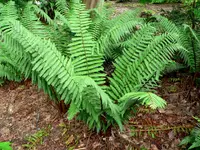
alpine woodfern
Dryopteris wallichiana
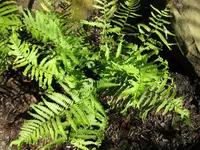
Dryopteris uniformis
Dryopteris uniformis
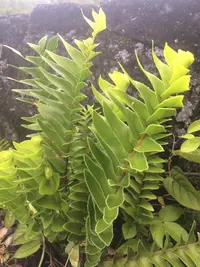
Nephrolepis abrupta
Nephrolepis abrupta
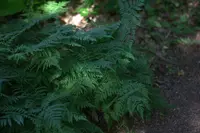
Mole-Ladder
Diplazium sibiricum
Annual Sword fern
Nephrolepis undulata var. aureoglandulosa