Summer dry rest
In hot, dry-summer climates, sharply reduce or stop watering in peak summer and give the rosette maximum air flow so the plant can enter its natural dry rest without rotting.

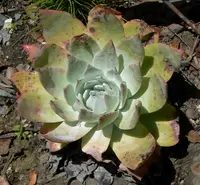
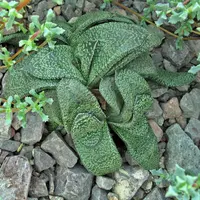
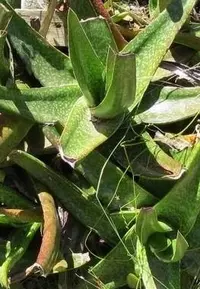
Anthony's liveforever, Dudleya anthonyi, is a small, rosette-forming succulent native to coastal cliffs of Baja California, Mexico. It grows in tight clusters, with fleshy, often bluish or gray-green leaves that store water for dry periods.
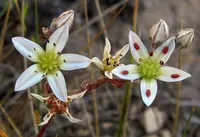
This species typically clings to rocky slopes and ledges, showing a compact, architectural habit suited to containers and rock gardens. In season, it sends up slender flower stalks with small, tubular blooms that attract pollinators.
Its cliff-dwelling origin means it prefers bright light, fast-draining mineral soil, and careful watering that avoids prolonged wetness. These traits make it rewarding but somewhat sensitive, so learning how to care for Anthony's liveforever is important, especially in wetter or more humid climates.

Care Difficulty
Hard Care

Light Preference
Full Sun

Water Requirements
Low Water

Temperature Preference
Warm Climate

Hardiness Zone
9–11

Soil Texture
Sandy, Rocky, Loamy

Soil pH
Slightly acidic (6.5–7.0), Neutral (7.0)

Soil Drainage
Well-drained

Fertilization
Minimal (feed rarely)
Scan your plant to receive care tips personalized for your specific plant
Available on iOS and Android
This cliff-dwelling succulent needs strong light that mimics full sun on coastal bluffs.
This species evolved for very dry conditions and is highly sensitive to excess moisture.
This coastal succulent prefers mild conditions and struggles with hard frost or intense desert heat.
This species prefers dry air and does best in low-humidity conditions similar to its native cliffs.
Dudleya anthonyi needs very sharply drained, mineral-based soil that dries quickly after watering.
This species is suitable for container growing when kept in a very fast-draining setup.
This drought-adapted succulent needs only minimal feeding, as Anthony's liveforever is naturally adapted to lean soils.
Dudleya anthonyi needs only light, targeted pruning to maintain health and appearance.
Container-grown plants appreciate careful, infrequent repotting to maintain a stable, dry root environment.
Propagation of this species is possible but should be done thoughtfully, as wild Dudleya anthonyi populations are vulnerable.
This succulent prefers mild, dry winters and is not suited to harsh freezing conditions.

Plant Health Check
Not sure what's wrong with your plant? Check your plant's health inside the app.
This species is naturally restricted to sheer volcanic and sedimentary cliffs on remote islands off Baja California, rooting in narrow cracks where few other vascular plants can survive.
In its native habitat, it typically enters a dry-season dormancy, with rosettes shrinking and leaves often taking on a grayish, powdery look that reduces water loss under intense sun and wind.
Inflorescences with pale yellow to cream flowers usually appear in late spring to early summer, providing nectar on exposed sea cliffs when few other succulents are in full bloom there.

Wild populations of this species are so restricted and vulnerable that unauthorized collection from wild habitats has become a documented conservation concern, prompting increased monitoring and legal protection efforts in parts of its range.
Lack of flowers usually comes from too much summer water, heavy fertilizer, or deep shade. This cliff-dwelling succulent needs a cool, bright, dry winter rest. Avoid disturbing roots and keep it slightly pot-bound to encourage bloom formation.
Keep your plants happy and healthy with plant identification, disease detection, and easy care guidance.