

Summer heat protection
In very hot inland areas, move containers or place temporary shade cloth so the plant avoids intense late-afternoon sun that can scorch its chalky leaves while still receiving bright light earlier in the day.

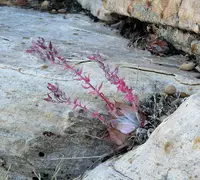
Arizona chalk dudleya (Dudleya arizonica) is a small, rosette-forming succulent native to rocky slopes and cliffs in the deserts of Arizona and nearby regions. It stores water in its thick, often chalky blue-green leaves, which helps it survive intense sun and long dry periods.
The plant stays compact, with tight rosettes and occasional tall flower stalks carrying small, starry blooms. Its adaptation to harsh, well-drained habitats makes it sensitive to excess moisture and poor drainage in cultivation.
Understanding how to care for Arizona chalk dudleya starts with mimicking its natural habitat: strong light, very sharp drainage, and infrequent but deep watering in a gritty, fast-drying soil mix.

Care Difficulty
Hard Care

Light Preference
Full Sun

Water Requirements
Low Water

Temperature Preference
Warm Climate

Hardiness Zone
8–10

Soil Texture
Sandy, Rocky, Loamy

Soil pH
Slightly acidic (6.5–7.0), Neutral (7.0)

Soil Drainage
Well-drained

Fertilization
Minimal (feed rarely)
Scan your plant to receive care tips personalized for your specific plant
Available on iOS and Android
This desert succulent needs strong light but benefits from some protection during the hottest hours.
This species prefers a dry, drought-style watering pattern with excellent drainage.
This plant is adapted to warm, dry conditions but has some tolerance for cool nights.
This species prefers dry air and low ambient humidity similar to arid habitats.
Provide a very fast-draining, mineral-based medium to prevent root and crown rot in Dudleya arizonica.
This species is suitable for container growing when drainage and root conditions are controlled carefully.
This desert succulent needs minimal feeding and often performs well with no fertilizer in poor, rocky soil.
Dudleya arizonica needs only light grooming rather than structural pruning.
Container-grown plants benefit from rare, careful transplanting to refresh the gritty substrate and prevent overcrowding.
This species is best propagated in cultivation by offsets and carefully handled seed rather than by disturbing wild plants.
Arizona chalk dudleya prefers mild, relatively dry winters and is not suited to very cold, wet climates without protection.

Plant Health Check
Not sure what's wrong with your plant? Check your plant's health inside the app.
This species is native to high-elevation volcanic and limestone outcrops in central and southeastern Arizona, where it forms small colonies on sheer cliffs and rocky ledges exposed to intense sun and large temperature swings.
In its native habitat it often enters partial summer dormancy, with rosettes shrinking and outer leaves drying as a way to conserve water and protect the growing point during the hottest, driest months.
Its pale, chalky leaf surface is caused by a dense epicuticular wax layer that reflects sunlight and reduces water loss, an adaptation to very bright, arid conditions.

This species is considered of conservation concern in the wild because of its narrow habitat preferences and limited natural distribution in Arizona sky-island mountain ranges, where disturbance or development can quickly impact entire populations.
Lack of flowers usually comes from too much summer water, rich organic soil, or insufficient winter chill. This species needs a dry rest in summer and cool, bright winter conditions to set and open flower spikes reliably.
Keep your plants happy and healthy with plant identification, disease detection, and easy care guidance.

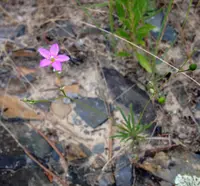
sunbright
Phemeranthus parviflorus
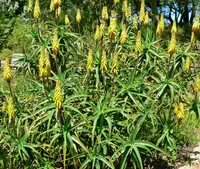
Hardy Aloe
Aloiampelos striatula
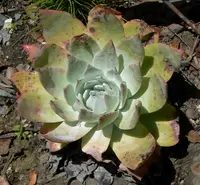
Anthony's liveforever
Dudleya anthonyi
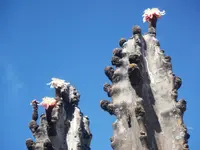
Neoraimondia macrostibas
Neoraimondia arequipensis
 POPULAR
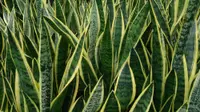
Snake plant
Dracaena trifasciata
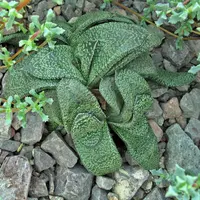
Shiny Oxtongue
Gasteria nitida
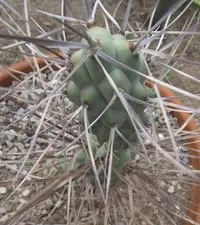
Tephrocactus aoracanthus
Tephrocactus aoracanthus
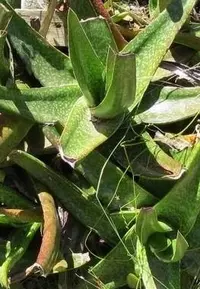
Coast Oxtongue
Gasteria acinacifolia