Summer rain shield
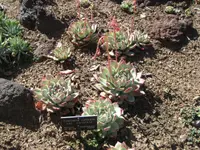
In climates with wet summers, place a simple clear cover or move pots under a deep overhang from late spring to early fall so the rosettes and crown stay dry and do not rot from warm-season rain exposure.

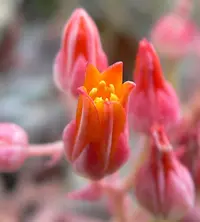
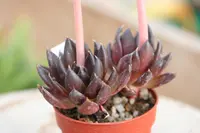
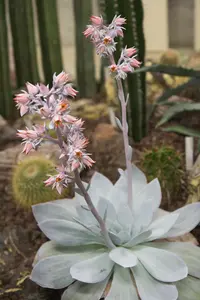
Canyon liveforever (Dudleya cymosa) is a small, rosette-forming succulent native to rocky slopes and cliffs in California and parts of the western United States. It stores water in its thick, spoon-shaped leaves and often shows gray-green foliage with red or orange flowering spikes in spring.
In nature it grows in well-drained crevices with high light and good air flow, which guides how to care for canyon liveforever at home. It can be long-lived but is sensitive to excess water and poorly drained soil, so it suits growers who can offer bright light and careful watering.

Care Difficulty
Hard Care

Light Preference
Full Sun

Water Requirements
Low Water

Temperature Preference
Warm Climate

Hardiness Zone
8–10

Soil Texture
Sandy, Rocky, Loamy

Soil pH
Slightly acidic (6.5–7.0), Neutral (7.0)

Soil Drainage
Well-drained

Fertilization
Minimal (feed rarely)
Scan your plant to receive care tips personalized for your specific plant
Available on iOS and Android
This sun-loving succulent thrives in bright, exposed sites that mimic rocky slopes in its native habitat.
This drought-adapted species needs infrequent, careful watering and sharply draining soil.
This succulent prefers mild, dry conditions and does best where extremes of cold and heat are limited.
Humidity is not a major factor for canyon liveforever, which is adapted to very dry air.
This species needs very fast-draining, mineral-based soil that mimics rocky slopes.
This species is suitable for container growing when drainage is managed very carefully.
Dudleya cymosa is adapted to nutrient-poor rocky soils, so canyon liveforever care instructions involve minimal fertilization.
Dudleya cymosa needs only light, occasional pruning to stay healthy and tidy.
This species is more often transplanted in rock gardens than repotted, and it dislikes frequent root disturbance.
Propagation of Dudleya cymosa is possible but slower and more specialized than many common succulents.
This species is relatively cold tolerant in dry conditions but dislikes prolonged freezing with wet soil.

Plant Health Check
Not sure what's wrong with your plant? Check your plant's health inside the app.
Many populations flower more abundantly after wildfires, taking advantage of increased light and reduced competition in recently burned chaparral and rocky slopes.
This species often anchors itself in tiny rock fissures on steep cliffs, where its thick roots exploit moisture held in cracks that many other plants cannot access.
Across its range, it shows notable variation in leaf and flower color, from green to bluish rosettes and yellow to orange or red flowers, reflecting local adaptation to different microhabitats.

Some subspecies of this plant are narrowly endemic, occurring only on specific cliff systems or small mountain ranges in California, which makes their wild populations highly vulnerable to habitat disturbance and illegal collecting.
Lack of flowering usually comes from insufficient light, excess summer water, or using high-nitrogen fertilizer. Stress from heat, repotting, or root disturbance can also delay buds. In suitable rocky, well-drained conditions, it typically flowers reliably.
Keep your plants happy and healthy with plant identification, disease detection, and easy care guidance.