


Deep pot choice
Use a relatively deep, narrow clay pot to accommodate the taproot and provide extra stability so the plant does not rock or lean as it matures.


Matucana madisoniorum is a small globular cactus from the Andes of Peru, valued for its neat shape and large funnel-shaped flowers. Young plants are often smooth and blue-green, while older specimens develop shallow ribs and sometimes small spines. Flowers are usually orange-red to scarlet and appear near the crown, creating a strong contrast with the body. This species stays compact, so it suits windowsills and small indoor collections. It is considered moderately easy if given strong light, very fast-draining soil, and careful watering. Understanding how to care for Matucana madisoniorum helps prevent rot and keep its shape tight and healthy.

Care Difficulty
Moderate Care

Light Preference
Full Sun

Water Requirements
Low Water

Temperature Preference
Tropical / Frost Sensitive

Hardiness Zone
10–11

Soil Texture
Sandy, Rocky, Loamy

Soil pH
Slightly acidic (6.5–7.0), Neutral (7.0)

Soil Drainage
Well-drained

Fertilization
Minimal (feed rarely)
Scan your plant to receive care tips personalized for your specific plant
Available on iOS and Android
This species prefers strong light that mimics high-altitude sun but needs some protection from extremes.
Watering should stay on the dry side, with thorough but infrequent soakings.
Temperature management should reflect its origin in seasonally cool, high-altitude habitats.
This cactus tolerates low humidity and does not need special humidity management indoors.
This species needs a very fast-draining, mineral-rich mix to prevent root rot.
This compact cactus is very suitable for container growing.
This compact cactus needs modest feeding to support steady growth in containers.
This species needs little pruning, mainly to maintain health and remove damaged tissue.
This slow-growing cactus prefers tight pots and only occasional repotting.
Multiplying this cactus is usually done from seed, as it rarely forms offsets.
This cactus is not fully frost hardy and benefits from cool, dry winter conditions indoors in most climates.

Plant Health Check
Not sure what's wrong with your plant? Check your plant's health inside the app.
This cactus is naturally restricted to steep limestone slopes along the Río Marañón canyon in northern Peru, where it grows in very rocky, mineral-rich soils with intense sun and large temperature swings between day and night.
Wild populations show striking variation in spination, ranging from almost spineless gray-green plants to heavily spined individuals with stout, recurved spines, all considered part of the same species rather than separate varieties.
It produces relatively large, slightly zygomorphic (bilaterally symmetrical) tubular flowers that can reach about one-third the height of the stem, adapted for pollination by long-tongued insects and possibly hummingbirds in its native range.
The species was first described in the 20th century from plants collected near the town of Balsas in Peru, and its taxonomic history involved placement in several different genera (including Submatucana and Borzicactus) before molecular and morphological evidence supported its current position in Matucana.
Growth is slow. In home conditions it often adds only a few millimeters in height and width per year, eventually forming a dome 6–10 cm tall and 6–12 cm wide over many years.
Keep your plants happy and healthy with plant identification, disease detection, and easy care guidance.

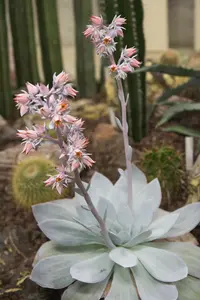
white cloud plant
Echeveria cante
Pfeiffera ianthothele
Pfeiffera ianthothele
square-stemmed pelargonium
Pelargonium tetragonum
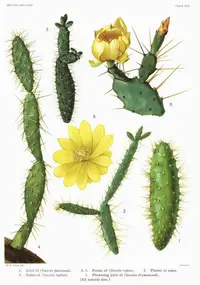
Velvet Bur Cactus
Opuntia pubescens
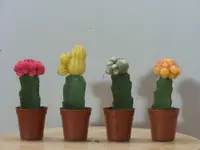 POPULAR
Moon Cactus
Gymnocalycium mihanovichii
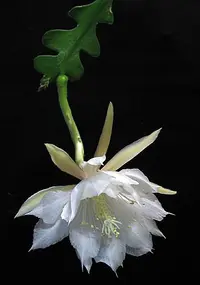
fishbone cactus
Disocactus anguliger
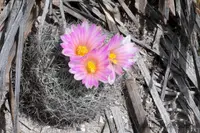
Rapicactus beguinii
Rapicactus beguinii
Echeveria bicolor
Echeveria bicolor