


Maximize rosette symmetry
Rotate the pot 90° every 1–2 weeks so all sides receive similar light, which keeps the rosette compact and prevents a lopsided, stretched form.

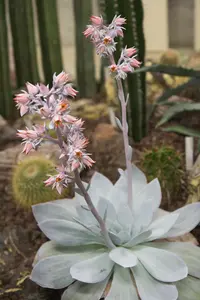
The white cloud plant, Echeveria cante, is a compact rosette-forming succulent prized for its silvery blue leaves with a soft, powdery coating. Mature plants develop broad, slightly upturned leaves that create a symmetrical, architectural shape suitable for containers or rock gardens.
This species is native to arid regions of Mexico, where it grows in bright, dry, well-drained habitats. Its succulent leaves store water, making it relatively forgiving of occasional missed watering.
Because of its drought tolerance and slow, tidy growth, many growers find it straightforward to care for white cloud plant when light is strong and soil does not stay wet for long.

Care Difficulty
Easy Care

Light Preference
Full Sun

Water Requirements
Low Water

Temperature Preference
Tropical / Frost Sensitive

Hardiness Zone
9–11

Soil Texture
Sandy, Loamy, Rocky

Soil pH
Slightly acidic (6.5–7.0), Neutral (7.0)

Soil Drainage
Well-drained

Fertilization
Minimal (feed rarely)
Scan your plant to receive care tips personalized for your specific plant
Available on iOS and Android
This succulent prefers bright, direct light but needs some protection from intense afternoon sun.
Water Echeveria cante deeply but infrequently, allowing the soil to dry between waterings.
This species prefers warm, dry conditions and is sensitive to frost and prolonged cold.
Echeveria cante prefers relatively dry air and handles typical indoor humidity well.
Echeveria cante needs a very fast-draining, airy mineral-based soil to prevent root and stem rot.
This species is well suited to container growing when the pot controls moisture and supports its rosette form.
This succulent needs only light feeding to maintain compact, healthy rosettes.
Echeveria cante needs minimal pruning, focused on hygiene and maintaining a neat rosette.
This slow-growing succulent needs infrequent repotting but benefits from fresh, very free-draining soil.
Echeveria cante is commonly multiplied by leaf or stem cuttings under warm, bright conditions.
This succulent is frost-sensitive and needs dry, cool but not freezing conditions in winter.

Plant Health Check
Not sure what's wrong with your plant? Check your plant's health inside the app.
This species occurs naturally in dry, rocky slopes of the Sierra Madre Occidental in Mexico, where it is adapted to intense sun, wide day–night temperature swings, and very limited rainfall.
Its thick whitish coating, called epicuticular wax, reflects sunlight, reduces water loss, and protects the leaves from UV radiation and fungal spores.
Mature plants can form solitary rosettes over 30 cm across, with long, tapering leaves that often show subtle pink to lavender tones along the margins under high light.

In its native range, this species often grows on exposed cliffs and steep, stony hillsides where many other succulents cannot survive, anchored in shallow crevices with minimal organic soil yet persisting for many years under extreme drought conditions.
Insufficient light, excessive nitrogen fertilizer, or a pot that is too large commonly delay flowering. Mild winter chill and a brief dry rest often help trigger bloom. Older rosettes flower more reliably than very young ones.
Keep your plants happy and healthy with plant identification, disease detection, and easy care guidance.

Echeveria amoena
Echeveria amoena
Tricolour Storksbill
Pelargonium tricolor
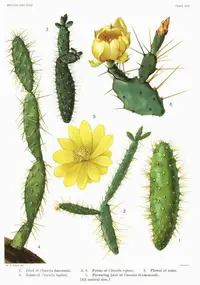
Velvet Bur Cactus
Opuntia pubescens
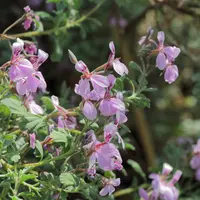
Greyleaf Storksbill
Pelargonium exstipulatum
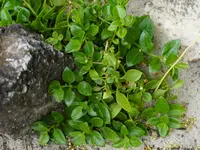
heart-leaf ice plant
Mesembryanthemum cordifolium
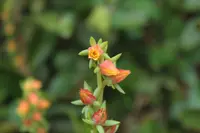
Echeveria bicolor
Echeveria bicolor
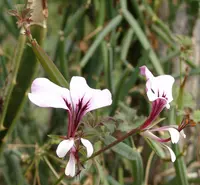
square-stemmed pelargonium
Pelargonium tetragonum

Cephalocereus tetetzo
Cephalocereus tetetzo