


Leaf Removal Timing
Remove only fully dried, papery lower leaves and slide them off sideways at the base to reduce rot risk and improve airflow around the crown.

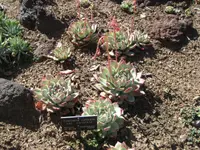
Echeveria colorata is a compact rosette-forming succulent from arid regions of Mexico. It stores water in thick, pointed leaves with a blue-green to silvery tone and pink to red leaf tips in strong light. Plants usually stay low and symmetrical, making them suitable for small pots, rock gardens, and decorative containers. Growth is relatively slow but steady under stable conditions. This species is considered easy to moderate to grow, as it tolerates some neglect but is sensitive to overwatering and poorly drained soil. Bright light, low to moderate moisture, and gritty, fast-draining soil match its natural habitat and support healthy growth. Understanding how to care for Echeveria colorata helps keep its rosettes compact and colorful over time.

Care Difficulty
Easy Care

Light Preference
Full Sun

Water Requirements
Low Water

Temperature Preference
Tropical / Frost Sensitive

Hardiness Zone
9–11

Soil Texture
Sandy, Loamy, Rocky

Soil pH
Slightly acidic (6.5–7.0), Neutral (7.0)

Soil Drainage
Well-drained

Fertilization
Minimal (feed rarely)
Scan your plant to receive care tips personalized for your specific plant
Available on iOS and Android
This compact succulent prefers bright, direct light for strong rosettes and color.
This drought-tolerant succulent needs infrequent but thorough watering in fast-draining soil.
This species prefers warm, dry conditions and is sensitive to hard frost.
This succulent prefers dry air and usually stays healthy in typical indoor humidity.
This species needs a very fast-draining, mineral-rich mix to keep roots dry between waterings.
This species is well suited to container growing when excess water can drain rapidly.
This succulent needs only light feeding to maintain compact, healthy rosettes.
Pruning is minimal and mainly keeps this rosette succulent clean and well-shaped.
This succulent prefers infrequent repotting and does best when slightly root-bound in a shallow pot.
This species is commonly multiplied from offsets and leaf cuttings for consistent new plants.
Cold sensitivity means this succulent usually needs sheltered conditions in winter in most climates.

Plant Health Check
Not sure what's wrong with your plant? Check your plant's health inside the app.
The leaves develop a thick, whitish wax coating called epicuticular wax, which protects the plant from intense sun and reduces water loss in its native arid habitats of central Mexico.
Leaf tips and outer edges often turn pink to red when exposed to strong light and cooler temperatures, a response caused by increased production of protective pigments called anthocyanins.
This species forms a tight, symmetrical rosette that channels scarce rainfall toward the root zone, an efficient structural adaptation to dry, rocky slopes.
This species performs best outdoors in bright, dry, frost-free conditions but can adapt to bright indoor windowsills. Growth is usually tighter and color stronger outdoors, while indoor plants may stretch and need more careful light management.
Keep your plants happy and healthy with plant identification, disease detection, and easy care guidance.

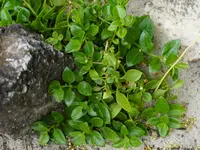
heart-leaf ice plant
Mesembryanthemum cordifolium

Cephalocereus tetetzo
Cephalocereus tetetzo
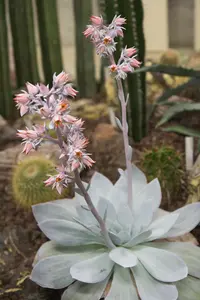
white cloud plant
Echeveria cante
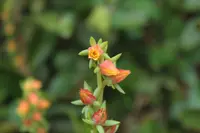
Echeveria bicolor
Echeveria bicolor
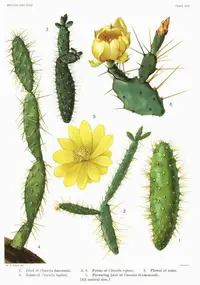
Velvet Bur Cactus
Opuntia pubescens
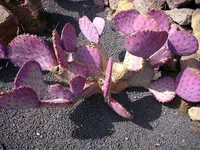
purple pricklypear
Opuntia macrocentra

Matucana madisoniorum
Matucana madisoniorum
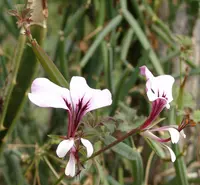
square-stemmed pelargonium
Pelargonium tetragonum