variegated liveforever Care (Dudleya variegata)

Also known as: variegated dudleya
variegated liveforever

About variegated liveforever

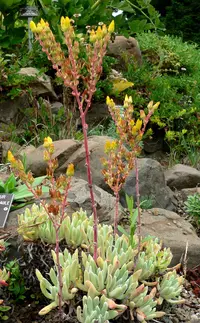
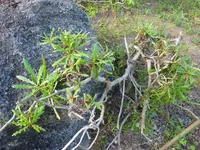
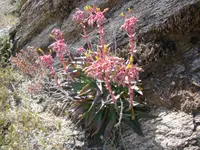
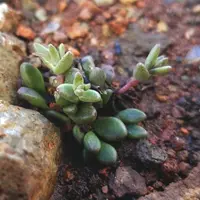
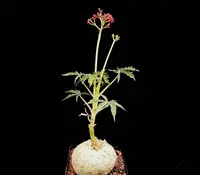
Variegated liveforever (Dudleya variegata) is a small, rosette-forming succulent native to coastal bluffs and rocky slopes of southern California and northern Baja California. It has fleshy, spoon-shaped leaves with pale green, gray, or creamy variegation and sends up slender flower stalks with starry white to pinkish blooms in season.

This species grows slowly and prefers dry, well-drained, mineral soils, reflecting its origin on cliffs and rocky outcrops. It is sensitive to excess summer water and humidity, which can make how to care for variegated liveforever more challenging in wetter climates.

In cultivation it suits container growing or rock gardens, where strong light, good air circulation, and careful watering help maintain compact growth and healthy foliage.

Main Plant Requirements

Care Difficulty

Hard Care

Light Preference

Full Sun

Water Requirements

Low Water

Temperature Preference

Warm Climate

Hardiness Zone

9–11

Soil Texture

Sandy, Rocky, Loamy

Soil pH

Slightly acidic (6.5–7.0), Neutral (7.0)

Soil Drainage

Well-drained

Fertilization

Minimal (feed rarely)

Get Personalized Care Plan

Scan your plant to receive care tips personalized for your specific plant

Available on iOS and Android

How to Care for the variegated liveforever

Dudleya variegata thrives in bright, mostly direct sun that mimics its native coastal bluffs.

  • Provide 4–6 hours of direct morning sun plus bright light the rest of the day; in very hot inland sites, give light afternoon shade to prevent leaf scorch and faded variegation in variegated liveforever.
  • Allow light, open shade under high trees or a shade cloth with about 30–40% screening in hotter regions, especially from 1–4 p.m.
  • In winter, ensure an open southern or western exposure so plants still receive 4–5 hours of sun; reduced light leads to stretched, weak rosettes.

This coastal succulent needs sparse, carefully timed watering to avoid root rot.

  • Water only when the top 3–5 cm of soil are completely dry and the leaves feel slightly less firm; in mild coastal climates this may mean every few weeks in active growth.
  • Use very fast-draining, gritty soil or rock crevices so water runs through within seconds; standing water or soggy soil quickly damages Dudleya variegata roots.
  • Reduce or stop watering in summer dormancy, resuming light, infrequent watering with cooler fall weather; signs of overwatering include mushy leaves, while deep wrinkling signals underwatering.

This species prefers mild, coastal-type temperatures with protection from hard frost and extreme heat.

  • Aim for 55–75°F (13–24°C) for best growth, especially during its cool-season active period from fall to spring.
  • Protect from temperatures below 28°F (-2°C); brief light frost may be tolerated if soil is dry, but repeated freezes or wet cold cause rot and tissue damage.
  • In heat above 90°F (32°C), give afternoon shade and ensure strong air movement; avoid reflected heat from walls or rock that can push leaf temperature much higher than air temperature.

This succulent prefers very dry air and usually does best at 20–40% humidity.

  • Tolerates typical heated indoor air well and is more likely to rot than to dry out from low humidity.
  • Watch for mushy leaves, blackened leaf bases, or a sour smell as signs excess humidity is combining with overwatering.
  • If air is consistently above 50%, increase air movement with a fan and space the plant away from other pots to aid drying.

This species needs a very fast-draining, mineral-based mix to prevent root and crown rot.

  • Use a gritty mix of roughly 60–70% inorganic material such as pumice, coarse sand, or small gravel with 30–40% cactus potting mix.
  • Aim for slightly acidic to neutral pH, around 6.0–7.0, which suits Dudleya variegata in containers.
  • Ensure the mix feels loose and airy; water should pass through in seconds, leaving no soggy or compacted pockets.
  • Avoid peat-heavy, dense, or moisture-retentive mixes, and do not add water-holding crystals or fine compost that slows drainage.

This species can grow well in containers if the pot is shallow, stable, and dries quickly between waterings.

  • Choose a wide, shallow pot that matches the shallow root system and keeps the rosette well above the rim to avoid pooled water at the crown.
  • Use unglazed clay to allow faster evaporation through the pot walls, reducing the risk of rot in variegated liveforever.
  • Elevate the container slightly on pot feet or bricks so drainage holes never sit in a saucer of water and runoff clears quickly.

This coastal succulent needs very light feeding, as it is adapted to nutrient-poor soils and can thrive with minimal inputs.

  • Apply a low-strength balanced liquid fertilizer (around 10-10-10) at 1/4 strength once in late spring if growth is weak.
  • Avoid rich compost; use a gritty, low-organic mix to prevent soft, rot-prone growth in Dudleya variegata.
  • Do not feed during summer dormancy or winter; fertilizer at these times can stress the plant.
  • Flush the pot with plain water occasionally to avoid salt buildup in the root zone.

Pruning needs for Dudleya variegata are minimal and focus on hygiene rather than reshaping the plant.

  • Best time to tidy is late winter to early spring, before the main growth period starts.
  • Remove dead, dried, or damaged leaves by gently pulling them away at the base to reduce rot and pests.
  • Cut spent flower stalks at the base with clean, sharp scissors or pruners once seeds have dispersed.
  • Avoid cutting healthy rosettes; heavy pruning can disfigure the plant and reduce vigor.

Container-grown plants and small clumps benefit from infrequent, careful transplanting that preserves the sensitive root system.

  • Look for roots circling the pot, reduced new leaf growth, or fast-drying soil as signs it needs a larger container.
  • Plan to repot or transplant every 3–4 years, ideally in late winter or very early spring, before active growth.
  • Use a shallow, wide pot or rocky, fast-draining site, handling the root ball gently to keep soil around the roots intact.
  • Water lightly after moving, then allow the mix to dry well; shade from strong sun for 3–5 days to limit transplant shock when growing variegated liveforever.

Propagation of Dudleya variegata is possible but slow and should be done thoughtfully, especially with wild-origin material.

  • Use offsets from established clumps in late winter or early spring, when buds just begin to swell.
  • Gently separate side rosettes with some attached roots, keeping wounds small and clean.
  • Set divisions into a gritty, sharply draining mix; keep in bright shade with very light watering until rooted.
  • Seed propagation is specialist work; seeds need well-drained sandy medium, bright light, and careful moisture to avoid damping-off.

Winter care focuses on keeping the plant cool, bright, and relatively dry, as this species is more active in cooler months.

  • Tolerates light frost around 25–30°F if soil is sharply drained and foliage stays relatively dry.
  • In the ground, a thin gravel mulch helps insulate the crown and keeps moisture away from leaf bases.
  • For containers in colder climates, move under a cold frame, unheated greenhouse, or bright indoor window before hard freezes.
  • Water sparingly in winter, allowing soil to dry almost completely between light waterings to limit root rot risk.

Care Tips

Summer dry rest

In hot-summer climates, sharply reduce or stop watering in peak summer and keep the rosette shaded from afternoon sun to mimic its natural dry dormancy and prevent root loss.

Top-dress with grit

Apply a 0.5–1 in layer of coarse mineral grit around the crown to keep leaves off wet soil, reduce collar rot, and stabilize the rosette on sloped or rocky sites.

Tilted planting angle

Set the root ball on a slight tilt in a rocky pocket or sloped container so water drains away from the crown, which lowers the risk of rot from heavy rains or overwatering.

Cold rain protection

In winter-rain regions, place a clear, ventilated rain cover or move pots under a bright overhang during extended wet spells to keep foliage and crown relatively dry while still allowing airflow.

Minimal disturbance repotting

When repotting or dividing, keep the native root ball as intact as possible, handle roots gently, and wait 5–7 days before the first light watering to let any broken roots callus, which supports long-term success when growing variegated liveforever.

Common Pests and Diseases

Mealybugs

This pest feeds on sap in leaf axils and between tight rosette leaves, causing distortion and sticky honeydew that encourages sooty mold. Symptoms include white cottony clusters hidden deep in the rosette and slowed growth.

Solution

Isolate the plant, then use a strong but gentle stream of water to flush insects from the rosette, repeating weekly until no signs remain. For persistent infestations, dab visible mealybugs with cotton swabs dipped in 70% isopropyl alcohol and improve air movement and spacing to reduce reinfestation when growing variegated liveforever in containers or rock gardens.

Aphids

These insects cluster on new growth and flower stalks, sucking sap and causing curling, yellowing, and sticky residue that may attract ants. This pest is most common when plants are grown in richer soils or receive excess water or fertilizer.

Solution

Rinse off colonies with a firm spray of water in the morning, repeating as needed until populations stay low. If needed, spot-treat remaining aphids with insecticidal soap, avoiding applications during full sun or high heat to prevent leaf damage, and reduce excess nitrogen fertilizer that encourages soft, aphid-prone growth.

Snails and slugs

These pests chew irregular holes in leaves and can eat entire young rosettes, especially during cool, damp periods. Symptoms include ragged leaf margins, missing tissue, and slime trails on or near the plant.

Solution

Hand-pick snails and slugs at dusk or after watering, and use physical barriers such as copper tape or rough gravel mulches around pots or planting areas. In wetter gardens, place beer traps or iron-phosphate slug baits nearby, following label directions and keeping them away from children and pets.

Fungal leaf spots

This disease appears as small brown, tan, or black spots on leaves, sometimes with a yellow halo, and can develop when moisture stays on the rosette for long periods. Symptoms include premature leaf drop from the outer ring of the rosette in poorly ventilated or humid locations.

Solution

Remove and discard affected leaves, keeping only firm, clean tissue, and avoid overhead watering so the rosette dries quickly. Space plants to increase airflow, keep foliage dry in the evening, and if spots continue to spread, apply a sulfur or copper-based fungicide labeled for succulents, following all safety directions.

Crown rot

This disease causes the central growing point of the rosette to soften, turn brown or black, and collapse, often starting after prolonged moisture at the base. Symptoms include mushy tissue at the crown, foul odor, and rapid decline of the entire plant.

Solution

At the first sign of soft tissue, cut away all rotted parts with a sterile blade and allow the remaining healthy rosette sections to dry several days before replanting in a very fast-draining, gritty mix. Prevent recurrence by using shallow, well-drained containers or rocky slopes, watering sparingly, and keeping water away from the rosette center, especially during cool seasons.

Interesting Facts

San Diego County endemic

This species occurs naturally only in a restricted area of southwestern California, mainly in San Diego County and a small part of northern Baja California, where it grows on rocky slopes and coastal mesas.

Subtle leaf variegation

Despite the name variegata, its leaves are usually a soft bluish to pale green with faint mottling or streaking, rather than the bold variegation seen in many ornamental plants, and this coloration helps reflect sunlight in exposed habitats.

Dry-season dormancy strategy

In its native climate it often slows growth or partially retreats during the hottest, driest months, conserving water in its rosette while surviving on minimal rainfall and marine fog moisture.

Botan icon

Did you know?

Wild populations of this species have been threatened by illegal collecting for the succulent trade, enough that land managers and conservation groups in California have organized specific protection and monitoring efforts for it in its native habitat.

FAQs about variegated liveforever

This species is best grown outdoors in mild, dry-summer climates that mimic coastal bluffs. Indoors, it often declines due to low light, stagnant air, and overwatering, so variegated liveforever indoor care is generally considered challenging long term.

Grow Healthy Plants with Botan Care

Keep your plants happy and healthy with plant identification, disease detection, and easy care guidance.

Botan plant care app — identify plants on mobile

Explore More Plants