Encourage Compact Growth
Pinch back soft stem tips in early spring to encourage branching and a denser cushion form, which helps reduce wind damage in exposed sites.

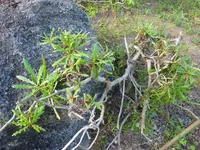
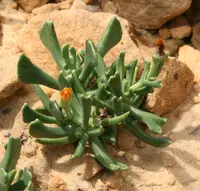
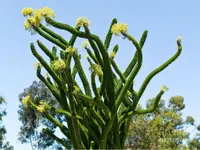
Tolpis succulenta is a small, clump-forming perennial from rocky coastal areas of Madeira and nearby Atlantic islands. It belongs to the daisy family and has a compact, bushy habit. The plant produces fleshy, bluish-green leaves that store water and yellow daisy-like flowers on slender stems. It often grows in crevices and shallow soils exposed to salt-laden winds. Its succulent foliage makes it relatively tolerant of short dry spells and poor, gritty soils, which can simplify how to care for Tolpis succulenta. It prefers bright light, good drainage, and moderate watering, which suits many sunny windowsills and dry garden spots.

Care Difficulty
Easy Care

Light Preference
Full Sun

Water Requirements
Low Water

Temperature Preference
Warm Climate

Hardiness Zone
9–11

Soil Texture
Sandy, Loamy, Rocky

Soil pH
Slightly acidic (6.5–7.0), Neutral (7.0)

Soil Drainage
Well-drained

Fertilization
Minimal (feed rarely)
Scan your plant to receive care tips personalized for your specific plant
Available on iOS and Android
This coastal succulent prefers bright, open conditions that mimic its native rocky habitats.
This species is drought-tolerant and needs infrequent but thorough watering once established.
This plant thrives in mild, maritime-type climates with limited frost and moderate summer heat.
This coastal succulent handles low indoor humidity well and rarely needs special moisture control.
Tolpis succulenta prefers mineral, fast-draining soil that dries quickly between waterings.
This species is well suited to container growing for patios, balconies, or dry gardens.
This coastal species grows on poor soils and usually needs only light feeding in containers or very lean garden sites.
Pruning Tolpis succulenta is minimal and mainly supports compact growth and repeat flowering.
This species is usually grown in the ground, so focus on careful transplanting rather than frequent repotting.
Tolpis succulenta is commonly propagated to expand groundcover patches or replace older plants.
In mild coastal climates Tolpis succulenta is fairly tolerant of cool weather but dislikes hard frost.

Plant Health Check
Not sure what's wrong with your plant? Check your plant's health inside the app.
This species is native to the Azores and naturally grows on exposed sea cliffs and rocky slopes, where it tolerates wind, salt spray, and thin, stony soils.
Its fleshy, water-storing leaves are an adaptation to the oceanic island climate, helping the plant bridge short dry periods despite generally mild, moist conditions.
The yellow flower heads belong to the Asteraceae (daisy) family and are composed of many small florets grouped together, a typical trait of this plant family.
Poor flowering usually results from insufficient light, depleted soil nutrients, or spent flower heads left on the plant. Provide strong light, use a balanced, low-nitrogen fertilizer, and deadhead regularly to encourage repeated bud formation and longer flowering.
Keep your plants happy and healthy with plant identification, disease detection, and easy care guidance.