Verity's liveforever Care (Dudleya verityi)

Also known as: Verity's dudleya
Verity's liveforever

About Verity's liveforever

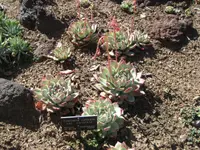
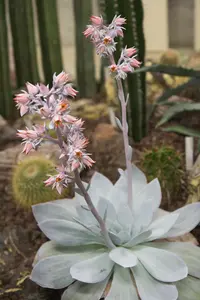
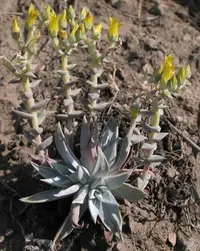
Verity's liveforever (Dudleya verityi) is a small, rosette-forming succulent native to rocky coastal bluffs in Ventura County, California. It grows in tight clusters, with pale bluish to whitish leaves often covered by a fine powdery coating.

This species is adapted to harsh, dry, and sunny cliff environments, which makes it sensitive to excess water and poor drainage in cultivation. It is slow growing and can be challenging if its seasonal dry rest is ignored.

Because it is a rare and protected species in the wild, responsible growers focus on how to care for Verity's liveforever using nursery-propagated plants, bright light, and very gritty soil.

Main Plant Requirements

Care Difficulty

Hard Care

Light Preference

Full Sun

Water Requirements

Low Water

Temperature Preference

Warm Climate

Hardiness Zone

9–11

Soil Texture

Sandy, Rocky

Soil pH

Slightly acidic (6.5–7.0), Neutral (7.0)

Soil Drainage

Well-drained

Fertilization

Minimal (feed rarely)

Get Personalized Care Plan

Scan your plant to receive care tips personalized for your specific plant

Available on iOS and Android

How to Care for the Verity's liveforever

This coastal succulent needs bright, direct sun with some protection from harsh extremes.

  • Provide 6–8 hours of full sun daily, ideally with morning sun and light afternoon shade, especially inland or away from cool coastal influence.
  • Tolerates light partial shade (3–4 hours sun), but plants may elongate and lose compact rosettes if kept too shaded.
  • In very hot summers, protect Verity's liveforever from intense midafternoon sun to reduce leaf scorch and gray coating damage, especially on reflective surfaces.

Watering should mimic a dry, coastal climate with short wet periods and long dry spells.

  • Allow the soil to dry completely, at least the top 5–8 cm, before watering; use sharply drained, gritty soil so water runs through quickly.
  • During the cool growing season, water only when foliage looks slightly less firm; in summer dormancy, keep almost dry except for rare light sips in extreme heat.
  • Reduce or stop watering if leaves become mushy, translucent, or black at the base, classic signs of overwatering in Dudleya verityi.

This species prefers mild, frost-free conditions similar to its native coastal bluffs.

  • Aim for 55–75°F (13–24°C) for active growth, with coolest, slightly moist conditions in winter–spring and drier rest in warmer months.
  • Tolerates brief dips to around 32°F (0°C) if soil is dry and air is not stagnant, but repeated or hard freezes can damage rosettes.
  • Handles dry heat up to about 90–95°F (32–35°C) if shaded in midafternoon and kept on the dry side to prevent root rot and leaf stress.

This species prefers very dry air and usually needs no special humidity management indoors.

  • Target 20–40% relative humidity, similar to arid indoor conditions, and avoid using humidifiers nearby.
  • Excess humidity shows as soft, pale, or translucent leaves and increased rot at the rosette base.
  • If air is consistently above 50%, increase airflow with a small fan and keep the plant away from kitchens, bathrooms, and terrariums.

Provide a fast-draining, mineral-heavy mix that mimics a rocky coastal cliff habitat.

  • Use roughly 70–80% inorganic material such as pumice, coarse sand, and small gravel with 20–30% cactus mix or lean potting mix.
  • Aim for slightly acidic to neutral pH around 6.0–7.0, avoiding strongly acidic or alkaline blends unless tested.
  • Improve aeration by using large-grain materials (3–6 mm) and avoiding fine peat that compacts and holds water around roots.
  • Avoid dense, moisture-retentive mixes, high compost content, or any soil that stays wet longer than 24 hours after watering, which increases rot risk for Dudleya verityi.

This species adapts well to container growing when drainage and mineral substrate are carefully controlled.

  • Choose a shallow, wide pot to accommodate the relatively shallow root system and keep the rosette elevated above any water pooling.
  • Use unglazed terracotta or clay to promote evaporation from the sides, reducing the chance of prolonged root wetness.
  • Elevate the pot slightly on feet or mesh so runoff clears quickly and the drainage holes never sit in a saucer of water.

This highly specialized native succulent grows best with minimal feeding, so focus on light, infrequent nutrition rather than routine fertilization when caring for Verity's liveforever.

  • If container-grown, use a very dilute balanced NPK cactus or succulent fertilizer at 1/4 strength once in late spring.
  • Avoid organic compost or rich potting mixes that hold moisture, as they increase root rot risk in Dudleya verityi.
  • Skip feeding in summer dormancy and winter; nutrients at these times encourage weak, etiolated growth.
  • Rinse pots occasionally with plain water during the growing season to prevent salt buildup from liquid fertilizers.

Pruning needs for Dudleya verityi are minimal and focus mainly on hygiene rather than reshaping the plant.

  • In late winter or early spring, remove dried flower stalks and completely dead leaves by gently pulling or cutting at the base.
  • Use small, clean scissors or pruning snips to avoid damaging the rosette and to limit disease entry points.
  • Clearing dead foliage improves air circulation around the crown, reducing moisture retention and fungal problems.
  • Avoid cutting into healthy rosettes; this species maintains its natural form best with only light, selective cleanup.

This species dislikes root disturbance, so repotting or transplanting Dudleya verityi should be done infrequently and with care.

  • Check for roots circling drainage holes, compacted mix, or stagnant growth as signs that a larger, shallow container is needed.
  • Plan any move for late winter to early spring, just before active growth, and limit repotting to every 3–4 years at most.
  • Use a very fast-draining mineral mix and handle the root ball gently, keeping as much soil intact as possible.
  • After transplanting, keep the plant slightly shaded and barely watered for 7–10 days to allow roots to heal before resuming normal care.

Dudleya verityi is a conservation-sensitive species, so propagation is best limited to legally obtained plants and done with careful technique.

  • Leaf cuttings are unreliable; instead, use offsets or rosette division from mature, healthy clumps in late winter or early spring.
  • Lift the plant gently and separate side rosettes with a clean, sharp knife, keeping a portion of the root system attached.
  • Allow cut surfaces to dry and callus for several days in bright, indirect light before placing on or in barely moist, gritty mix.
  • Maintain cool, bright conditions and very light watering until roots establish, then transition slowly to typical dry-summer care.

Cool, relatively dry winters suit this coastal succulent, but it is sensitive to hard, prolonged freezes, especially in containers.

  • Aim to keep temperatures above 28–30°F; brief light frosts are usually tolerated if soil drains well.
  • In the ground, use a thin gravel mulch around the crown rather than organic mulch, which holds excess moisture.
  • For potted plants in colder regions, move containers under a cold frame, bright porch roof, or unheated greenhouse during freezes.
  • Ensure winter watering is sparse, letting the mix dry well between light waterings to avoid cold-related root rot.

Care Tips

Summer dormancy rest

Reduce water sharply and provide strong air movement during the hottest, driest months to respect this species’ natural summer dormancy and prevent rot.

Top-dressing choice

Use a 1–2 cm layer of coarse, pale-colored gravel around the crown to keep leaves dry at the base, stabilize the plant, and reflect heat away from the rosette.

Slope-style planting

Plant the rosette on a slight lean or in a crevice so water naturally runs off the crown, which mimics its cliff habitat and greatly reduces crown rot risk.

Winter rain management

If grown outdoors in regions with prolonged winter rain, place containers under a clear rain shield or eave so the plant receives bright light but no continuous overhead wetting.

Propagation timing

Take leaf or offset cuttings only in late winter to early spring, when root growth resumes, to improve establishment success and simplify caring for Verity's liveforever during recovery.

Common Pests and Diseases

Mealybugs

This pest targets sheltered rosettes and leaf bases, sucking sap and weakening the plant over time. Symptoms include white cottony clusters, distorted new growth, and sticky honeydew on leaves or nearby surfaces.

Solution

Remove visible clusters with a cotton swab dipped in isopropyl alcohol and rinse the plant gently with a firm stream of water, keeping the rosette angled so water drains away. For repeated outbreaks, isolate the plant and use a light topical treatment of insecticidal soap or horticultural oil applied carefully to avoid standing moisture in the rosette, which is important in Dudleya verityi care.

Aphids

These insects feed on tender new growth and flower stalks, causing curling, stunted growth, and sticky residue that can attract sooty mold. Colonies often appear suddenly during active growth or flowering, especially in mild, sheltered locations.

Solution

Dislodge colonies with a firm stream of water in the morning so the plant dries fully by evening, and pinch back heavily infested flower stalks. For persistent populations, apply insecticidal soap directly to affected areas, keeping sprays light and avoiding prolonged wetting of the rosette core.

Soft scale

This pest appears as small, rounded, often tan or brown bumps on stems and leaf undersides, where it feeds on sap and excretes honeydew. Symptoms include dull, sticky foliage, slowed growth, and possible sooty mold on nearby surfaces.

Solution

Gently scrape or wipe off individual scales with a soft cloth or cotton swab moistened with isopropyl alcohol, then rinse the plant to remove honeydew. Improve air movement and sun exposure within the plant’s tolerance, and repeat spot treatments over several weeks to break the life cycle without over-wetting the succulent leaves.

Fungal leaf spots

This disease causes small brown, gray, or black lesions on leaves, often starting where water sits on the foliage or where there is poor airflow. Symptoms include localized discoloration, sunken spots, and in severe cases premature leaf drop from the lower rosette.

Solution

Remove and discard affected leaves, cutting cleanly and keeping the rosette as dry as possible. Adjust watering so the substrate dries fully between waterings, avoid overhead watering, provide stronger airflow and sun, and, if spreading continues, use a light, succulent-safe fungicide applied only to dry tissue.

Snails and slugs

These pests feed at night on fleshy leaves, leaving irregular holes, ragged edges, and silvery slime trails on and around the plant. Damage often concentrates on outer leaves and young rosettes grown outdoors or in unprotected cold frames.

Solution

Hand-pick snails and slugs in the evening or early morning and use barriers such as copper tape or sharp grit around pots to reduce access. In outdoor plantings, keep surrounding areas dry and free of dense debris, and if needed use iron phosphate bait placed away from direct contact with the rosettes to protect the slow-growing plants.

Interesting Facts

Restricted cliff specialist

This species is naturally confined to a few north-facing volcanic cliffs on the Ventura County coast of California, growing in narrow crevices that provide cool roots and protection from desiccation.

Summer dormancy strategy

In its native habitat, the rosettes often shrink and leaves can look shriveled in summer, entering a drought-induced semi-dormant state that reduces water loss until cooler, wetter conditions return.

Genetic distinctiveness

Although closely related to other insular dudleyas, this species shows distinct morphological and genetic traits, which contributed to its formal recognition and listing as a federally threatened plant in the United States.

Botan icon

Did you know?

This species is so narrowly endemic and vulnerable to poaching that botanists and land managers have deliberately kept some exact wild locations vague in public documents to reduce the risk of illegal collecting.

FAQs about Verity's liveforever

Flowering rosettes produce nectar-rich blooms that attract native bees, small wasps, flies, and sometimes hummingbirds. In gardens, this species supports local pollinator communities, especially when planted in dry, open sites with other drought-tolerant natives.

Grow Healthy Plants with Botan Care

Keep your plants happy and healthy with plant identification, disease detection, and easy care guidance.

Botan plant care app — identify plants on mobile

Explore More Plants