Rock crevice mounting
Press the thallus gently into shallow crevices of porous rocks (like tufa or lava rock) so it can anchor, then secure it with small pebbles or mesh until new growth grips the surface.

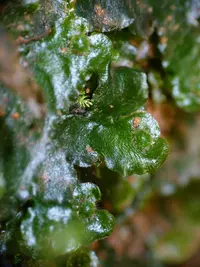
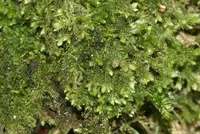
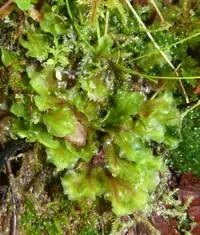
Dumortier's liverwort (Dumortiera hirsuta) is a non-vascular bryophyte, related to mosses, that forms soft, flattened, ribbon-like mats on moist surfaces. It often grows on rocks, tree bases, or soil in very humid, shaded habitats.
This species is native to many warm, wet regions in Asia and other tropical to subtropical areas, where it thrives in consistently damp forests and near streams or waterfalls. Its glossy green to reddish fronds and low, creeping habit make it an interesting accent for terrariums and shaded water features.
Because it needs high humidity, constant moisture, and shade, it can be delicate in typical indoor conditions. Anyone wanting to learn how to care for Dumortier's Liverwort should be ready to maintain stable moisture and shelter it from drying air and direct sun.

Care Difficulty
Hard Care

Light Preference
Shade

Water Requirements
Aquatic

Temperature Preference
Tropical / Frost Sensitive

Hardiness Zone
10–13

Soil Texture
Silty, Peaty, Organic-rich

Soil pH
Strongly acidic (4.5–5.5), Acidic (5.5–6.5)

Soil Drainage
Waterlogged tolerant

Fertilization
Minimal (feed rarely)
Scan your plant to receive care tips personalized for your specific plant
Available on iOS and Android
This bryophyte thrives in cool, consistently shaded, humid sites with very soft, indirect light.
This liverwort requires constant surface moisture and does not tolerate drying out.
This species prefers cool to mild, frost-free conditions with stable humidity.
This species needs constant high humidity to thrive and will decline quickly in dry air.
This liverwort prefers permanently moist, highly organic, fine-textured substrates rather than conventional potting soil.
This species can be grown in shallow containers, especially terrariums, if moisture and stability are carefully managed.
This moss-like liverwort is adapted to nutrient-poor substrates and needs very little supplemental feeding in cultivation.
Dumortiera hirsuta needs only light maintenance trimming to keep mats healthy and free from decay.
This liverwort is usually grown on rocks, wood, or shallow trays, so transplanting focuses on renewing its substrate rather than frequent repotting.
This species is commonly propagated vegetatively, using small fragments of the thallus rather than seeds.
This liverwort prefers cool, moist conditions and usually needs only modest winter care in temperate climates.

Plant Health Check
Not sure what's wrong with your plant? Check your plant's health inside the app.
This species is named for the fine, soft hairs on its surface, which give the thallus a slightly velvety look when moist and help retain a film of water around the plant body.
The plant forms broad, ribbon-like thalli that lie flat on rock or bark, creating overlapping layers that trap water and provide habitat for microscopic invertebrates and algae in constantly wet forests.
It typically grows on shaded, wet rocks and tree bases along unpolluted waterfalls and streams, so stable colonies often indicate cool, humid microclimates with relatively clean running water.

Genetic and morphological studies place this species in one of the most basal lineages of complex thalloid liverworts, meaning it retains several ancient structural features that help researchers study early land plant evolution.
This species spreads slowly to moderately by creeping mats and small vegetative fragments. It usually forms low patches rather than overtaking areas. In gardens or terraria, growth is easy to direct by gently lifting and thinning unwanted sections.
Keep your plants happy and healthy with plant identification, disease detection, and easy care guidance.