Substrate anchoring
Press small pieces of moss firmly onto rough bark or porous rock and secure them with biodegradable mesh or cotton thread for 4–6 weeks so the rhizoids can attach securely before the support is exposed to wind or handling.

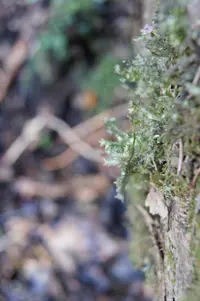
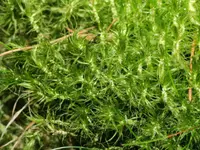
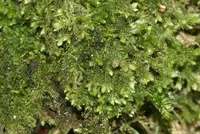
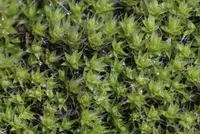
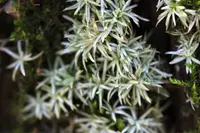
Neckera pennata, often called neckera moss, is a creeping, evergreen moss that forms flat, glossy mats on tree trunks and shaded rocks. Its fronds are slender, overlapping, and slightly feathered, creating a soft, layered texture.
This species occurs mainly in cool, humid forests of Europe, Asia, and North America, where the air is moist and light is filtered. It tends to be moderately easy to keep in cultivation if humidity stays high and air movement is gentle.
Those who want to learn how to care for neckera moss should know it prefers stable moisture, low to medium light, and a neutral to slightly acidic, well-drained substrate.

Care Difficulty
Hard Care

Light Preference
Shade

Water Requirements
Keep Soil Moist

Temperature Preference
Cool Climate

Hardiness Zone
3–7

Soil Texture
Loamy, Rocky, Organic-rich

Soil pH
Strongly acidic (4.5–5.5), Acidic (5.5–6.5)

Soil Drainage
Moist but well-drained

Fertilization
Minimal (feed rarely)
Scan your plant to receive care tips personalized for your specific plant
Available on iOS and Android
This moss prefers soft, indirect light similar to that found on shaded tree trunks or rock faces.
This species relies on frequent surface moisture but is sensitive to stagnant water.
This moss is adapted to cool, humid climates and does best without temperature extremes.
This moss needs consistently high humidity to stay hydrated and photosynthesize efficiently.
Neckera pennata prefers a moist, airy, organic substrate that mimics decaying wood or rock crevices.
This species can grow in shallow containers or terraria if moisture and stability are carefully managed.
This moss needs very little feeding when grown in natural-style culture.
Pruning needs for Neckera pennata are minimal and mainly cosmetic.
This moss is usually grown on bark, rocks, or wood, so focus on gentle transplanting rather than repotting.
Neckera pennata is commonly propagated by division of existing mats rather than from spores at home.
This moss is naturally cold hardy in many temperate regions and usually needs no special winter care outdoors.

Plant Health Check
Not sure what's wrong with your plant? Check your plant's health inside the app.
This moss is strongly associated with long-established, undisturbed broadleaf forests, especially old maple and ash stands, so its presence is often used by ecologists as an indicator of forest continuity and habitat quality.
In much of its range, this species grows mainly as an epiphyte on the bark of living trees rather than on soil or rock, forming loose, glossy mats that follow the contours of trunks and branches.
The species has a wide but patchy distribution across cool, moist boreal and temperate regions of the Northern Hemisphere, yet it can be locally rare where suitable humid, shaded forest microhabitats have been reduced.

In parts of Europe and North America, Neckera pennata is legally protected or listed as a species of conservation concern, and its occurrence is used in forest management planning to identify and safeguard high-value, old-growth-like habitats.
Growth is slow to moderate. In favorable, consistently moist and shaded conditions, it usually extends only a few millimeters to about 1 cm per year, forming soft mats over bark, rocks, or decaying wood rather than thick cushions.
Keep your plants happy and healthy with plant identification, disease detection, and easy care guidance.