Use suitable rock
Select hard, low-porosity rock such as granite, basalt, or slate rather than limestone, as this mimics the natural habitat and helps cushions stay attached and long-lived.

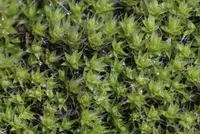
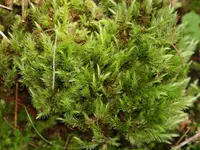
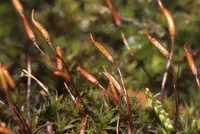
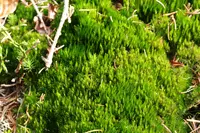
Grimmia laevigata, commonly called grimmia dry rock moss, is a small cushion-forming moss that grows tightly against rock surfaces. It forms dense, gray-green tufts that can appear almost velvety when hydrated.
This species naturally occurs on exposed rocks in dry, sunny or partly shaded sites across many temperate regions. It is adapted to withstand drying out and then quickly revive when moisture returns, which makes it relatively forgiving once established.
Because it is slow-growing and specialized for rocky substrates, it can be a bit challenging to establish in gardens or terrariums. Understanding how to care for grimmia dry rock moss starts with providing stable rock surfaces, good light, and intermittent moisture without constant saturation.

Care Difficulty
Moderate Care

Light Preference
Full Sun

Water Requirements
Low Water

Temperature Preference
Cold Hardy

Hardiness Zone
4–9

Soil Texture
Rocky, Sandy

Soil pH
Acidic (5.5–6.5)

Soil Drainage
Well-drained

Fertilization
Minimal (feed rarely)
Scan your plant to receive care tips personalized for your specific plant
Available on iOS and Android
This sun-loving rock moss thrives in open, exposed sites but still benefits from some daily shade.
This drought-adapted moss is naturally dry most of the time and should not be kept constantly moist.
This moss is highly cold hardy and tolerates a broad temperature range when attached to well-drained rock.
This moss tolerates a wide humidity range but prefers moderately dry air.
Grimmia laevigata prefers mineral, fast-draining, rocky substrates rather than soft, organic potting mixes.
This species can be grown in shallow containers that mimic rocky outcrops.
This moss is adapted to nutrient-poor rock and typically needs no added fertilizer for healthy growth.
Grimmia laevigata needs virtually no pruning beyond light tidying to keep rock plantings neat.
Transplanting Grimmia laevigata focuses on moving small mats or cushions rather than disturbing individual shoots.
Propagation is usually done by vegetative division of cushions rather than by spores in home settings.
This rock moss is naturally cold hardy and typically requires no special winter care in outdoor conditions.

Plant Health Check
Not sure what's wrong with your plant? Check your plant's health inside the app.
This rock moss can survive almost completely dried out on exposed stone and resume metabolism within minutes to hours after rewetting, thanks to highly resilient leaf and cell structures that limit damage during dehydration.
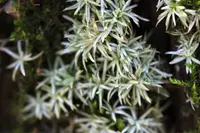
Its narrow, strongly incurved leaves have a thickened, shiny upper surface that reflects excess sunlight and reduces water loss, giving cushions a silvery or hoary look when dry on sun-exposed rocks.
It typically anchors on hard, often slightly basic rocks such as granite or limestone in very dry, open sites, forming dense cushions that help stabilize tiny pockets of dust and organic matter on otherwise bare stone.

This species is considered a classic model for studying drought adaptation in mosses, and its cushion-forming, rock-dwelling lifestyle has been documented across multiple continents, from lowland quarries and walls to high mountain outcrops, demonstrating an unusually broad ecological amplitude for such an extreme habitat specialist.
This species spreads slowly by spores and by expanding its cushions, but it is not aggressive. It gradually enlarges over rock surfaces without smothering nearby plants, making it suitable for detailed rockwork and small crevice plantings.
Keep your plants happy and healthy with plant identification, disease detection, and easy care guidance.