Rotate for symmetry
Rotate the pot 90° every 2–3 weeks so the mat-forming stems develop evenly and do not lean or crowd one side of the container.

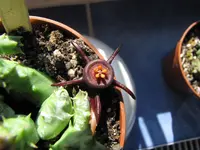
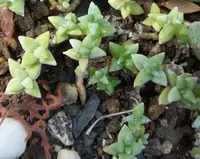
Duvalia caespitosa is a small, mat-forming succulent from arid regions of southern Africa. It belongs to the stapeliad group, known for star-shaped, often unusual flowers. The plant grows from low, angular, grey-green stems that form dense clumps and stay compact, making it suitable for pots and small spaces.
Its flowers are typically brownish to maroon with a textured surface and may have a strong odor that attracts pollinating flies. This species prefers bright, indirect light, a very fast-draining gritty soil mix, and careful watering that allows the roots to dry between waterings. Understanding these desert-like needs is the key to how to care for Duvalia caespitosa in a home setting.

Care Difficulty
Moderate Care

Light Preference
Partial Sun

Water Requirements
Low Water

Temperature Preference
Tropical / Frost Sensitive

Hardiness Zone
10–11

Soil Texture
Sandy, Rocky, Organic-rich

Soil pH
Slightly acidic (6.5–7.0), Neutral (7.0)

Soil Drainage
Well-drained

Fertilization
Minimal (feed rarely)
Scan your plant to receive care tips personalized for your specific plant
Available on iOS and Android
This arid-climate succulent prefers bright, indirect sun with some direct light at cooler times of day.
Watering should mimic brief desert rains followed by dry periods in a sharply draining mix.
This species prefers warm, dry conditions and is sensitive to cold and frost.
This species prefers relatively dry air and does not have demanding humidity requirements.
Soil for Duvalia caespitosa must be very fast-draining and airy to prevent root and stem rot.
This species is well suited to container growing due to its shallow, spreading root system.
This drought-adapted succulent needs only light feeding under active growth.
Pruning is minimal and mainly keeps this succulent tidy and healthy.
This species prefers a stable, tight pot and only occasional repotting.
Propagation is commonly done from stem cuttings rather than seed.
This succulent is frost sensitive and needs protective winter conditions in most climates.

Plant Health Check
Not sure what's wrong with your plant? Check your plant's health inside the app.
This species produces flat, 5-pointed, star-like flowers that lie almost flush with the soil surface, an adaptation that helps attract ground-dwelling pollinators in its arid native habitats.
The flowers emit a mild carrion-like scent and display mottled, flesh-like colors that mimic decaying organic matter, a classic strategy in the stapeliad group to lure flies as pollinators.
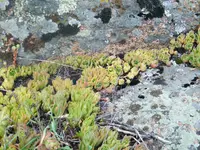
Its slender, 4-angled stems grow in dense, low mats that help shade the root zone, reduce water loss, and stabilize the plant on rocky, shallow soils in the dry regions of southern Africa.

In its native range in South Africa and neighboring regions, this species often occupies narrow rock crevices and shallow pockets of gritty soil where few other succulents can persist, demonstrating a high degree of specialization for extreme microhabitats.
Lack of flowers usually comes from insufficient light, keeping it too cool, or not giving a short dry rest. Slightly cooler, drier conditions for a few weeks can often trigger flowering in the next season.
Keep your plants happy and healthy with plant identification, disease detection, and easy care guidance.