Echeveria fulgens Care

Echeveria fulgens

About Echeveria fulgens

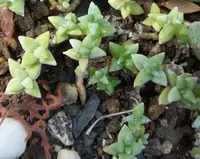
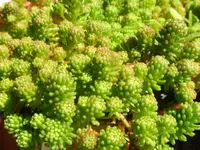
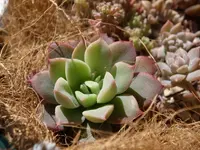
Echeveria fulgens is a small, rosette-forming succulent from rocky slopes of Mexico’s Pacific coast. It stores water in thick, spoon-shaped leaves and stays compact. Leaf color often shifts between blue-green and reddish tones, especially in bright light, giving the plant strong ornamental value in pots and rock gardens. In season, it sends up arching flower stalks with small, bell-shaped coral to orange blooms. As a drought-tolerant succulent, it is generally easy to grow for beginners who want to care for Echeveria fulgens. It prefers strong light, limited watering, and sharply draining soil to maintain its shape and avoid rot.

Main Plant Requirements

Care Difficulty

Easy Care

Light Preference

Full Sun

Water Requirements

Low Water

Temperature Preference

Tropical / Frost Sensitive

Hardiness Zone

9–11

Soil Texture

Sandy, Loamy, Rocky

Soil pH

Slightly acidic (6.5–7.0), Neutral (7.0)

Soil Drainage

Well-drained

Fertilization

Minimal (feed rarely)

Get Personalized Care Plan

Scan your plant to receive care tips personalized for your specific plant

Available on iOS and Android

How to Care for the Echeveria fulgens

This succulent thrives in bright, direct light but needs protection from extreme midday intensity in hot climates.

  • Provide 4–6 hours of direct morning sun plus bright light the rest of the day; in very hot areas, give light shade after 1–2 pm to prevent leaf scorch.
  • Echeveria fulgens tolerates light partial shade, but rosettes may stretch and lose color if total daily sun drops below about 3–4 hours.
  • In winter, move plants to the brightest available spot and, in cold regions, place containers where low-angle sun reaches them for most of the day.

This drought-tolerant species prefers thorough but infrequent watering in sharply draining soil.

  • Water only when the top 3–5 cm of soil are completely dry; in warm growing seasons this may mean roughly every 7–14 days, less often in cool or cloudy weather.
  • Use fast-draining, gritty soil so water runs through in seconds and no puddles remain on the surface or around the crown.
  • Reduce watering in winter to just prevent shriveling leaves; soft, translucent leaves suggest overwatering and rot risk, while deeply wrinkled leaves indicate underwatering.

This species prefers mild, dry conditions and is sensitive to prolonged cold and frost.

  • Aim for 65–80°F (18–27°C) during active growth for best rosette shape and coloration, with good air movement to avoid fungal problems.
  • Protect plants from temperatures below 30–32°F (-1–0°C); brief light frost may mark leaves, but harder or repeated freezes can kill the rosette.
  • In summer heat above 90–95°F (32–35°C), provide afternoon shade and avoid reflected heat from walls or pavement to reduce leaf scorch and stress.

This species prefers dry, airy conditions and does not require elevated humidity.

  • Aim for 30–50% relative humidity, similar to most heated or air-conditioned homes.
  • Dry indoor air is usually tolerated, but prolonged humidity above 60% increases rot risk.
  • Watch for soft, translucent leaves as a sign of excess humidity and improve air movement rather than adding moisture.

This succulent needs a sharply draining, mineral-rich mix to keep roots dry between waterings.

  • Use a cactus/succulent mix based on sandy or gritty material, not peat-heavy potting soil.
  • Aim for slightly acidic to neutral pH around 6.0–7.0, which suits Echeveria fulgens roots well.
  • Blend mineral components such as pumice, perlite, and coarse sand at 50–70% of the mix for strong aeration.
  • Avoid dense, water-retentive soils that stay wet for more than 2–3 days, as this encourages root rot.

This species is very suitable for container growing due to its compact rosette and shallow roots.

  • Choose a wide, shallow pot that matches the rosette spread so the roots can occupy the top layer without excess unused depth.
  • Use unglazed terracotta if possible, as its porous walls help moisture evaporate quickly after watering.
  • Elevate the container slightly on pot feet or stones so drainage holes stay clear and water does not pool under the base.

Succulent species such as Echeveria fulgens need only light, targeted fertilization to support compact growth.

  • Use a balanced, low-nitrogen liquid fertilizer at 1/4–1/2 strength during spring–summer growth.
  • Apply every 4–6 weeks to plants in active growth, especially in containers with inert, gritty mixes.
  • Skip fertilizing in winter or when growth is stalled to avoid weak, stretched tissue.
  • Avoid rich compost or heavy slow-release products that hold excess moisture in the potting mix.

Pruning for this compact rosette succulent is minimal and mainly hygienic.

  • Best time is late winter to early spring before strong new growth begins.
  • Remove dead, shriveled, or damaged leaves at the base to reduce rot and pest harborage on Echeveria fulgens.
  • Cut spent flower stalks near the rosette with clean, sharp scissors or snips.
  • Avoid cutting into the central growing point to maintain symmetrical form and steady growth.

Container-grown plants benefit from occasional repotting to refresh the gritty substrate and manage root health.

  • Plan to repot every 2–3 years in spring when light and temperatures increase.
  • Check for roots circling the pot, slow growth, or rapid drying soil as signs repotting is needed.
  • Use a shallow pot with drainage and a fast-draining cactus–succulent mix to limit waterlogging.
  • Lift the plant gently, tease roots lightly, remove old soggy mix, then water sparingly for 3–5 days to reduce stress.

This species is commonly propagated to maintain desired forms and produce new plants from healthy rosettes.

  • Use offsets, leaf cuttings, or stem cuttings; sow seeds mainly for breeding or larger batches.
  • Start in late spring–summer when warmth and light support active rooting and low rot risk.
  • Allow leaf or stem cut surfaces to callus 1–3 days before placing on barely moist, gritty mix.
  • Provide bright, indirect light, 70–80°F warmth, and very light misting until roots establish.

This succulent is sensitive to hard frost and benefits from controlled winter conditions in many regions.

  • Keep temperatures above 35–40°F; extended freezes can damage foliage and crowns.
  • Move containers indoors or to a bright, frost-free porch or greenhouse in cold climates.
  • Water sparingly, allowing mix to dry almost completely between waterings to limit rot.
  • In mild climates, use a coarse gravel mulch around the base to keep crowns dry in cool, wet weather.

Care Tips

Rosette spacing

Leave 5–8 cm between rosettes in a pot or tray so air can move around the leaves, which greatly reduces the risk of fungal spotting and mealybug clusters when growing Echeveria fulgens.

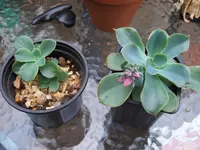
Tilted pot setup

Place the pot at a slight angle outdoors or in a very bright window so rain or overhead water naturally drains off the rosette, keeping the central crown dry and less prone to rot.

Gritty top-dressing

Add a 0.5–1 cm layer of coarse sand, fine gravel, or pumice on the soil surface to keep lower leaves dry, discourage fungus gnats, and stabilize shallow roots in a wide, low pot.

Controlled offset removal

Remove offsets only when they have several roots and a rosette at least 3–4 cm wide, then allow the cut base to dry for 2–3 days before replanting to minimize infection and rot.

Seasonal pest checks

Inspect the tight leaf bases and underside of older leaves every 2–3 weeks in warm weather, using a cotton swab with isopropyl alcohol to spot-treat any early mealybugs before they spread through the clump.

Common Pests and Diseases

Mealybugs

This pest often hides in leaf axils and along the stem, sucking sap and causing stunted growth and deformed new leaves.

Solution

Isolate the plant, then dab visible insects with cotton swabs dipped in 70% isopropyl alcohol and repeat weekly until gone; for heavier infestations, use a ready-to-use systemic or contact insecticide labeled for succulents and improve light and airflow to reduce reinfestation while growing Echeveria fulgens.

Aphids

These insects cluster on flower stalks and tender new growth, feeding on sap and excreting sticky honeydew that can attract sooty mold.

Solution

Rinse colonies off with a firm stream of water, then apply insecticidal soap or a neem oil spray to the affected areas every 5–7 days until populations stay low, and avoid overfertilizing, which encourages soft, aphid-prone growth.

Soft scale

This pest appears as small, rounded, tan to brown bumps on leaves and stems that do not move, causing gradual yellowing and weakening of the plant.

Solution

Gently scrape or wipe off individual scales with a cotton swab or soft brush dipped in alcohol, then follow with a horticultural oil or neem oil spray, ensuring good coverage of stems and the undersides of leaves and repeating after 7–10 days if new scales appear.

Powdery mildew

This disease shows as white, powdery patches on leaves, often during mild, humid conditions with poor airflow, and can cause dull, weakened foliage.

Solution

Increase air circulation, avoid overhead watering, and remove heavily affected leaves; for persistent cases, use a sulfur-based or potassium bicarbonate fungicide labeled for ornamentals, applied according to directions and kept off sun-heated leaves to prevent damage.

Leaf spot (fungal)

Symptoms include small, dark, sunken or water-soaked spots on leaves that can enlarge and cause tissue collapse, especially when foliage stays wet for long periods.

Solution

Remove and discard affected leaves, keep water off the rosette, and space plants so they dry quickly; if spots continue to spread, apply a broad-spectrum ornamental fungicide and maintain a drier, well-ventilated environment to limit recurrence.

Interesting Facts

Endemic Mexican rosette

This species is naturally restricted to rocky slopes of central Mexico, especially in Puebla, where it grows on well-drained, often volcanic or limestone outcrops in relatively arid conditions.

Glaucous leaf coating

Its blue-green leaves often show a waxy, bluish bloom called epicuticular wax, which helps reduce water loss and protect tissues from intense sunlight.

Color-shifting flowers

The nodding, bell-shaped flowers are bicolored, with orange to red outer petals and yellow interiors, and they can appear more intensely colored in higher light and cooler, drier conditions.

FAQs about Echeveria fulgens

Lack of blooms usually comes from insufficient light, excessive nitrogen fertilizer, or too-warm winter conditions. This species benefits from bright sun and a short cool, dry rest in winter to set flower buds reliably.

Grow Healthy Plants with Botan Care

Keep your plants happy and healthy with plant identification, disease detection, and easy care guidance.

Botan plant care app — identify plants on mobile

Explore More Plants