Staggered Succession Sowing
Sow small batches every 2–3 weeks in spring and early summer so flowering remains continuous rather than peaking once and declining.

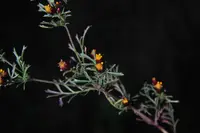
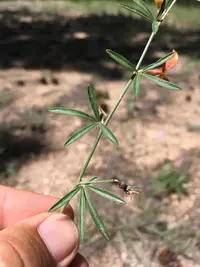
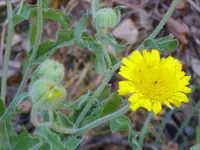
Dyssodia pinnata, often called dogweed or golden dyssodia, is a small, fine-textured annual in the aster family. It forms low, bushy mounds with threadlike, highly divided leaves and numerous tiny yellow, daisy-like flowers.
This species is native to arid and semi-arid regions of the southern United States and Mexico, where it thrives in open, sunny, often disturbed sites. It is generally easy to grow in well-drained, sandy or rocky soil and tolerates heat and drought once established.
Because it adapts well to poor soils and needs little supplemental water, many gardeners find it low-maintenance. Those learning how to care for Dyssodia pinnata mainly need to provide strong light and avoid consistently wet conditions.

Care Difficulty
Easy Care

Light Preference
Full Sun

Water Requirements
Low Water

Temperature Preference
Warm Climate

Hardiness Zone
8–11

Soil Texture
Sandy, Loamy, Rocky

Soil pH
Acidic (5.5–6.5), Slightly acidic (6.5–7.0)

Soil Drainage
Well-drained

Fertilization
Minimal (feed rarely)
Scan your plant to receive care tips personalized for your specific plant
Available on iOS and Android
This sun-loving annual thrives in bright, open conditions typical of dry, exposed sites.
This species prefers dry to slightly moist soil and reacts poorly to prolonged wetness.
This warm-season annual grows best in consistently mild to hot conditions without frost exposure.
This drought-tolerant annual handles low humidity well and rarely needs special moisture management.
This species prefers light, well-drained soil that mimics its native dry habitats.
This species adapts well to container growing in sunny outdoor spots.
Light feeding is enough, as Dyssodia pinnata is adapted to lean, well-drained soils.
Thoughtful pruning keeps this fine-textured annual compact and blooming well.
This plant is usually grown as an annual in the ground, so focus on gentle outdoor transplanting rather than long-term repotting.
Propagation is most practical from seed, which offers many uniform plants at low cost.
In most climates this species behaves as a frost-tender annual and needs no complex winter regime.

Plant Health Check
Not sure what's wrong with your plant? Check your plant's health inside the app.
Dyssodia pinnata is a short-lived annual of arid and semi-arid regions in the southwestern United States and Mexico, completing its life cycle quickly in response to brief summer rains.
The finely divided leaves release a sharp, pungent scent when crushed, a common trait in its genus thought to help deter herbivores and reduce insect damage.
Its small yellow flower heads are actually composites made of many disk and ray florets, providing concentrated nectar and pollen to small native bees and other insects.
This species is typically grown as a warm-season annual. In frost-free climates it may behave as a short-lived perennial, but most gardeners replant it each year because older plants decline after a long flowering season.
Keep your plants happy and healthy with plant identification, disease detection, and easy care guidance.