Earliella scabrosa Care

Earliella scabrosa

About Earliella scabrosa

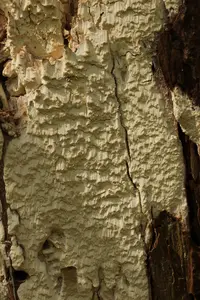
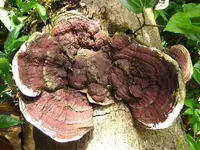
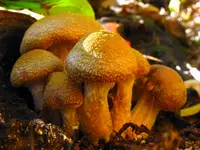
Earliella scabrosa is a wood-decaying bracket fungus, not a typical leafy houseplant. It forms thin, crust-like fruiting bodies on dead or dying wood. The surface is usually smooth to slightly rough, with a pale to brownish color that blends into bark. It grows in tropical and subtropical regions, especially in Asia and nearby areas.

This species relies on consistently humid, shaded conditions and the presence of suitable woody material. It is not usually grown intentionally in gardens or containers, so most people encounter it in natural or semi-natural settings rather than trying to care for Earliella scabrosa.

Main Plant Requirements

Care Difficulty

Moderate Care

Light Preference

Partial Shade

Water Requirements

Moderate Water

Temperature Preference

Warm Climate

Hardiness Zone

Unknown

Soil Texture

Loamy

Soil pH

Slightly acidic (6.5–7.0)

Soil Drainage

Well-drained

Fertilization

Minimal (feed rarely)

Get Personalized Care Plan

Scan your plant to receive care tips personalized for your specific plant

Available on iOS and Android

How to Care for the Earliella scabrosa

This fungus prefers stable, filtered light rather than intense direct sun.

  • Provide bright shade or dappled light, such as beneath shrubs or open tree canopies, with no more than 1–2 hours of weak direct morning sun per day.
  • Avoid strong midday and afternoon sun, which can dry the substrate quickly and damage sensitive fruiting bodies of Earliella scabrosa on exposed wood.
  • In summer, increase shade or use denser canopy cover, while in cooler seasons slightly more open, indirect light is acceptable if the substrate stays moist.

Moist, not waterlogged, conditions are essential for stable growth on wood or woody debris.

  • Allow the surface of the substrate or colonized wood to feel just barely dry before rewetting, keeping inner layers consistently damp but never saturated.
  • Use well-drained but moisture-retentive surroundings, such as decaying logs or wood pieces that can absorb water without remaining in standing water.
  • In warm, dry weather, mist or gently soak the substrate more often, watching for pale, shriveling tissue as a sign of dryness and slimy, foul-smelling patches as a sign of excess moisture.

This species favors warm, frost-free conditions for stable colonization and fruiting.

  • Aim for 70–86°F (21–30°C) for active growth, as consistently warm, humid air supports steady development on wood substrates.
  • Protect from cold; growth slows sharply below about 59°F (15°C), and hard frost below 32°F (0°C) can damage exposed fruiting bodies.
  • In hot periods above 90°F (32°C), provide extra shade and higher humidity so the substrate does not overheat or dry out too quickly, especially on exposed logs or stumps.

This species prefers steady moderate humidity for stable growth.

  • Aim for 50–70% humidity, as very dry air slows growth and may desiccate exposed tissues.
  • Watch for crisping edges, dull discoloration, or slow healing of damaged areas as signs of low-humidity stress.
  • Increase humidity locally with shallow water trays, grouped plants, or a humidifier rather than misting directly onto Earliella scabrosa structures.

Soil conditions must support rapid drainage while maintaining moderate, evenly distributed moisture.

  • Use a loose, airy mix such as 40% fine bark, 30% coarse sand, and 30% composted organic matter for both structure and nutrition.
  • Ensure sharp drainage; water should pass through within seconds and not pool, which reduces oxygen around roots and favors rot.
  • Maintain soil pH around 6.0–7.0, avoiding highly acidic or strongly alkaline substrates that restrict nutrient uptake.
  • Improve aeration by adding extra perlite or pumice in wet climates and avoid heavy clay or compacted ground that stays waterlogged.

This species can be managed in containers if moisture, drainage, and stability are carefully controlled.

  • Choose a pot slightly wider than the root zone but deep enough to anchor structures so wind or handling does not tip it over.
  • Select rigid, heavier containers when grown outdoors so the mass of the pot balances any top-heavy or uneven growth.
  • Elevate the container on feet or bricks to keep drainage holes fully open, allowing rapid runoff and stronger gas exchange around the root zone.

This species is usually self-sufficient in natural or lightly amended soil, so added feeding is modest for typical Earliella scabrosa care.

  • Use a light top-dressing of mature compost once in spring if soil is poor or very sandy.
  • On container plants, apply a balanced, slow-release fertilizer (around 10-10-10) at half label rate at the start of the growing season.
  • Avoid high-nitrogen products that encourage weak, lush growth rather than sturdy tissue.
  • Do not feed during winter or dormancy, as nutrient uptake is minimal and salt buildup can stress roots.

Pruning Earliella scabrosa is mainly corrective and hygienic, rather than a frequent shaping task.

  • Late winter or very early spring, before active growth, is the preferred time for structural cuts.
  • Remove dead, diseased, crossing, or storm-damaged branches with clean, sharp bypass pruners or a pruning saw.
  • Thin congested interior shoots selectively to improve light penetration and airflow, reducing fungal problems.
  • Avoid heavy topping; instead, shorten or redirect individual shoots to maintain a natural, balanced form.

This species is typically grown in the ground, so transplanting young plants thoughtfully is more important than frequent repotting.

  • Transplant in early spring or early autumn, when temperatures are mild and moisture is more reliable.
  • Look for signs such as roots circling a nursery container or slowed top growth as indicators a larger planting space is needed.
  • Move the plant with as much intact root ball as possible, keeping roots shaded and moist to limit transplant shock.
  • Replant at the same soil depth, water thoroughly, then mulch 5–8 cm around but not against the stem to stabilize moisture.

Propagation of Earliella scabrosa is usually done by seed under controlled conditions, as it is not a common garden ornamental.

  • Collect fully mature, dry spores or fruiting structures where legally and ethically permitted, then sow promptly.
  • Use a sterile, well-drained medium and maintain consistent moisture with high humidity but good air movement.
  • Provide gentle, indirect light and stable temperatures suited to the species’ native range to encourage germination.
  • Label and space young plants carefully, as early crowding can increase damping-off and other seedling diseases.

In climates close to its native range, this species is generally cold tolerant and needs little targeted winter care outdoors.

  • In colder areas, apply a 5–8 cm mulch layer over the root zone in late autumn to moderate freeze–thaw cycles.
  • For container specimens, move pots into a sheltered, unheated but frost-free area once temperatures approach the plant’s minimum tolerance.
  • Avoid waterlogged soil in winter by ensuring sharp drainage, as saturated, cold roots are more vulnerable to damage.

Care Tips

Encourage Lateral Growth

Pinch back overly long, thin shoots during active growth to encourage more lateral branching, which helps the colony spread evenly across the substrate rather than forming sparse clumps.

Control Moss Competition

If the culture is on bark or wood, periodically trim or gently peel back fast-growing mosses so they do not overrun the fungal tissue and restrict air and light at the surface.

Optimize Wood Substrate

Use well-seasoned, partially decayed hardwood rather than fresh or heavily rotted wood, since intermediate decomposition offers the most stable structure and nutrient profile for growing Earliella scabrosa.

Promote Air Exchange

In enclosed or terrarium-style setups, provide small, regular vents of fresh air to reduce stagnant pockets that favor mold competitors while still maintaining the higher humidity this species prefers.

Monitor Structural Integrity

Inspect supporting wood or mounts every few months and replace or reinforce pieces that have become too soft or brittle, so the fruiting bodies remain well supported and are not damaged by collapse or handling.

Common Pests and Diseases

Wood-boring beetles

This pest targets the dead or dying woody substrate on which this crust fungus grows, tunneling through and weakening the fruiting body. Symptoms include small round exit holes, powdery frass, and crumbly, undermined tissue in the crust.

Solution

Remove and destroy heavily infested substrate pieces to break the life cycle, and avoid storing cut wood or logs near the fungus for long periods. For display logs or outdoor culture, keep wood off the ground where possible and maintain dry–moderate conditions so beetle larvae are less likely to thrive when growing Earliella scabrosa outdoors.

Sap beetles

These insects are attracted to moist, sugar-rich fungal tissue and spores, often feeding on and contaminating the fruiting surface. Symptoms include irregular feeding marks, presence of small dark beetles, and a decline in spore production on affected patches.

Solution

Physically remove beetles and any heavily damaged sections of fungus or substrate. Reduce excess moisture and organic debris around the cultivation area, and use fine mesh screens or covers over logs or trays to limit beetle access while maintaining airflow.

Mold contamination

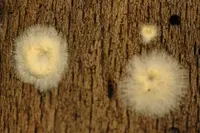
This disease involves fast-growing competitor molds colonizing the same woody substrate, often appearing as green, gray, or black fuzzy patches that overrun the crust. Symptoms include off-color fungal growth, a musty odor, and visibly different texture from the normal smooth to slightly warted Earliella scabrosa fruiting surface.

Solution

Cut away and discard contaminated sections of substrate and any clearly overgrown fungal tissue. Improve air circulation, avoid overwatering or soaking the wood, and use clean tools and containers; in controlled culture, start with fresh, uncontaminated wood and maintain moderate humidity rather than constant wetness.

Bacterial soft rot

This disease can develop on very wet substrate or fruiting bodies, causing water-soaked, slimy, and foul-smelling patches that collapse the crust. Symptoms include localized soft, translucent areas that quickly spread under persistently wet conditions.

Solution

Promptly remove and discard affected portions of the fungus and associated substrate, then allow the remaining wood to dry slightly by increasing airflow and reducing direct water contact. For repeated problems, switch to better-drained wood pieces, avoid standing water on the surface, and space substrates to minimize prolonged surface wetting as part of careful Earliella scabrosa care instructions.

Interesting Facts

Tropical white‑rot fungus

This species is a basidiomycete wood-decay fungus that performs white-rot, meaning it can break down both lignin and cellulose in dead wood, an important step in nutrient recycling in tropical forest ecosystems.

Limited geographic records

Published records place this fungus mainly in Southeast Asia and parts of tropical Asia, where it has been collected on dead branches and woody debris in warm, humid forests.

Morphology still understudied

Descriptions of its fruiting bodies and microscopic structures exist in mycological literature, but detailed modern studies on its genetics, variation, and ecology remain sparse compared with many more common wood-decay fungi.

FAQs about Earliella scabrosa

This fungus is not a vascular garden plant but a wood-decaying basidiomycete. It colonizes dead wood locally and does not spread aggressively in soil or turf, so it is not considered invasive in managed landscapes.

Grow Healthy Plants with Botan Care

Keep your plants happy and healthy with plant identification, disease detection, and easy care guidance.

Botan plant care app — identify plants on mobile

Explore More Plants