Woodchip depth management
Maintain a 5–10 cm deep, loose woodchip layer and gently rake or top up it each season so the mycelium has fresh, aerated substrate to colonize instead of becoming compacted and anaerobic.

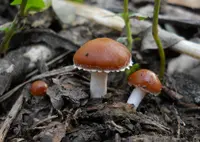
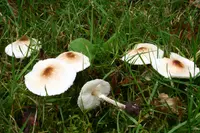
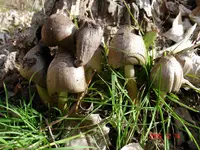
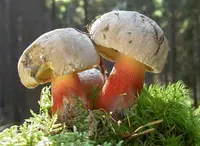
Chip Cherries is the common name for Leratiomyces ceres, a wood-decaying mushroom rather than a traditional houseplant. It typically forms small, bright to brick-red caps with pale stems, often appearing in clusters on wood chips or bark mulch. This fungus is widespread in temperate regions and is frequently seen in urban landscapes, gardens, and public plantings where woody mulch is used.
Its growth depends mainly on moisture, temperature, and the presence of decaying wood, rather than on conventional soil care. Gardeners usually do not need to care for Chip Cherries intentionally, as it colonizes suitable mulch by itself and may appear seasonally when conditions are favorable.

Care Difficulty
Moderate Care

Light Preference
Partial Shade

Water Requirements
Keep Soil Moist

Temperature Preference
Cool Climate

Hardiness Zone
Unknown

Soil Texture
Loamy, Silty, Organic-rich

Soil pH
Acidic (5.5–6.5), Slightly acidic (6.5–7.0)

Soil Drainage
Moist but well-drained

Fertilization
Minimal (feed rarely)
Scan your plant to receive care tips personalized for your specific plant
Available on iOS and Android
This woodchip-dwelling fungus prefers bright, mild outdoor light rather than intense direct sun.
Moist, not saturated, substrate is the key for reliable fruiting of this woodchip fungus.
This species fruits best in mild, cool to warm outdoor conditions.
This saprotrophic fungus tolerates a wide humidity range but fruits best in moderately moist air.
This woodchip-loving fungus thrives in loose, organic-rich, well-drained substrates rather than traditional mineral soil.
This species can be grown in containers if the pot mimics a deep, airy woodchip bed.
Leratiomyces ceres, often called Chip Cherries, typically grows on nutrient‑rich wood chips and needs little to no additional fertilizer in garden or landscape settings.
Leratiomyces ceres fruiting bodies do not benefit from conventional pruning, since mushrooms are temporary structures that naturally appear and decompose.
This woodchip mushroom is not maintained like a potted plant, so focus on managing its substrate rather than classic repotting.
Propagation of Leratiomyces ceres is informal and usually relies on spreading its colonized substrate rather than controlled techniques used for ornamental plants.
This species is generally tolerant of normal outdoor winter conditions in mild to cool climates and needs minimal dedicated winter care.

Plant Health Check
Not sure what's wrong with your plant? Check your plant's health inside the app.
The species produces vivid red to orange caps, often with paler or whitish margins, which act as aposematic coloration, a visual warning that discourages animals from eating it.
It commonly fruits in human-made environments such as garden beds, playgrounds, and roadside plantings where fresh woodchip mulch is present, making it a typical example of an urban-adapted saprobe that breaks down woody debris.
Mature fruiting bodies often show a distinctly gelatinous or slimy zone near the stem base, a feature that helps field mycologists distinguish it from other small red mushrooms with similar caps.

This mushroom was long classified in the genus Stropharia and known as Stropharia aurantiaca until molecular studies of its DNA led to its reclassification into the genus Leratiomyces, illustrating how modern genetic tools can overturn long-standing names based only on appearance.
This mushroom is considered toxic and should not be eaten by people or animals. Ingestion can cause gastrointestinal upset such as nausea, vomiting, and diarrhea. Always prevent children and pets from handling or consuming unknown fungi in the yard.
Keep your plants happy and healthy with plant identification, disease detection, and easy care guidance.