Dead Man's Foot Care (Pisolithus tinctorius)

Also known as: Horse Dung Fungus, Bohemian Truffle, Dye-maker's False Puffball
Dead Man's Foot

About Dead Man's Foot

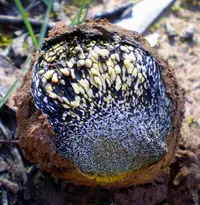
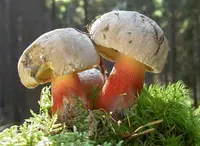
Dead man's foot, Pisolithus tinctorius, is a hardy ectomycorrhizal fungus rather than a traditional leafy plant. It forms irregular, often rounded or club-shaped fruiting bodies that may crack and darken as they mature.

This species naturally occurs in poor, sandy, or disturbed soils, often in pine forests and reforestation sites across many temperate and subtropical regions. It partners with tree roots, improving their nutrient uptake and stress tolerance.

Because it thrives in low-fertility, dry, and acidic soils, it is considered relatively easy to establish in tough landscapes when compatible host trees are present. Gardeners who want to learn how to care for Dead Man's Foot should focus on providing suitable host trees and well-drained, low-nutrient soil.

Main Plant Requirements

Care Difficulty

Moderate Care

Light Preference

Partial Sun

Water Requirements

Moderate Water

Temperature Preference

Warm Climate

Hardiness Zone

7–11

Soil Texture

Sandy, Loamy, Rocky

Soil pH

Acidic (5.5–6.5), Slightly acidic (6.5–7.0)

Soil Drainage

Well-drained

Fertilization

Minimal (feed rarely)

Get Personalized Care Plan

Scan your plant to receive care tips personalized for your specific plant

Available on iOS and Android

How to Care for the Dead Man's Foot

This ectomycorrhizal fungus prefers stable, bright outdoor sites with moderate sun exposure.

  • Provide 3–6 hours of direct morning or late-afternoon sun with dappled or partial shade during the hottest midday period.
  • Allow growth in light woodland edges or among host trees where filtered light reaches the soil surface; dense, deep shade reduces fruiting.
  • In hot, exposed sites above 86°F (30°C), protect Dead Man's Foot from intense bare-soil sun with leaf litter, mulch, or low vegetation to limit drying and overheating.

This soil fungus is drought-tolerant once established and is easily harmed by excess moisture.

  • Allow the upper 3–5 cm of soil to dry between natural rain events; avoid additional irrigation unless soil becomes powder-dry and host trees show wilting or leaf curl.
  • Ensure sharply draining, sandy or gravelly soil; standing water, persistent mud, or sour odors around Pisolithus tinctorius indicate oxygen-poor conditions and overwatering.
  • In cool or wet seasons, rely mostly on rainfall; in prolonged summer drought, deep but infrequent watering that moistens soil 10–15 cm down is safer than frequent light sprinkling.

This fungus is adapted to warm, often dry climates but still requires protection from severe cold and extreme heat.

  • Ideal active growth occurs around 68–82°F (20–28°C), especially in warm seasons when host tree roots are also growing strongly.
  • It tolerates brief drops near 23–25°F (-5 to -4°C) when established in soil, but repeated hard frosts or frozen, waterlogged ground reduce survival and fruiting.
  • In hot regions, it withstands 90–100°F (32–38°C) if soil remains slightly moist and shaded by mulch or vegetation, which helps prevent lethal surface overheating.

This ectomycorrhizal fungus tolerates a wide humidity range and usually does not require special humidity control outdoors.

This species thrives in dry, sandy, nutrient-poor, well-drained mineral soils, often in association with pine or other conifers.

  • Use a sandy or sandy-loam mix with 60–80% mineral content and only a thin layer of organic matter on top.
  • Ensure rapid drainage; avoid compacted substrates or mixes heavy in peat that hold water for long periods.
  • Aim for slightly acidic conditions, around pH 5.0–6.5, which support healthy mycorrhizal formation for Pisolithus tinctorius.
  • Improve aeration by incorporating coarse sand or fine grit rather than water-retentive amendments like clay or silt.

This fungus is generally unsuitable for long-term container growing because it depends on living host tree roots to complete its life cycle.

Pisolithus tinctorius is a mycorrhizal fungus that usually supports host trees without needing routine fertilizer applications.

Pisolithus tinctorius produces tough, woody fruiting bodies that do not need structural pruning in gardens or landscape settings.

This fungus is seldom grown as a stand‑alone container specimen, so management focuses on where and how its host trees are planted.

  • Transplant host trees in early spring or fall so roots and associated fungus experience less heat and drought stress.
  • Move young trees only when actively root‑bound or struggling, as frequent disturbance can disrupt mycorrhizal connections.
  • Water deeply after transplanting and maintain even soil moisture for several weeks to help roots and fungal partners re‑establish.
  • Limit root disturbance by keeping the root ball intact and backfilling with native soil rather than heavily amended mixes.

Propagation of Pisolithus tinctorius is usually done by professionals using spore inoculation rather than by home gardeners.

Once established in the ground with suitable host trees, Dead Man's Foot is cold hardy in most temperate climates and needs no special winter care.

Care Tips

Host root selection

Pair the fungus with sturdy, deep-rooted host plants such as pines, oaks, or eucalypts, since vigorous hosts provide better carbohydrates for extensive mycorrhizal development.

Inoculation placement

When planting trees, place the inoculated substrate or granules directly in the root zone (top 10–20 cm of soil around the root ball) rather than scattering on the surface to ensure rapid root-fungus contact.

Disturbance minimization

After establishment, avoid frequent cultivation, raking, or deep digging in the colonized zone, since breaking fine roots and fungal strands can reduce the long-term stability of the symbiosis.

Low-organic substrates

Use low-organic, well-drained mineral soils or sandy mixes when growing Dead Man's Foot, as high compost or manure levels can favor competing fungi and reduce its effectiveness as a root partner.

Salinity and pH testing

Test soil pH and salinity before large-scale inoculation, and favor slightly acidic to neutral, low-salt sites, because high salts or extreme pH can sharply limit colonization and fruiting body formation.

Common Pests and Diseases

Ectomycorrhiza disruption

This disease affects the symbiotic connection between the fungus and host tree roots, reducing nutrient exchange and overall vigor. Symptoms include weak host tree growth and poor colonization of roots by the fungus.

Solution

Reduce or stop use of broad-spectrum soil fungicides and sterilizing chemical treatments around host trees, and avoid deep soil disturbance in the colonized area. Maintain healthy host trees through proper watering and mulching so the mycorrhizal partnership can stabilize; this is a core part of Pisolithus tinctorius plant care in managed landscapes.

Soil pollution stress

This disease-like stress condition occurs where heavy metals, salt, or industrial pollutants accumulate in the soil, which can impair normal fruiting and mycelial spread. Symptoms include sparse, misshapen fruiting bodies and poor establishment on host roots.

Solution

Test soil in high-risk sites and reduce inputs of road salt, industrial waste, or contaminated fill. If contamination is high, relocate planting or inoculation efforts to a cleaner site and improve soil organic matter with clean compost to buffer pollutants.

Desiccation of mycelium

This disease-like condition develops when the upper soil profile stays too dry for extended periods, causing the mycelium and developing fruiting bodies to dry and die back. Symptoms include aborted, cracked, or powdery fruiting bodies and reduced regeneration from year to year.

Solution

Maintain moderate, steady soil moisture around host trees with occasional deep watering during long dry spells and a 5–8 cm mulch layer to reduce evaporation. Avoid frequent shallow watering, which keeps the surface dry and does not support stable mycelial growth.

Soil-borne nematodes

These insects are microscopic roundworms that feed on fine roots, indirectly weakening the mycorrhizal network and nutrient uptake. Symptoms include stunted host tree growth and patchy colonization where the fungus cannot maintain stable root associations.

Solution

Encourage soil health with diverse organic matter and avoid over-tilling, which can favor certain plant-parasitic nematodes. In high-pressure sites, introduce nematode-suppressive organic amendments such as well-composted manure or chitin-rich products and maintain vigorous host trees so the symbiosis can compensate for moderate nematode activity.

Fungivorous soil insects

This pest group includes springtails and various beetle larvae that feed on fungal tissue, sometimes damaging young fruiting bodies and surface mycelium. Symptoms include chewed or hollowed sections of fruiting bodies and slow surface spread of the colony.

Solution

Keep surface debris and thatch moderate so predators of these insects, such as ground beetles, can move freely. Where damage is heavy and persistent, gently disturb the top 1–2 cm of soil around affected areas to break pest hiding sites and maintain a balanced soil ecosystem rather than applying broad-spectrum insecticides, which would also harm beneficial organisms.

Interesting Facts

Natural fabric dyestuff

This fungus has historically been used to produce fast yellow, brown, and gold dyes for wool and other animal fibers, thanks to its high content of stable pigment compounds called melanins and related phenolics.

Tough pioneer partner

It forms strong ectomycorrhizal associations with the roots of many pines and eucalypts, allowing these trees to establish and survive on extremely poor, acidic, or disturbed soils where few other fungi perform well.

Granular spore packets

Mature fruiting bodies break down internally into many pea‑sized spore masses called peridioles, which dry and crumble into a powder that can be easily spread by rain splash, animals, or soil movement.

Botan icon

Did you know?

This species is widely used in commercial forestry nurseries as a deliberate root inoculant for pine and eucalyptus seedlings, improving their survival and growth after planting on degraded or mine-reclaimed lands in various parts of the world.

FAQs about Dead Man's Foot

Yes, this fungus develops from spores rather than true seeds. In cultivation, it is usually established using mycorrhizal inoculum mixed into soil near host tree roots, rather than by sowing collected spores at home.

Grow Healthy Plants with Botan Care

Keep your plants happy and healthy with plant identification, disease detection, and easy care guidance.

Botan plant care app — identify plants on mobile

Explore More Plants