


Tilted rosette check
Place the pot so the rosette faces a bright direction, then rotate it 90° every 1–2 weeks to keep the plant compact and prevent lopsided, etiolated growth.

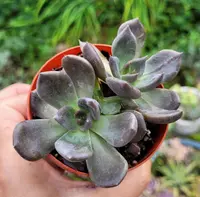
Echeveria 'Black Prince' is a compact succulent known for its dark, almost black rosettes and slow, clumping growth. It stays low to the ground and forms tight leaf clusters over time.
This cultivar belongs to the genus Echeveria, a group of drought-tolerant succulents native mainly to arid regions of Mexico. Its thick leaves store water, which makes it relatively forgiving of occasional missed watering.
The plant prefers bright light, low to moderate moisture, and gritty, fast-draining soil. These traits make it a good option for beginners learning how to care for Echeveria, as long as overwatering is avoided.

Care Difficulty
Easy Care

Light Preference
Full Sun

Water Requirements
Low Water

Temperature Preference
Tropical / Frost Sensitive

Hardiness Zone
9–11

Soil Texture
Sandy, Loamy, Rocky

Soil pH
Slightly acidic (6.5–7.0), Neutral (7.0)

Soil Drainage
Well-drained

Fertilization
Minimal (feed rarely)
Scan your plant to receive care tips personalized for your specific plant
Available on iOS and Android
This compact succulent prefers bright, direct light but needs some protection from intense afternoon sun in hot climates.
This drought-tolerant succulent stores water in its leaves and is sensitive to excess moisture around the roots.
This species prefers warm, dry conditions and is not reliably hardy in areas with prolonged frost.
This succulent prefers dry air and does not need extra humidity indoors.
Use a very fast-draining, mineral-rich mix to keep roots dry between waterings.
This species is highly suitable for container growing due to its compact, shallow root system.
This succulent benefits from light feeding during its active spring–summer growth but performs poorly with heavy fertilization.
Echeveria 'Black Prince' needs only light, occasional grooming to keep rosettes compact and healthy.
This compact succulent prefers infrequent repotting and only needs a new container when clearly outgrowing its pot.
This cultivar is commonly propagated to create fresh, compact rosettes and expand a collection at low cost.
This tender succulent is not frost hardy and must be kept above freezing in most climates.

Plant Health Check
Not sure what's wrong with your plant? Check your plant's health inside the app.
The rosette’s deep brown to nearly black color comes from high concentrations of protective pigments called anthocyanins, which accumulate more strongly in high light and cooler temperatures than in many other Echeveria cultivars.
This cultivar is widely accepted as a hybrid between Echeveria shaviana and Echeveria affinis, combining the compact, symmetrical rosette form of its parents with a much darker leaf coloration than either species shows in typical conditions.
Leaf color can shift from olive or dark green in lower light to rich mahogany or near black in high light, while new central leaves often show brighter green tones that contrast with older, darker outer foliage.

Mature plants often produce offsets tightly clustered around the base, forming a slowly expanding colony that, in suitable conditions, creates a dense mound of dark rosettes highly valued by collectors for dramatic container and rock garden compositions.
Leggy growth occurs when this succulent stretches toward light, producing tall, thin stems and wider spacing between leaves. Provide stronger, more direct light and gradually rotate the pot to maintain an even, compact rosette form.
Keep your plants happy and healthy with plant identification, disease detection, and easy care guidance.

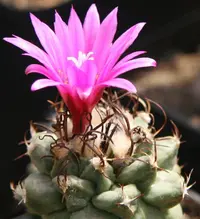
Turbinicarpus alonsoi
Turbinicarpus alonsoi
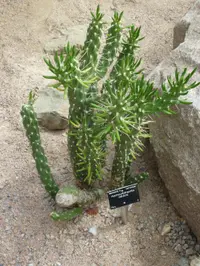
Eve's needle cactus
Austrocylindropuntia subulata
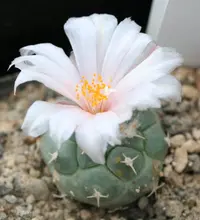
Turbinicarpus lophophoroides
Turbinicarpus lophophoroides
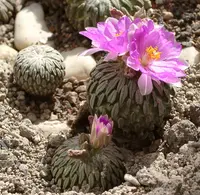
Pelecyphora aselliformis
Pelecyphora aselliformis
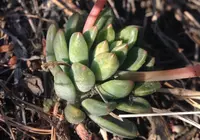
Echeveria amoena
Echeveria amoena
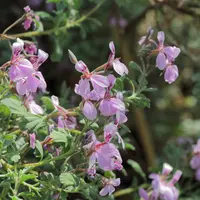
Greyleaf Storksbill
Pelargonium exstipulatum
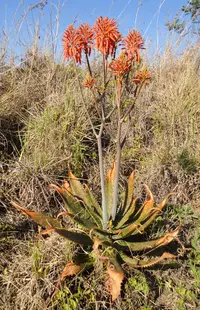
spotted aloe
Aloe greatheadii
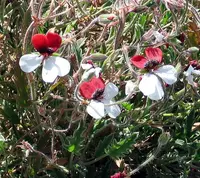
Tricolour Storksbill
Pelargonium tricolor