Offset management
Remove offsets with a clean, sharp knife once they have at least 3–4 leaves, then allow cut surfaces to callus for 2–3 days before replanting to reduce rot risk and maintain a compact mother rosette.

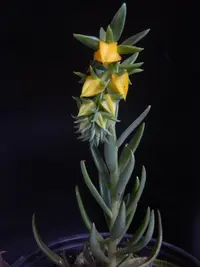
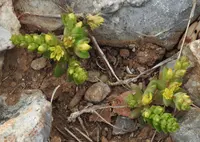
Echeveria lutea is a compact succulent from Mexico, forming tight rosettes of fleshy, usually green to yellowish leaves. It stays low to the ground and slowly clumps over time. In the right conditions, it sends up slender flower stalks with yellow blooms that stand above the rosette. This species suits containers, rock gardens, and bright indoor spots where it can stay dry and airy. Its drought tolerance and slow growth make it relatively simple to care for Echeveria lutea as long as it receives strong light, fast-draining soil, and protection from prolonged cold or excess moisture.

Care Difficulty
Easy Care

Light Preference
Full Sun

Water Requirements
Low Water

Temperature Preference
Tropical / Frost Sensitive

Hardiness Zone
10–11

Soil Texture
Sandy, Loamy, Rocky

Soil pH
Slightly acidic (6.5–7.0), Neutral (7.0)

Soil Drainage
Well-drained

Fertilization
Minimal (feed rarely)
Scan your plant to receive care tips personalized for your specific plant
Available on iOS and Android
This compact succulent needs strong, direct light to keep its rosettes firm and well colored.
This drought-adapted succulent prefers deep, infrequent watering with thorough drying between soakings.
This species favors warm, dry conditions and is sensitive to hard frost.
This species prefers dry air and typical indoor humidity around 30–50%.
Use a very fast-draining, mineral-rich mix to prevent root and crown rot in Echeveria lutea.
This species is well suited to container growing when drainage and stability are managed carefully.
This succulent needs only light feeding, as Echeveria lutea stores nutrients efficiently in its leaves and roots.
Pruning needs are minimal and mainly focus on hygiene and maintaining a compact rosette on Echeveria lutea.
Container-grown Echeveria lutea benefits from occasional repotting to maintain drainage and prevent root congestion.
This species is commonly multiplied from offsets and leaf cuttings, making expansion of a healthy Echeveria lutea cluster straightforward.
Cold sensitivity means Echeveria lutea needs thoughtful winter care in most climates outside mild USDA zones 9–11.

Plant Health Check
Not sure what's wrong with your plant? Check your plant's health inside the app.
This species is unusual in the genus because its compact rosettes and leaves often show clear yellow to yellow‑green tones rather than the bluish or grey waxy colors common in many other Echeveria species.
It is naturally restricted to a small area of central Mexico, where it grows on rocky, often limestone-rich slopes, making it adapted to very sharp drainage and high light in its native habitat.
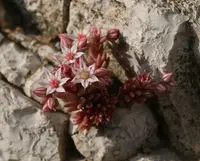
The inflorescences bear small, tubular, bright yellow flowers that are specifically shaped for pollination by local insects, differing from the more common pink or red tones found in many related species.
Brown leaves often result from sun scorch, old age, or past water stress. Crisp brown patches suggest intense, direct sun. Dry, papery lower leaves are usually normal aging and can be removed gently to improve appearance.
Keep your plants happy and healthy with plant identification, disease detection, and easy care guidance.