Parry's beargrass Care (Nolina parryi)

Also known as: Parry's nolina
Parry's beargrass

About Parry's beargrass

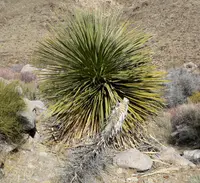
Parry's beargrass (Nolina parryi) is a slow-growing, desert-adapted shrub native to arid mountains of the southwestern United States and northern Mexico. It forms dense clumps of narrow, stiff, blue-green leaves that arch outward from a woody base.

Mature plants can produce very tall flowering spikes covered in small, creamy white blossoms, attracting pollinators in late spring. The plant is highly drought-tolerant and long-lived, which makes it suitable for low-maintenance, xeric landscapes.

It prefers full sun, sharply drained soil, and infrequent watering once established. These traits mean it can be challenging in wet or humid climates, but relatively simple to care for Parry's beargrass in dry regions. Nolina parryi is often used as an architectural accent in desert-style gardens.


Main Plant Requirements

Care Difficulty

Easy Care

Light Preference

Full Sun

Water Requirements

Low Water

Temperature Preference

Cold Hardy

Hardiness Zone

6–10

Soil Texture

Sandy, Loamy, Rocky

Soil pH

Slightly acidic (6.5–7.0), Neutral (7.0)

Soil Drainage

Well-drained

Fertilization

Minimal (feed rarely)

Get Personalized Care Plan

Scan your plant to receive care tips personalized for your specific plant

Available on iOS and Android

How to Care for the Parry's beargrass

This high desert species thrives in strong light but adapts to slightly lower exposure once established.

  • Provide 6–10 hours of direct sun daily; full sun suits most outdoor sites, especially in arid, high-light climates.
  • In hot low-desert areas, give Parry's beargrass morning sun with light afternoon shade to reduce leaf tip scorch and heat stress.
  • In winter, lower sun angles are usually sufficient, but in shaded yards thin overhanging branches or relocate young plants that show stretched, leaning growth.

This species is highly drought-tolerant and prefers infrequent, deep watering in fast-draining soil.

  • Allow soil to dry thoroughly between waterings; in the ground, wait until at least the top 5–10 cm are dry and foliage looks slightly less plump before watering again.
  • During the first growing season, water deeply every 2–4 weeks in dry climates, then reduce to occasional soaks during prolonged drought once Nolina parryi is established.
  • Watch for overwatering signs such as yellowing, limp leaves and a sour smell in the root zone; crisp browning leaf tips usually indicate extended drought or very hot, dry winds.

This plant is adapted to wide temperature swings, tolerating substantial heat and cold once established.

  • Optimal growing temperatures are about 65–90°F (18–32°C), typical of warm, dry climates with strong sun and cool nights.
  • Mature plants tolerate cold down to about 10–15°F (-12 to -9°C) when soil drains well; new growth and young plants are more vulnerable to sudden hard freezes.
  • In extreme heat above 100°F (38°C), provide extra mulch to buffer root temperatures and, in low-desert sites, partial afternoon shade to limit leaf scorch.

This desert-adapted species tolerates typical indoor and outdoor humidity, so humidity control is rarely important.

This species needs very fast-draining, mineral, almost desert-like soil to prevent root rot.

  • Use a gritty, sandy mix with 50–70% mineral content such as coarse sand, fine gravel, or pumice, with only a small amount of organic matter.
  • Aim for slightly acidic to slightly alkaline pH, roughly 6.0–7.8, avoiding strongly acidic media that break down quickly.
  • For containers, combine cactus mix with extra perlite or pumice to increase aeration and prevent water from lingering around the roots.
  • Avoid heavy clay, peat-heavy, or compacted mixes that stay wet, as these quickly lead to root and crown rot in Nolina parryi.

This species can be grown in containers, especially in cooler or wetter climates.

  • Choose a wide, heavy pot that resists tipping, since the stiff leaf rosette becomes tall and top-heavy over time.
  • Select a container material like unglazed terracotta if faster drying is needed in humid or rainy regions to reduce water retention.
  • Use a pot only 5–10 cm wider than the root mass to keep the substrate volume low enough to dry quickly between waterings.

This desert-adapted species needs only light feeding in cultivation, especially in poor or very sandy soils.

  • Use a balanced slow-release fertilizer (around 10-10-10) or a thin layer of compost once at the start of spring growth.
  • Apply at roughly half the label rate to avoid excess salts that can burn roots.
  • In warm climates, a second light application in mid-summer is enough for caring for Parry's beargrass.
  • Do not feed in late fall or winter, when growth is slow or dormant.

Nolina parryi needs minimal pruning, mainly for safety and appearance rather than growth control.

  • Best time is late winter to early spring, before strong new growth starts.
  • Remove only dead, damaged, or badly crossing leaves and old flower stalks with clean, sharp pruners.
  • Cut brown leaves close to the trunk without nicking healthy tissue to maintain a tidy skirt or cleaner trunk line.
  • Avoid heavy crown reduction, which can disfigure the plant and stress the growing point.

This long-lived desert plant is usually grown in the ground and dislikes frequent disturbance of its deep root system.

  • Transplant only when necessary, such as outgrowing a space or when roots tightly circle a container or escape drainage holes.
  • Plan moves for late winter or very early spring, so roots can recover before intense summer heat.
  • Handle the root ball gently, keeping as much native soil attached as possible to limit shock.
  • Set at the same depth, water deeply once, then allow soil to dry between irrigations while new roots establish.

Nolina parryi is most often raised from seed, and propagation is relatively slow but straightforward under the right conditions.

  • Collect ripe seeds from mature flower stalks and clean off any remaining fruit pulp.
  • Sow in late winter to spring in a very well-drained, gritty mix kept around 65–75°F.
  • Provide bright light and only light, even moisture; avoid waterlogging to prevent damping-off, a fungal seedling disease.
  • Allow seedlings to grow strong root systems before potting on, disturbing roots as little as possible.

This species is quite cold hardy in dry conditions and often needs little special winter care in suitable climates.

  • Mature plants in the ground tolerate substantial frost when soils drain well.
  • In areas with wet winters, use a gravel mulch around the base to improve drainage and keep the crown drier.
  • Container plants are less hardy; move them to a bright, frost-free spot if temperatures drop below their known tolerance.

Care Tips

Deep root establishment

During the first 2–3 years, give occasional deep soakings rather than frequent light watering to encourage a deep root system that better anchors the plant and improves drought resilience when growing Parry's beargrass outdoors.

Rock mulch strategy

Use a 5–10 cm layer of coarse gravel or small rocks around the base instead of organic mulch to keep the crown dry, reduce rot risk, and mimic its native rocky habitat.

Slope and runoff planning

Position the plant on a slight slope, berm, or raised mound so that heavy rain or irrigation drains away from the crown, preventing water from pooling around the base.

Wind hardening practice

In windy sites, gradually expose young plants to stronger winds over several weeks and avoid staking unless absolutely necessary so the trunk develops natural strength and flexible fiber tissue.

Rodent and grazing protection

In areas with rabbits, rodents, or deer, install a low wire mesh cylinder or barrier around young plants to protect the growing point until the rosette becomes high and fibrous enough to resist grazing damage.

Common Pests and Diseases

Agave snout weevil

This pest bores into the stem base and crown, causing collapse of the rosette and yellowing or wilting of leaves, especially in plants grown in warm, dry climates.

Solution

Remove and destroy severely affected plants, including as much of the root system as possible, to reduce breeding sites, and avoid replanting Nolina in the same spot for a season. In landscapes where this weevil is common, monitor the crown area regularly, keep plants healthy but not overfertilized, and use a labeled systemic insecticide as a soil drench only where the pest is known to be present and local regulations allow.

Scale insects

These insects attach to leaves and stems, forming small, hard or cottony bumps that extract sap and can cause yellowing, stunting, and sticky honeydew on the foliage.

Solution

Physically remove scales on light infestations by gently scraping with a fingernail or soft brush and wiping leaves with a cloth dampened in diluted insecticidal soap. For heavier infestations, repeat applications of horticultural oil according to label directions, making sure to coat leaf bases and the crown where scales often hide, and isolate affected plants from others during treatment.

Leaf spot

This disease causes tan to brown spots or streaks on the tough leaves, sometimes with a yellow halo, and may appear after prolonged wet or humid conditions on foliage that normally stays dry.

Solution

Prune and discard the most affected leaves to reduce inoculum, cutting cleanly near the base without injuring the crown, and avoid overhead watering so foliage can stay dry. Improve spacing and airflow around the plant, irrigate at the soil level in the morning, and if spots continue to spread in outdoor plantings, apply a suitable copper- or chlorothalonil-based fungicide according to label directions.

Crown rot

This disease affects the crown at soil level, leading to soft, dark, or foul-smelling tissue and sudden collapse of the rosette, especially in poorly drained or overwatered sites.

Solution

At early stages, allow soil to dry thoroughly, remove any mulch from the crown, and improve drainage by amending soil or raising the planting area; badly rotted plants usually cannot be saved and should be removed. For future plantings, use a fast-draining gritty mix, water deeply but infrequently, and avoid burying the crown, which is essential for Nolina parryi plant care in wetter climates.

Interesting Facts

Desert yucca look‑alike

Although often mistaken for a yucca or small desert palm, this species is actually in the asparagus family (Asparagaceae), with a dense rosette of rigid, straplike leaves that can form a massive, rounded clump over many years.

Towering flower stalks

Mature plants produce a tall, branched inflorescence that can rise several meters above the leaf crown, carrying thousands of small, cream‑white flowers that provide an important nectar source for desert pollinators in late spring and early summer.

Rocky mountain specialist

In the wild it is most common on exposed, rocky slopes and ridges in the mountains of southern California, Arizona, and northern Baja California, often above 1,200 m where it tolerates intense sun, large temperature swings, and very low rainfall.

Botan icon

Did you know?

Individual plants can live for many decades and slowly develop thick, woody, branched trunks with a skirt of persistent dead leaves, giving very old specimens a distinctive, sculptural appearance that stands out in high‑desert landscapes.

FAQs about Parry's beargrass

Brown tips or edges usually come from underwatering, very low humidity, reflected heat from paving, or salt buildup from fertilizer. Check soil moisture, flush salts occasionally, and protect from extreme reflected heat and harsh drying winds.

Grow Healthy Plants with Botan Care

Keep your plants happy and healthy with plant identification, disease detection, and easy care guidance.

Botan plant care app — identify plants on mobile

Explore More Plants