Rocky planting pockets
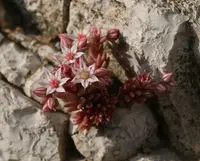
Tuck plants into shallow crevices between stones or pavers with a very thin soil layer to mimic its natural habitat and keep roots cool and well-drained.

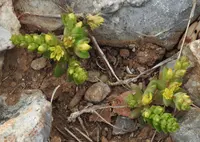
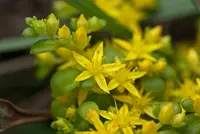
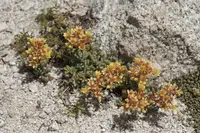
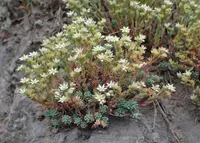
Coastal stonecrop, Sedum litoreum, is a small, low-growing succulent herb adapted to dry, rocky, and coastal habitats. It forms loose mats or clusters of fleshy, rounded leaves with delicate star-shaped flowers. Native to Mediterranean shorelines, it tolerates salt spray, wind, and poor, shallow soils. This natural toughness makes it a good choice for rock gardens, green roofs, and drought-prone sites. It prefers bright light, fast-draining sandy or gravelly soil, and careful watering that allows the roots to dry between soakings. Its resilience and compact habit help simplify how to care for Coastal Stonecrop in a range of mild climates.

Care Difficulty
Easy Care

Light Preference
Full Sun

Water Requirements
Low Water

Temperature Preference
Warm Climate

Hardiness Zone
8–11

Soil Texture
Sandy, Loamy, Rocky

Soil pH
Slightly acidic (6.5–7.0), Neutral (7.0)

Soil Drainage
Well-drained

Fertilization
Minimal (feed rarely)
Scan your plant to receive care tips personalized for your specific plant
Available on iOS and Android
This coastal succulent prefers strong light to maintain its compact form and leaf color.
This drought-tolerant species prefers infrequent, deep watering in sharply drained soil.
This species prefers mild conditions but tolerates a fairly wide outdoor temperature range when kept dry.
This coastal sedum handles a wide humidity range and rarely needs special humidity management indoors or outdoors.
Sedum litoreum prefers very fast-draining, sandy mineral soils that prevent prolonged root wetness.
This low, spreading species is very suitable for shallow container cultivation, including troughs and bowls.
Sedum litoreum is adapted to poor soils and needs only light feeding in cultivation.
Pruning is mainly used to keep Sedum litoreum compact and tidy rather than to control size strongly.
This coastal sedum is usually grown as groundcover, so transplanting in the garden is more common than repotting.
Sedum litoreum is commonly propagated to extend low, drought-tolerant groundcover.
This species is quite cold hardy in many temperate coastal climates and usually needs little winter care.

Plant Health Check
Not sure what's wrong with your plant? Check your plant's health inside the app.
Sedum litoreum is naturally restricted to coastal habitats around the Mediterranean, where it typically grows in thin, rocky soils very close to the sea, tolerating salt-laden winds and strong sun that many other species cannot handle.
This species behaves as a short-lived annual or ephemeral succulent, completing its life cycle quickly in cool, moist seasons and then surviving unfavorable dry periods mainly as seeds in the soil seed bank.
In the wild, plants form small, dense rosettes only a few millimeters across, often packed together in crevices; this compact growth habit reduces water loss and protects growing points from desiccation and mechanical damage.
This species spreads slowly to moderately by short stems and self-seeding, but it is not usually aggressive. In garden settings, it forms small mats. Simple edging or lifting unwanted pieces keeps it neatly contained.
Keep your plants happy and healthy with plant identification, disease detection, and easy care guidance.