Red Mount Teide Bugloss Care (Echium wildpretii)

Also known as: Tower of Jewels, Pink Echium
Red Mount Teide Bugloss

About Red Mount Teide Bugloss

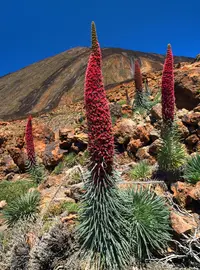
Red Mount Teide bugloss, Echium wildpretii, is a striking biennial or short-lived perennial from the high volcanic slopes of Tenerife in the Canary Islands. In its second year it forms a tall, narrow flower spike packed with small, vivid red blossoms that rise from a silvery rosette of hairy leaves.

This plant is adapted to dry, sunny, windy sites with rocky, well-drained soil. It can be challenging outside mild, low-humidity climates, so understanding how to care for Red Mount Teide Bugloss is important.

Gardeners value it for its bold architectural form and its ability to attract pollinators such as bees. It prefers full sun, low to moderate moisture, and sharply draining soil to prevent root problems.

Main Plant Requirements

Care Difficulty

Moderate Care

Light Preference

Full Sun

Water Requirements

Low Water

Temperature Preference

Warm Climate

Hardiness Zone

9–11

Soil Texture

Sandy, Loamy, Rocky

Soil pH

Slightly acidic (6.5–7.0), Neutral (7.0)

Soil Drainage

Well-drained

Fertilization

Minimal (feed rarely)

Get Personalized Care Plan

Scan your plant to receive care tips personalized for your specific plant

Available on iOS and Android

How to Care for the Red Mount Teide Bugloss

This sun-loving rosette plant needs strong light to build energy for its tall flowering spike.

  • Provide full sun for 6–8 hours daily; open, south- or west-facing positions suit Red Mount Teide Bugloss best in dry, exposed beds or slopes.
  • Tolerates light partial shade for 2–3 hours, but prolonged shade causes weak, elongated growth and fewer flowers.
  • In hot inland summers, protect from intense late-afternoon sun with brief shade; in winter, prioritize maximum sun exposure to compensate for shorter days.

This drought-adapted species prefers deep but infrequent watering in sharply drained soil.

  • Allow the top 3–5 cm of soil to dry completely before watering; in sandy or rocky ground this may mean long gaps between waterings, especially once established.
  • Use very free-draining, gritty soil so water runs through quickly; standing moisture around the crown greatly increases rot risk for Echium wildpretii.
  • Reduce or stop watering in cool, wet seasons and resume modest deep watering only during extended dry, warm periods if foliage begins to soften or curl.

This Canary Islands species prefers mild, dry warmth and is sensitive to hard frost.

  • Optimal growth occurs around 60–75°F (16–24°C), especially in bright, dry conditions with good air movement.
  • Tolerates brief drops to about 25–28°F (-4 to -2°C) if soil is dry, but repeated freezes or wet cold can kill the rosette; use frost cloth in borderline climates.
  • Handles dry heat up to 90–95°F (32–35°C) if rooted deeply, but combine high temperatures with strong sun and low humidity for best performance and disease prevention.

Humidity is not a major factor for Echium wildpretii, which prefers dry air similar to its native habitat.

  • Target 20–50% relative humidity, typical of most heated indoor and dry outdoor climates.
  • The plant tolerates very dry air, but persistent humidity above 60% increases rot risk, especially around the crown.
  • High humidity stress shows as soft, collapsing stems or blackened crown tissue rather than crisp leaf edges; improve airflow immediately.

Echium wildpretii needs very fast-draining, lean soil that mimics rocky volcanic slopes.

  • Use a gritty mix such as 50–60% mineral material (coarse sand, pumice, or small gravel) blended with 40–50% low-organic potting mix.
  • Ensure water drains through in seconds, not minutes; water should never pool on the surface or in the saucer.
  • Aim for slightly alkaline to neutral pH, roughly 7.0–8.0, avoiding very acidic mixes rich in peat.
  • Avoid heavy clay, dense compost, or water-retentive peat-based substrates that stay wet and exclude air from the roots.

This species can be grown in containers if they are set up to drain very rapidly and support its tall, top-heavy growth.

  • Choose a deep, heavy container that resists tipping when the flowering spike reaches full height and catches wind.
  • Fill the pot with an extremely free-draining, gritty mix so a full watering clears the drainage holes within seconds.
  • Raise the container on feet or bricks so runoff escapes instantly and the drainage holes never sit in collected water.

This species grows in poor volcanic soils and usually needs only light feeding when cultivated.

  • Use a low-dose balanced NPK fertilizer or thin layer of compost in early spring to support initial growth.
  • Feed once more in mid-season if growth appears weak, keeping total applications to 1–2 times per year.
  • Dilute liquid fertilizer to 1/2–1/4 strength to avoid soft, lanky growth and salt buildup.
  • Stop feeding Red Mount Teide Bugloss in late summer to allow tissues to harden before winter.

Echium wildpretii needs minimal pruning, mainly to tidy plants and manage self-seeding after flowering.

  • Cut back the spent flowering spike at the base once seeds have matured, using clean, sharp pruners.
  • Remove dead or damaged rosette leaves in late winter or early spring to reduce rot risk and improve airflow.
  • Thin crowded self-sown seedlings at the base to maintain spacing and reduce competition for water and nutrients.

This biennial is usually grown in the ground, so focus on careful transplanting of young plants rather than frequent repotting.

  • Transplant seedlings when they have several true leaves, before roots become tangled or circle a small pot.
  • Choose late spring in cooler climates or mild autumn in warm regions so roots establish before heat or frost stress.
  • Move plants with a generous soil ball, handling the central taproot gently to reduce transplant shock.
  • Water thoroughly after transplanting, then keep soil lightly moist until new growth shows successful establishment.

Echium wildpretii is most reliably propagated from seed rather than cuttings or division.

  • Sow fresh seeds in late winter to early spring in a free-draining, gritty mix under bright light.
  • Lightly press seeds into the surface; do not bury deeply, as they prefer some light for germination.
  • Maintain temperatures around 65–75°F and even, slightly moist conditions until germination in 2–4 weeks.
  • Prick out seedlings into individual cells once large enough to handle, disturbing roots as little as possible.

This plant is only marginally frost tolerant and benefits from targeted winter protection in cooler climates.

  • In USDA zones colder than 9, grow Echium wildpretii in containers and move to a bright, frost-free space for winter.
  • Mulch around the crown with coarse grit or gravel to keep the neck dry while lightly insulating roots.
  • In borderline climates outdoors, use a breathable frost cloth or cold frame to shield rosettes from hard freezes.

Care Tips

First-year rosette management

In the first year, gently clear debris and competing weeds around the rosette to maintain excellent air circulation and prevent rot at the crown after heavy rain.

Staking the flower spike

Before the flower spike reaches 60–80 cm, install a sturdy stake on the windward side and secure the stem loosely with soft ties to prevent snapping in strong winds.

Controlled self-seeding

After flowering, allow some seed heads to dry on the plant, then collect and store seed in a paper envelope in a cool, dry place so you can replant in a chosen area rather than letting seedlings appear randomly.

Grit mulch application

Apply a 1–2 cm layer of horticultural grit or very coarse sand around the base to keep the neck of the plant dry, reduce crown rot risk, and discourage slugs and snails from grazing the rosette.

Winter rain protection

In cold, wet climates, set up a simple clear rain cover or cold frame over the rosette in late autumn to keep it dry while still allowing maximum light, which is one of the most effective strategies for caring for Red Mount Teide Bugloss in marginal climates.

Common Pests and Diseases

Snout beetle borers

This pest targets the crown and rosette, where adults or larvae chew into the stem base and can cause collapse of the flowering spike. Symptoms include wilting despite adequate moisture and visible holes or frass at the crown.

Solution

Remove and destroy heavily infested plants to prevent beetles from completing their life cycle, and inspect nearby Echium for early signs of boring damage. Keep plants in very free-draining, low-organic soil to discourage larvae, and use fine gravel or grit around the crown to make access more difficult; in high-value plantings, targeted soil drenches labeled for beetle larvae may be used according to label directions.

Aphids

These insects cluster on soft new growth and flowering stems, sucking sap and distorting leaves and buds. Symptoms include sticky honeydew and sooty mold on the tall flower spike.

Solution

Wash colonies off with a strong but controlled stream of water, focusing on the undersides of leaves and the flower spike. For persistent infestations, apply insecticidal soap or a light horticultural oil in the cool part of the day, and encourage natural predators such as lady beetles by avoiding broad-spectrum insecticides in the planting area.

Spider mites

This pest thrives in hot, very dry conditions around the dense rosette, piercing leaf cells and causing fine stippling, bronzing, and eventual leaf drop. Symptoms include very fine webbing between leaves, especially on stressed plants in containers or against hot walls.

Solution

Increase humidity immediately around the rosette with occasional overhead rinsing in the morning and hose down foliage to dislodge mites. If damage continues, use insecticidal soap or a miticide labeled for ornamental plants, and reduce heat stress by providing slightly better airflow without increasing soil moisture beyond the plant’s tolerance.

Crown rot

This disease appears in plants exposed to prolonged winter wet or poorly drained soil, leading to softening and browning of the basal rosette. Symptoms include a foul smell, mushy tissue at the crown, and sudden collapse, often before or during flowering.

Solution

Remove and discard affected plants and any heavily contaminated soil, and avoid replanting in the same poorly drained spot. To prevent recurrence when growing Red Mount Teide Bugloss, plant on a raised mound or slope with very sharp drainage, use a high proportion of mineral grit, and avoid overhead watering during cool periods.

Interesting Facts

Teide volcano specialist

This species is naturally restricted to high volcanic slopes on Mount Teide and surrounding areas in Tenerife, thriving on loose lava scree and nutrient-poor, rocky soils where few other plants can survive.

Two-year life strategy

Echium wildpretii is a strict biennial: it spends the first year as a low rosette storing energy, then in the second year sends up a tall flowering spike, sets seed, and dies.

Pollinator magnet spikes

Its tall, densely flowered spikes produce large amounts of nectar and attract many pollinators, especially bees, making it an important food source in its native high-mountain ecosystem.

Botan icon

Did you know?

The natural populations of Echium wildpretii are considered vulnerable due to their very restricted range on Tenerife and pressures from habitat disturbance and grazing, so conservation efforts focus on protecting its limited high-altitude habitats around Mount Teide.

FAQs about Red Mount Teide Bugloss

This species is a short-lived perennial that behaves as a monocarpic plant. It usually grows as a leafy rosette for 1–2 years, then sends up a tall flowering spike, sets seed once, and dies.

Grow Healthy Plants with Botan Care

Keep your plants happy and healthy with plant identification, disease detection, and easy care guidance.

Botan plant care app — identify plants on mobile

Explore More Plants