Carpet Establishment
Plant very small plugs close together (1–2 cm apart) and gently press them into the substrate with aquascaping tweezers to help the mat close quickly and reduce algae-prone bare patches.

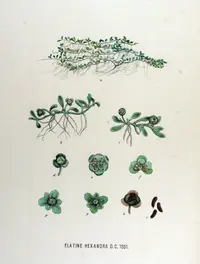
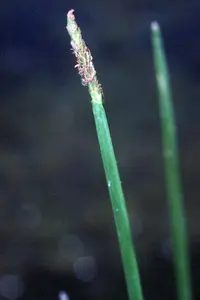
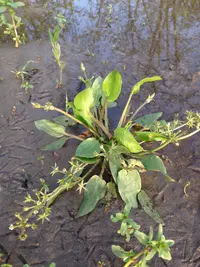
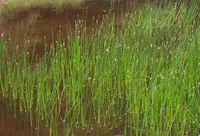
Six-stamened waterwort (Elatine hexandra) is a tiny aquatic or semi-aquatic plant that forms low, creeping mats. It has very small opposite leaves and fine, delicate stems that root at the nodes, creating a compact green carpet under shallow water or along muddy margins.
This species occurs naturally in ponds, slow streams, and wet depressions across parts of Europe and North America. It is often used in naturalistic aquariums and specialized water garden setups where stable water conditions can be maintained.
Its minute size, slow spreading habit, and need for consistently clean, cool, oxygen-rich water make it more suitable for patient growers. Understanding how to care for six-stamened waterwort starts with providing gentle light, soft substrate, and steady moisture without sudden environmental changes.

Care Difficulty
Hard Care

Light Preference
Partial Sun

Water Requirements
Aquatic

Temperature Preference
Cool Climate

Hardiness Zone
5–9

Soil Texture
Sandy, Loamy, Silty

Soil pH
Acidic (5.5–6.5), Slightly acidic (6.5–7.0)

Soil Drainage
Waterlogged tolerant

Fertilization
Light (every 4–6 weeks)
Scan your plant to receive care tips personalized for your specific plant
Available on iOS and Android
This creeping aquatic plant needs bright, gentle light to form dense, low growth.
This species is adapted to shallow water and saturated substrates rather than fluctuating soil moisture.
This plant prefers mild, stable temperatures with no frost and limited heat stress.
This species prefers consistently high humidity, similar to shallow-water or bog conditions.
Elatine hexandra grows best in fine, waterlogged substrates that still allow some oxygen movement around the roots.
This species adapts well to container culture, especially in shallow trays or aquatic tanks.
This small aquatic species needs only light nutrition in stable, clean water.
Light pruning helps keep Elatine hexandra low, dense, and healthy in aquaria or shallow ponds.
This plant is more often transplanted as a carpeting aquatic than repotted in traditional containers.
New plants are most often produced vegetatively rather than from seed in Elatine hexandra.
In mild climates this aquatic species persists with minimal winter intervention if water does not freeze solid.

Plant Health Check
Not sure what's wrong with your plant? Check your plant's health inside the app.
This species is a very small annual plant that can complete its life cycle both submerged in shallow water and on exposed mud in seasonally flooded habitats such as pond margins and slow streams.
Unlike several related Elatine species that show variable stamen numbers, this plant consistently develops 6 stamens per flower, which is also reflected in its common name six-stamened waterwort.
The species has a scattered, often rare distribution across parts of Europe and western North America, where it typically occupies small, transient microhabitats that depend on stable, unpolluted, oligotrophic or slightly mesotrophic waters.
This species performs best outdoors, fully or partially submerged in cool, clean, low-nutrient water. Indoor setups are possible in aquaria or shallow containers, but require stable water quality, good lighting, and regular trimming to prevent overcrowding.
Keep your plants happy and healthy with plant identification, disease detection, and easy care guidance.