Rhizome Containment
Plant into a wide, shallow container or pond basket lined with fine mesh to keep the spreading rhizomes confined and make it easier to lift, divide, and control its spread in ponds or bog gardens.

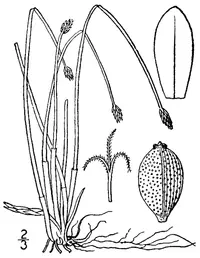
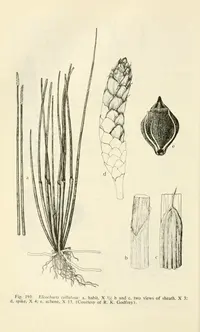
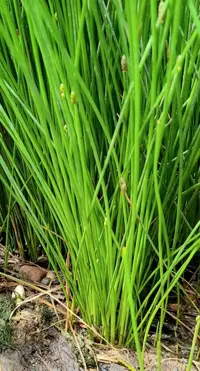
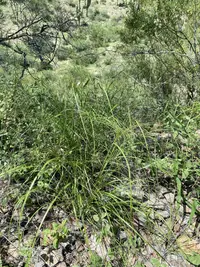
Flatstem spikerush, Eleocharis compressa, is a small, grass-like wetland plant in the sedge family. It forms low, tufted clumps of flattened, bright green stems with tiny terminal flower spikes. Native to moist habitats in parts of North America, it typically grows along pond margins, slow streams, and periodically flooded ground. Its compact habit and tolerance of shallow standing water make it suitable for naturalistic ponds and rain gardens. Growth is generally steady but not aggressive, so it is easier to manage than many rushes. To care for flatstem spikerush, keep roots consistently moist, provide full sun to light shade, and use a low-nutrient, sandy or loamy substrate.

Care Difficulty
Moderate Care

Light Preference
Full Sun

Water Requirements
Aquatic

Temperature Preference
Cool Climate

Hardiness Zone
4–9

Soil Texture
Sandy, Loamy, Silty

Soil pH
Acidic (5.5–6.5), Slightly acidic (6.5–7.0)

Soil Drainage
Waterlogged tolerant

Fertilization
Minimal (feed rarely)
Scan your plant to receive care tips personalized for your specific plant
Available on iOS and Android
This wetland sedge prefers consistent sun exposure but tolerates some shade, especially in hotter climates.
This species naturally grows in saturated soils, so its root zone should rarely dry out completely.
This species is adapted to temperate climates and tolerates a fairly wide temperature range when its root zone stays moist.
This wetland sedge prefers consistently high humidity close to saturation rather than typical indoor air levels.
This species thrives in saturated, fine-textured substrates that mimic slow-moving shallow water margins.
This species is suitable for containers when grown in bog-style or aquatic setups.
Eleocharis compressa is a low-nutrient wetland species that needs only modest feeding in cultivation.
Pruning needs for Eleocharis compressa are light and mainly focused on maintaining a clean, healthy clump.
This wetland sedge is more often transplanted in clumps than repotted, especially in outdoor or pond-edge plantings.
Eleocharis compressa is commonly propagated by division, which preserves the characteristics of the parent plant.
This species is generally cold hardy in its native range and needs minimal winter care in-ground.

Plant Health Check
Not sure what's wrong with your plant? Check your plant's health inside the app.
This species is naturally restricted to parts of eastern and central North America, where it occurs in scattered, often localized populations rather than being globally widespread like several other flatstem spikerushes.
It typically grows in moist to seasonally wet habitats such as pond margins, wet meadows, and depressions that periodically flood, tolerating fluctuating water levels that many upland grasses and sedges cannot handle.
Unlike many round-stemmed rush-like plants, its culms (leafless stems) are distinctly 3-angled and strongly compressed, a feature that helps botanists distinguish it from similar Eleocharis species.
This species spreads by creeping rhizomes and can form dense mats in consistently wet soils or shallow water. In small ponds or rain gardens, contain it with edging, containers, or periodic division to prevent unwanted spread when growing flatstem spikerush.
Keep your plants happy and healthy with plant identification, disease detection, and easy care guidance.