yellow spikerush Care (Eleocharis flavescens)

Also known as: Pale Spike Rush, Wrinkle-sheathed Spike-rush
yellow spikerush

About yellow spikerush

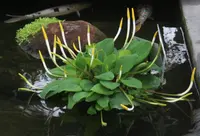
Yellow spikerush (Eleocharis flavescens) is a small, fine-textured rush-like plant that forms low clumps or patches of thin, upright stems. It is typically found in shallow water, muddy shores, and wet meadows, often along ponds, lakes, and slow streams. This species prefers consistently moist to saturated conditions and does best in full sun to light shade with nutrient-rich, silty or sandy substrates. Its compact size and tolerance of standing water make it useful in naturalistic ponds, rain gardens, and restoration plantings. Gardeners who understand how to care for yellow spikerush usually find it reliable as long as the soil never dries out completely.

Main Plant Requirements

Care Difficulty

Moderate Care

Light Preference

Full Sun

Water Requirements

Aquatic

Temperature Preference

Cool Climate

Hardiness Zone

5–9

Soil Texture

Sandy, Loamy, Silty

Soil pH

Acidic (5.5–6.5), Slightly acidic (6.5–7.0)

Soil Drainage

Waterlogged tolerant

Fertilization

Minimal (feed rarely)

Get Personalized Care Plan

Scan your plant to receive care tips personalized for your specific plant

Available on iOS and Android

How to Care for the yellow spikerush

This wetland sedge prefers steady light to support dense, upright growth.

  • Provide 4–8 hours of sun, with morning or late-afternoon sun preferred and light shade during the hottest midday hours in summer.
  • Plants tolerate partial shade, but stems may elongate and thin if light drops below roughly 3–4 hours of bright exposure per day.
  • In very strong sun or heat, use neighboring plants or light shade cloth to reduce leaf scorching, especially for young yellow spikerush in shallow water.

This aquatic species requires constantly moist to submerged conditions rather than intermittent drying.

  • Maintain soil or substrate saturated at all times; for ponds or bog gardens, allow 2–10 cm of standing water over the crown during the growing season.
  • If grown at pond edges, do not let the top 1–2 cm of soil dry; leaf tips curling or browning indicate underwatering stress.
  • Soft, pale, or collapsing stems and a sour smell from the substrate suggest poor drainage and root issues, so improve water movement or reduce stagnant, anaerobic conditions.

This species grows best in mild to warm conditions but tolerates a reasonable range in outdoor wetlands.

  • Optimal growth occurs around 65–80°F (18–27°C), especially during the main growing season in late spring and summer.
  • The plant usually survives down to about 32°F (0°C) if crowns stay submerged and insulated, but repeated hard freezes below 25°F (−4°C) can damage or kill exposed clumps.
  • In hot spells above 90°F (32°C), maintain higher water levels to buffer roots, and avoid allowing shallow pools to overheat or dry out completely.

This semi-aquatic species needs very high humidity and constant surface moisture to stay healthy.

  • Aim for 70–90% humidity by keeping the plant beside or partly in shallow standing water rather than relying on room air.
  • Tolerates brief dips to 50–60%, but leaf tips brown and growth stalls if the air and substrate both dry.
  • Fine foliage wilting, yellowing, and crisping at the tips indicate humidity stress and insufficient water contact.
  • Use trays of water, aquatic planters, or bog-style containers to maintain saturated conditions around yellow spikerush.

Eleocharis flavescens prefers permanently wet, fine-textured substrate rather than conventional potting soil.

  • Use a heavy loam or clay-loam rich in organic matter, with a soft, mud-like structure that stays saturated.
  • Ensure extremely slow drainage by using watertight containers, pond baskets lined with fabric, or saucers that remain filled with water.
  • Maintain slightly acidic to neutral conditions around pH 6.0–7.0 by mixing mineral topsoil with 20–30% composted organic material.
  • Avoid peat-heavy, sandy, or highly porous mixes that drain quickly and instead build a dense, low-oxygen substrate typical of shallow pond margins.

This species is very suitable for container growing in ponds, water gardens, or consistently wet patios.

  • Choose a broad, shallow tub or bowl so rhizomes can spread sideways while roots remain fully submerged or waterlogged.
  • Use a sturdy, weighty container material such as ceramic or thick plastic to keep the clump stable in moving or wind-exposed water.
  • Keep the water line just above the soil surface and top up frequently so the substrate never dries or becomes only lightly damp.

Eleocharis flavescens is a low-feeding aquatic sedge that benefits from light nutrition in contained plantings.

  • Use a balanced NPK aquatic or general-purpose fertilizer at 1/4–1/2 strength for potted or basket-grown yellow spikerush.
  • Apply during the main growing season, roughly every 4–6 weeks, only if growth appears weak or pale.
  • Prefer slow-release aquatic tablets pushed into the substrate rather than liquid feed into the water column.
  • Stop feeding in late fall and winter, when growth slows, to avoid soft, weak tissue and nutrient buildup.

Pruning for Eleocharis flavescens is minimal and focuses on keeping clumps healthy and tidy.

  • Best time is late winter or early spring, before strong new growth starts.
  • Trim brown, dead, or damaged culms at the base using clean scissors or sharp snips.
  • Thin out crowded or leaning stems to improve light penetration and maintain a neat, low clump.
  • Avoid cutting into healthy green bases, as this is the main photosynthetic area supporting regrowth.

Repotting or transplanting this shallow-water sedge is mainly needed when clumps outgrow their baskets or spread beyond the desired area.

  • Look for roots circling containers, substrate lifting, or slowed growth as signs the plant needs more space.
  • Plan transplanting for early spring or early fall, when temperatures are mild and water is not too cold.
  • Typically divide and reset clumps every 2–3 years to refresh substrate and control spread in ponds or bog gardens.
  • Lift gently, keep roots and rhizomes moist, trim damaged roots, then replant at the same water depth into a rich, fine-textured substrate.

Propagation of Eleocharis flavescens is commonly done by division, with seeds used mainly in habitat or restoration work.

  • Divide mature clumps in early spring when new shoots first appear and water is warming.
  • Lift a section, then gently tease or cut it into small divisions, each with healthy roots and several green shoots.
  • Replant divisions into shallow, consistently wet substrate, avoiding deep burial of shoot bases.
  • For seed, sow on the surface of moist, fine-textured soil, keep saturated, and provide bright light for germination.

In much of its range this aquatic sedge is reasonably cold hardy and often needs little specific winter care in-ground.

  • In climates with freezing ponds, allow top growth to brown naturally, then trim dead stems above the crown.
  • Apply a light mulch around marginal plantings to insulate the root zone without burying the crowns.
  • Move container-grown plants into a frost-free but cool, bright area or sink pots into the ground for extra insulation.

Care Tips

Water Level Control

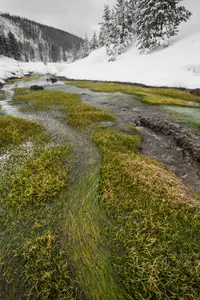
In container or pond culture, mark an ideal water line on the pot or liner and adjust the water table gradually with the seasons to keep roots wet while preventing sudden submergence stress when growing yellow spikerush.

Shoreline Containment

Use shallow, bottomless nursery pots or mesh aquatic baskets sunk into the substrate to limit lateral spread and make it easy to thin or relocate clumps without disturbing the whole shoreline or pond bed.

Substrate Topdressing

Add a thin topdressing of coarse sand or fine pea gravel over the planting substrate to stabilize the fine roots, reduce soil erosion in moving water, and keep the crown cleaner and less prone to rot.

Seasonal Thinning Routine

Plan a scheduled thinning once or twice a year, cutting out the oldest, densest interior shoots so light and water move through the stand and new growth remains fine-textured and upright.

Algae And Weed Management

Regularly remove filamentous algae and competing weeds by hand around the clump so oxygen and nutrients are not diverted, and avoid broad-spectrum herbicides near the planting zone to prevent root damage.

Common Pests and Diseases

Algal overgrowth

Symptoms include bright green, slimy mats coating the substrate and lower stems, often in slow-moving or nutrient-rich water. This overgrowth competes with yellow spikerush for light and nutrients and can smother young shoots.

Solution

Reduce dissolved nutrients by moderating fertilizer and fish load, increase water changes, and improve water movement so the surface is gently stirred. Manually remove algal mats from the substrate, shade the water slightly if light is very intense, and maintain stable water parameters to favor Eleocharis flavescens plant care over algae growth.

Aquatic snails

These insects are not present; instead, small freshwater snails and their eggs may arrive on nursery stock and can graze on tender new shoots and roots. Damage is usually seen as small bite marks or missing tips on the fine leaves.

Solution

Inspect new plants carefully, remove visible snails and egg clusters by hand, and rinse plants before adding them to the pond or aquarium. If populations build up, use snail traps or introduce natural predators compatible with the system, and avoid overfeeding fish, which supports snail population growth.

Aquatic aphids

This pest forms soft, pale green to dark green clusters on emergent stems and leaf bases above the waterline, sucking sap and causing distortion or yellowing. Heavy infestations can weaken clumps and attract sooty mold on the honeydew they excrete.

Solution

Rinse emergent foliage with a firm stream of water to dislodge colonies, repeat as needed, and remove heavily infested stems. In outdoor setups, encourage natural predators such as lady beetles, and in contained systems use insecticidal soap sprays only on emergent portions, keeping chemicals out of the water as much as possible.

Crown rot

This disease affects dense, waterlogged clumps where organic debris accumulates around the plant base, leading to browning, mushy crowns, and dieback of fine shoots. Symptoms include a foul smell from decaying tissue and collapse of affected sections.

Solution

Thin and divide overly dense mats, remove dead plant material and sludge from around the crowns, and improve water movement so the base of the plants does not stay stagnant. Discard severely affected clumps, replant healthy divisions in clean substrate, and avoid burying crowns too deeply to reduce rot risk.

Leaf spot fungus

This disease appears as small brown or dark olive spots on emergent leaves, sometimes with a yellow halo, which can merge and cause sections of foliage to die back. Stress from poor water quality or strong nutrient imbalances often makes plants more susceptible.

Solution

Remove and discard affected leaves to limit spore spread and improve water quality by reducing excess nutrients and decaying debris. Ensure good air movement around emergent foliage, avoid overhead splashing of contaminated water, and, in ornamental ponds, consider a targeted aquatic-safe fungicide only if sanitation and environmental correction do not control the problem.

Interesting Facts

Tiny, short-lived sedge

This small annual sedge often completes its life cycle in a single growing season, producing fine, grass-like stems rarely more than a few cm tall before setting seed and dying back.

Specialist of wet sands

It is typically found on exposed, seasonally wet sandy or muddy shores of ponds, lakes, and slow streams, often colonizing very shallow water or drawdown zones that dry later in the season.

Indicator of water levels

Populations frequently appear and disappear from year to year because the species depends on specific water-level fluctuations, so its presence can indicate sites with naturally variable hydrology rather than permanently flooded conditions.

FAQs about yellow spikerush

This species establishes relatively quickly in wet sites, especially in shallow water or saturated soil. In favorable conditions, clumps can fill in bare areas within one growing season, making it useful for rapid pond or shoreline coverage.

Grow Healthy Plants with Botan Care

Keep your plants happy and healthy with plant identification, disease detection, and easy care guidance.

Botan plant care app — identify plants on mobile

Explore More Plants