goldenclub Care (Orontium aquaticum)

Also known as: Neverwet
goldenclub

About goldenclub

Goldenclub, Orontium aquaticum, is a hardy aquatic perennial native to slow-moving streams, ponds, and bogs in eastern North America. It forms clumps of upright, paddle-shaped leaves that rise from shallow water or saturated soil.

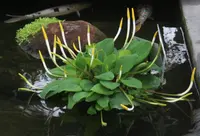
Its distinctive flower spikes are bright yellow with a white base, giving a candle-like look above the foliage. Plants spread gradually by rhizomes, creating stable stands where water conditions stay consistent.

Goldenclub is generally considered reliable once established, but it requires permanently moist or shallowly flooded conditions and does not adapt well to dry sites or frequent disturbance. Understanding how to care for goldenclub begins with providing constant moisture, cool to moderate temperatures, and nutrient-rich, mucky or sandy soil.

Main Plant Requirements

Care Difficulty

Moderate Care

Light Preference

Full Sun

Water Requirements

Aquatic

Temperature Preference

Cold Hardy

Hardiness Zone

4–9

Soil Texture

Loamy, Silty, Organic-rich

Soil pH

Acidic (5.5–6.5), Slightly acidic (6.5–7.0)

Soil Drainage

Waterlogged tolerant

Fertilization

Minimal (feed rarely)

Get Personalized Care Plan

Scan your plant to receive care tips personalized for your specific plant

Available on iOS and Android

How to Care for the goldenclub

Orontium aquaticum prefers bright, cool conditions in shallow water or saturated soil.

  • Provide 4–6 hours of direct morning sun with light shade or filtered light in the hot afternoon, especially in warm climates.
  • Tolerates partial shade, but flowering in goldenclub is stronger when plants receive at least 3–4 hours of direct or very bright light in spring and early summer.
  • In hot summers, protect from harsh sun between 12–4 pm to avoid leaf scorch, especially in small, heat-prone ponds.

This species is an emergent aquatic that thrives with constantly wet roots.

  • Grow in shallow water 5–20 cm deep or in soil that never dries out; do not allow the crown to be buried deeper than the base of the leaves.
  • In ponds, aim for steady water level; in bog beds, soil should feel fully saturated, not just damp, even in midsummer heat.
  • Yellowing, limp leaves with sour-smelling water often indicate stagnation or rot; improve water movement or repot into fresh, low-organic substrate.

This hardy aquatic tolerates cool conditions but needs protection from extreme heat and prolonged freezing.

  • Optimal growth occurs around 60–75°F (16–24°C), with strongest leaf and flower production in cool spring and early summer conditions.
  • The rhizomes are hardy to about 0–10°F (-18 to -12°C) in the ground or pond, provided they remain submerged and do not freeze solid above the crown.
  • In heat above 86°F (30°C), provide afternoon shade and maintain stable water depth; stressed plants may show browned leaf tips and slower growth.

This aquatic species requires very high humidity and constant moisture rather than typical room-air conditions.

  • Aim for 80–100% humidity by growing goldenclub in or at the edge of a pond, bog container, or water garden.
  • Dry air or drying soil margins cause browning leaf tips and crisp edges, especially in warmer weather.
  • Increase humidity by standing the container in a water-filled outer tub so the crown stays just above the waterline.

Orontium aquaticum grows best in saturated, organic-rich substrates designed for aquatic or bog plants.

  • Use a heavy clay or loam-based mix with high organic matter, such as garden loam blended with composted bark or leaf mold.
  • Avoid standard potting mixes with perlite or bark chunks that float or wash away in standing water.
  • Maintain soil that stays waterlogged but not sulfur-smelling; mildly acidic to neutral conditions around pH 5.5–7.0 suit this species.
  • To improve stability and slow nutrient loss, cap the surface with a 2–3 cm layer of washed gravel or coarse sand.

This plant can be grown in containers if the pot is treated as an aquatic or bog vessel kept constantly wet.

  • Choose a wide, heavy container 25–30 cm deep so the dense rhizomes are submerged yet the crown can sit just above the water level.
  • Use a solid pot without drainage holes when standing it inside a larger water reservoir to maintain stable water depth.
  • Place the container where water movement is gentle to prevent soil from washing out and to keep the plant upright.

Orontium aquaticum grows steadily in nutrient-rich ponds and usually needs only light supplemental feeding in containers.

  • Use a balanced aquatic plant fertilizer or slow-release tablets pushed into the substrate in spring.
  • Feed container-grown goldenclub every 6–8 weeks during active growth, following label rates at 1/2 strength.
  • Avoid fertilizing during winter dormancy when growth slows or foliage dies back.
  • Keep fertilizer away from direct contact with rhizomes to prevent burn and rot.

Orontium aquaticum needs only light pruning to keep plants tidy and healthy in the pond.

  • In late spring to early summer, cut off spent flower spikes at the base to reduce self-seeding and maintain appearance.
  • Remove yellowed, dead, or damaged leaves with clean, sharp scissors or pruners just above the crown.
  • Thin out crowded shoots to maintain good water flow and reduce rotting foliage around the rhizome.
  • Avoid heavy cutting, which can slow growth and reduce flowering in the next season.

This rhizomatous aquatic is more often transplanted in ponds than repotted like a houseplant.

  • Transplant or divide clumps in early spring as new growth starts, when water temperatures are rising.
  • Look for crowded rhizomes, poor flowering, or roots circling in baskets as signs a move is needed.
  • Lift the clump gently, rinse mud from roots, and trim damaged portions before resetting at the same depth.
  • Replant into a wide, shallow aquatic basket with heavy loam, then submerge gradually to reduce shock.

Propagation of Orontium aquaticum is usually done by division rather than seed for reliable results.

  • Divide established clumps in early spring when new shoots appear and water starts to warm.
  • Lift the rhizome mass and separate sections with at least 1–2 shoots and healthy roots each.
  • Replant divisions in rich, heavy loam in baskets, then sink to shallow water until growth resumes strongly.
  • Seed propagation is possible but slower; sow fresh seed in trays of shallow water and fine silt.

Orontium aquaticum is hardy in many temperate ponds and usually needs minimal winter care once established.

  • In ground, ensure rhizomes sit below the ice line so crowns remain submerged and insulated.
  • For container plants in cold zones, sink baskets deeper in the pond for winter or move to a frost-free tank.
  • Avoid cutting foliage too early in fall; allow it to die back naturally and feed the rhizome.

Care Tips

Rhizome Positioning

Set the rhizomes at a shallow angle with the growing tips just 2–5 cm below the substrate surface so new shoots emerge easily and do not rot in deep, cold mud.

Container-in-Pond Setup

Grow plants in wide, heavy pond baskets filled with loamy aquatic soil, then sink the baskets into the pond so you can lift, divide, or relocate them without disturbing the whole water feature.

Seasonal Water Depth

Adjust water depth through the year, keeping crowns in 5–15 cm of water in the growing season and slightly deeper but still above freezing in winter to protect buds and roots.

Sediment Management

Rinse or gently vacuum accumulated silt from around the crowns every 1–2 years so new shoots and flower stalks are not smothered by fine sediment.

Division For Vigor

Every 3–5 years, lift and divide congested clumps in early spring, replant only firm, healthy rhizome pieces with several buds, and discard woody, exhausted centers to maintain strong flowering when growing goldenclub.

Common Pests and Diseases

Waterlily aphids

These insects cluster on tender flower stalks and undersides of leaves, sucking sap and causing curling, distortion, and sticky honeydew on goldenclub in still or slow-moving water. Symptoms include sooty mold developing on the honeydew and reduced vigor in heavily infested plants.

Solution

Rinse colonies off with a firm stream of water or submerge infested emergent leaves briefly if practical, then remove any heavily deformed tissue. For persistent problems, use a horticultural soap or neem oil labeled for aquatic use and apply in the evening to minimize impact on beneficial insects and aquatic life, following all water-safety directions as part of responsible Orontium aquaticum care.

Leaf spot fungi

This disease causes small tan to brown spots on emergent leaves that may merge into larger dead patches, often starting on older foliage. Symptoms include premature yellowing and decline of affected leaves, especially in dense plantings with poor water movement.

Solution

Remove and discard spotted leaves to reduce spore levels and avoid letting infected material decompose in the pond. Improve spacing and water circulation around plants, and if needed use a pond-safe fungicide according to label directions, focusing on protecting new leaves rather than trying to cure badly damaged ones.

Aquatic snails

These pests chew irregular holes along leaf edges and surfaces, sometimes skeletonizing thin areas of goldenclub leaves. This pest is most problematic in nutrient-rich ponds where snail populations build up quickly.

Solution

Hand-pick snails during regular pond maintenance and reduce excess organic debris where they feed and hide. Where numbers stay high, use physical barriers like fine mesh around young plants or introduce natural predators such as compatible fish, avoiding copper-based treatments that can harm both plants and other aquatic organisms.

Spider mites

These insects may colonize emergent leaves during hot, dry spells, creating fine webbing and tiny pale speckles on the leaf surface. Symptoms include dull, stippled foliage that may turn bronze or yellow if the infestation is severe.

Solution

Increase humidity around emergent foliage by lightly misting above the water surface and gently rinse leaves to dislodge mites, taking care not to disturb plant anchoring. If needed, use insecticidal soap or horticultural oil suitable for use near water, applied to both leaf surfaces and repeated as directed until new growth appears clean.

Bacterial soft rot

This disease causes water-soaked, foul-smelling decay at the base of stems or rhizomes, often starting where tissue has been wounded. Symptoms include yellowing and collapse of leaves, with mushy, discolored tissue at or just below the waterline.

Solution

Promptly remove and discard all affected plant parts and any loose, decomposing material around the rhizomes. Improve water quality by reducing accumulated sludge, avoid injuring rhizomes during division or planting, and replant only firm, healthy sections in clean, gently moving water to reduce bacterial buildup.

Interesting Facts

Submerged juvenile phase

Young plants often start life fully submerged with only leaf tips reaching the water surface, then gradually develop sturdier emergent leaves as light and water levels allow.

Unusual spadix structure

Its golden flowering spike is a compact spadix covered in many tiny, tightly packed flowers rather than a single bloom, which is typical for members of the arum family.

Acid bog specialist

This species naturally occurs in nutrient-poor, acidic bogs and pond margins along the eastern United States, showing strong adaptation to low-nutrient, low-alkalinity waters.

Botan icon

Did you know?

Fossil evidence indicates that close relatives of Orontium aquaticum were already present in the Late Cretaceous, making this lineage one of the more ancient groups within the arum family and suggesting long-term evolutionary stability in its aquatic lifestyle.

FAQs about goldenclub

Poor flowering often results from insufficient light, water that is too shallow or not consistently wet, or nutrient-poor, infertile muck. Stable water depth, full sun to light shade, and a rich, organic substrate usually restore flower production.

Grow Healthy Plants with Botan Care

Keep your plants happy and healthy with plant identification, disease detection, and easy care guidance.

Botan plant care app — identify plants on mobile

Explore More Plants