Provide climbing support
Install a narrow trellis or vertical wires early and loosely tie young stems so the plant can climb rather than sprawl, which improves light exposure and air flow around the foliage.

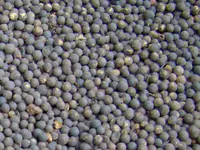
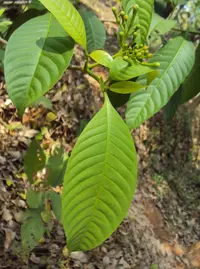
False black pepper (Embelia ribes) is a woody climbing shrub grown mainly for its small, bead-like fruits and glossy green leaves. It often scrambles over supports or nearby vegetation rather than forming a self-supporting shrub.
This species is native to tropical and subtropical regions of Asia, where it occurs in forest edges and thickets. Its twining habit and fine stems make it better suited to warm, frost-free climates or protected cultivation.
Embelia ribes tends to prefer bright light with some protection from harsh sun, along with evenly moist, well-drained soil. For anyone learning how to care for false black pepper, its main challenges are sensitivity to cold and the need for consistent moisture without waterlogging.

Care Difficulty
Moderate Care

Light Preference
Partial Shade

Water Requirements
Moderate Water

Temperature Preference
Tropical / Frost Sensitive

Hardiness Zone
10–11

Soil Texture
Loamy, Sandy, Organic-rich

Soil pH
Acidic (5.5–6.5), Slightly acidic (6.5–7.0)

Soil Drainage
Moist but well-drained

Fertilization
Minimal (feed rarely)
Scan your plant to receive care tips personalized for your specific plant
Available on iOS and Android
Embelia ribes grows best with bright, gentle light that mimics a lightly shaded forest edge.
Embelia ribes prefers evenly moist, well-drained soil that never stays soggy for long.
This species favors warm, frost-free conditions similar to a sheltered tropical or subtropical understory.
This species prefers moderately humid air and reacts somewhat to indoor dryness.
This plant prefers light, evenly moist, well-drained soil that does not stay waterlogged.
This species is well suited to container growing when its climbing habit and root needs are considered.
This evergreen climber benefits from light, consistent feeding rather than heavy fertilization.
Pruning Embelia ribes is mainly done to maintain shape and plant health.
This species is more often grown in the ground, but container plants or young shrubs sometimes need moving.
Embelia ribes can be propagated both sexually by seed and vegetatively by cuttings or layering.
This plant is only moderately frost tolerant and benefits from some winter protection in cooler regions.

Plant Health Check
Not sure what's wrong with your plant? Check your plant's health inside the app.
This species is a woody climbing shrub native to moist tropical forests of India and surrounding regions, where it twines through trees rather than forming a free-standing trunk.
It produces small, round, blackish drupes with a hard seed, which historically have been strung like beads and used as a false substitute for true black pepper, giving rise to the name false black pepper.
In the wild it typically grows in shaded to semi-shaded forest understories with high air humidity and well-drained yet consistently moist soils, reflecting its adaptation to monsoon-influenced habitats.

Historical Sanskrit texts such as the Ayurvedic compendia Charaka Samhita and Sushruta Samhita describe this species (known as vidanga) as an important medicinal plant, indicating that people have actively harvested and traded its fruits for at least 1,500–2,000 years.
This species is a woody climber that uses surrounding shrubs, trees, or supports to scramble upward. In gardens it behaves as a twining or scrambling vine rather than a ground-hugging spreader, so vertical support is usually helpful outdoors.
Keep your plants happy and healthy with plant identification, disease detection, and easy care guidance.