Simulate tidal motion
If kept in an artificial system, program pumps or wavemakers to create alternating higher and lower flow periods each day to mimic natural tides and keep thalli clean and well-oxygenated.

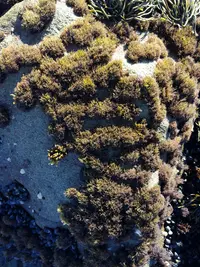
Scouring-pad alga, Endocladia muricata, is a small, wiry red alga that forms dense, bristly mats on rocky seashores. Its firm, abrasive texture gives it the common name scouring-pad alga.
This species is typically found in the mid to high intertidal zone along exposed Pacific coastlines, especially on rocks that are regularly splashed by waves. It relies on constant access to clean, moving seawater and strong light, which makes it challenging to maintain outside its natural habitat.
Those hoping to learn how to care for Scouring-pad alga should understand that it depends on stable marine conditions, including appropriate salinity and water movement, which are difficult to reproduce in most home setups.

Care Difficulty
Hard Care

Light Preference
Full Sun

Water Requirements
Aquatic

Temperature Preference
Cool Climate

Hardiness Zone
Unknown

Soil Texture
Sandy, Rocky, Organic-rich

Soil pH
Strongly acidic (4.5–5.5)

Soil Drainage
Waterlogged tolerant

Fertilization
Minimal (feed rarely)
Scan your plant to receive care tips personalized for your specific plant
Available on iOS and Android
Endocladia muricata is a marine red alga that depends on strong natural light but must avoid extreme midday exposure on exposed shores.
Endocladia muricata is adapted to wave-splashed rocky shores and relies on constant seawater contact rather than soil moisture.
This intertidal alga copes with variable temperatures but performs best within a moderate coastal range.
This intertidal alga depends on very high, stable humidity to avoid desiccation.
Endocladia muricata naturally anchors to hard marine substrates, not soil, so any culture setup should replicate rocky coastal conditions.
This species can be maintained in containers only as part of a marine aquarium or flow-through seawater system.
This intertidal red alga usually gains enough nutrients from seawater and does not need routine fertilization in cultivation.
Pruning needs for Endocladia muricata are minimal and mainly hygienic in controlled culture systems.
This species is seldom grown in pots, so focus on careful transplanting between marine setups rather than classic repotting.
Endocladia muricata is mainly propagated through vegetative fragments and natural reproduction in marine systems rather than home methods.
Outdoor natural populations are cold hardy in their native range and generally need no special winter care.

Plant Health Check
Not sure what's wrong with your plant? Check your plant's health inside the app.
This red alga is most abundant on harsh, wave-battered mid to upper intertidal rocks along the Pacific coast of North America, where few other seaweeds can tolerate the constant mechanical stress and drying.
Its dense, broom-like tufts have short branchlets with tiny spine-like projections, giving the plant a rough, scouring-pad feel that helps it resist abrasion from sand and moving rocks.
Thick mats of this species create shaded, moist refuges that shelter small invertebrates and juvenile snails, influencing community structure in the upper intertidal zone.

This alga often forms a distinct, easily recognizable reddish band high on rocky shores from British Columbia to Baja California, making it a useful indicator species for mapping intertidal zonation patterns in marine ecology studies.
Growth is moderate under stable, cool intertidal conditions. It spreads slowly across rock surfaces over several seasons, with speed strongly influenced by wave exposure, nutrient availability, and competition from other algae and sessile invertebrates in the same zone.
Keep your plants happy and healthy with plant identification, disease detection, and easy care guidance.