Controlled substrate depth
Keep the organic substrate layer shallow, around 2–4 cm, to discourage competing fungi and favor this small saprophytic species, refreshing the top layer annually rather than deeply disturbing the whole bed.

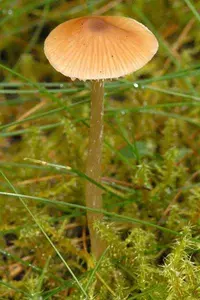
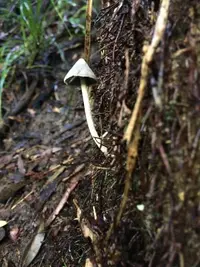
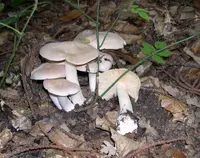
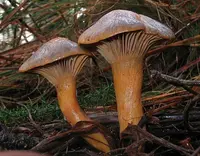
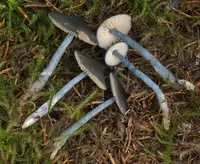
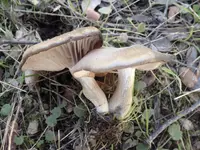
Honey pinkgill (Entoloma cetratum) is a small, short-lived mushroom rather than a leafy plant. It produces slender stems topped with honey to tan-colored caps that often show fine radial lines when moist. Caps are usually thin and fragile, with pale to pinkish gills as the spores mature.
This species typically appears in grasslands, lawns, and lightly managed meadows across parts of Europe and North America, often during cool, damp seasons. It can be challenging to identify accurately in the field, which makes how to care for honey pinkgill less relevant for most home growers. In nature, it favors moist, undisturbed soils rich in organic matter and is usually appreciated more for observation than cultivation.

Care Difficulty
Hard Care

Light Preference
Partial Shade

Water Requirements
Keep Soil Moist

Temperature Preference
Cool Climate

Hardiness Zone
Unknown

Soil Texture
Loamy, Silty, Organic-rich

Soil pH
Acidic (5.5–6.5), Slightly acidic (6.5–7.0)

Soil Drainage
Moist but well-drained

Fertilization
Minimal (feed rarely)
Scan your plant to receive care tips personalized for your specific plant
Available on iOS and Android
This woodland mushroom prefers gentle, filtered light rather than direct, intense sun.
This fungus relies on consistently moist but not waterlogged soil to fruit well.
This species fruits best in cool to mild conditions typical of temperate woodlands.
Humidity plays almost no role in cultivation, as this is a wild, non-domesticated mushroom rather than a houseplant.
This woodland mushroom relies on undisturbed, natural soil conditions rather than prepared potting mixes.
This species is not suitable for container growing, as it depends on complex soil ecosystems in the ground rather than isolated pot culture.
Entoloma cetratum is a wild, saprophytic mushroom that does not need or benefit from direct fertilization in cultivation or habitat.
Pruning is not applicable to Entoloma cetratum because it is a short-lived mushroom fruiting body rather than a woody or leafy plant.
Transplanting honey pinkgill is generally not recommended, as this fungus depends on specific soil conditions and fungal networks rather than container culture.
Propagation of Entoloma cetratum is specialized and not practical for home growers, so intentional multiplication is rarely attempted.
Specific winter care is not needed for Entoloma cetratum, as the fungus persists in the soil as mycelium and fruits only in suitable seasons.

Plant Health Check
Not sure what's wrong with your plant? Check your plant's health inside the app.
This small honey-colored pinkgill typically fruits among low grasses and mosses on nutrient-poor, often sandy or acidic soils, rather than in rich forest litter like many other agarics.
Its angular, pinkish spores with 5–6 sides are a key diagnostic feature within the genus, helping mycologists separate it from similar small brown mushrooms that lack distinctly polygonal spores.
Fruiting bodies are most often recorded in late summer to autumn in temperate Europe and parts of North America, aligning with cooler temperatures and increased soil moisture that favor spore production.
This species is considered inedible and should not be collected for food. Many similar-looking pinkgills are toxic or difficult to identify accurately, so foragers are advised to avoid eating it altogether.
Keep your plants happy and healthy with plant identification, disease detection, and easy care guidance.