Use decaying wood
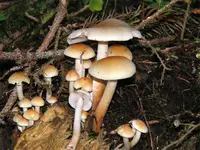
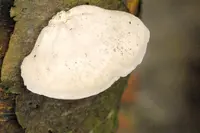
Establish the fungus in a shaded bed rich in well-rotted hardwood chips or punky branches, as the mycelium spreads more reliably through consistently moist, decaying wood than through mineral soil alone.

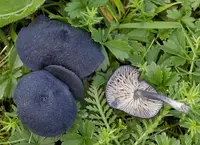
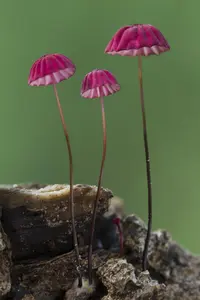
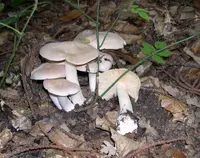
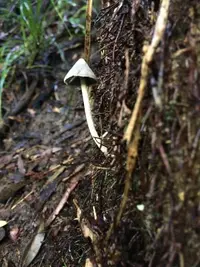
Blue edge pinkgill, Entoloma serrulatum, is a small, delicate mushroom rather than a leafy houseplant. It typically shows pale pink to lilac caps with finely toothed, slightly bluish gill edges, giving the species its common name.
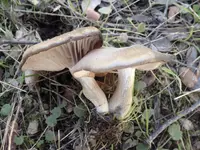
This fungus is usually found on soil or moss in woodland or grassy habitats, often in temperate regions. It can be difficult to identify accurately, as many Entoloma species look similar.
Because it is a wild mushroom with specific ecological needs, it is not a practical species to cultivate indoors or in gardens. Anyone wanting to care for Blue Edge Pinkgill should focus on preserving its natural woodland environment rather than attempting to grow it in containers.

Care Difficulty
Hard Care

Light Preference
Partial Shade

Water Requirements
Keep Soil Moist

Temperature Preference
Cool Climate

Hardiness Zone
Unknown

Soil Texture
Loamy, Peaty, Organic-rich

Soil pH
Acidic (5.5–6.5)

Soil Drainage
Moist but well-drained

Fertilization
Minimal (feed rarely)
Scan your plant to receive care tips personalized for your specific plant
Available on iOS and Android
This woodland fungus prefers cool, shaded forest conditions rather than direct, open sun.
This mushroom relies on consistently moist, not waterlogged, forest soil and leaf litter.
This species prefers cool to mild woodland temperatures with protection from extremes.
This wood-inhabiting fungus requires consistently high ambient moisture rather than typical indoor humidity control.
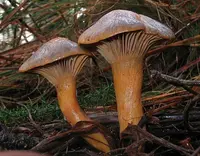
This fungus grows on decaying wood or very organic-rich forest substrates rather than conventional potting soil.
This species is generally unsuitable for traditional container growing, as it relies on complex outdoor wood-decay habitats that are difficult to replicate in pots.
Entoloma serrulatum is a wild woodland fungus that does not benefit from conventional fertilization and relies on natural soil processes.
Pruning is not applicable to Entoloma serrulatum, as it is a mushroom-producing fungus rather than a woody or leafy plant.
Transplanting this woodland fungus is rarely successful, since Entoloma serrulatum depends on complex soil and root relationships in its natural habitat.
Deliberate propagation of Entoloma serrulatum is difficult and not typically practiced outside specialist mycology or conservation projects.
Blue Edge Pinkgill is cold hardy in its native woodland range and generally requires no special winter care in the ground.

Plant Health Check
Not sure what's wrong with your plant? Check your plant's health inside the app.
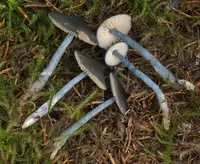
The gill edges of this species often show a distinct bluish to violet serrated margin, a key field character that helps separate it from many other small brown or gray Entoloma species.
Fruiting bodies are frequently found among mosses on soil, especially in moist forest or woodland settings, suggesting a preference for microhabitats with stable moisture and cool temperatures.
The cap and gills can shift from more vividly bluish or violaceous tones in young specimens to duller grayish or brownish hues with age, which can complicate identification for beginners.
This species is considered inedible and should not be collected for food. Identification within the Entoloma group is difficult, and some close relatives are poisonous. For safety, treat it as non-edible and for observation only.
Keep your plants happy and healthy with plant identification, disease detection, and easy care guidance.